
Original briefings. Zero spin.
Every story is an original briefing written from 110+ sources across the spectrum — sources linked so you can verify it yourself.
 finance
Notable (6/10)
Event date: August 28, 2026
finance
Notable (6/10)
Event date: August 28, 2026
Gold and Silver Post Sharpest One-Day Drop in Six Weeks After Fed Chair Warsh's Jackson Hole Speech
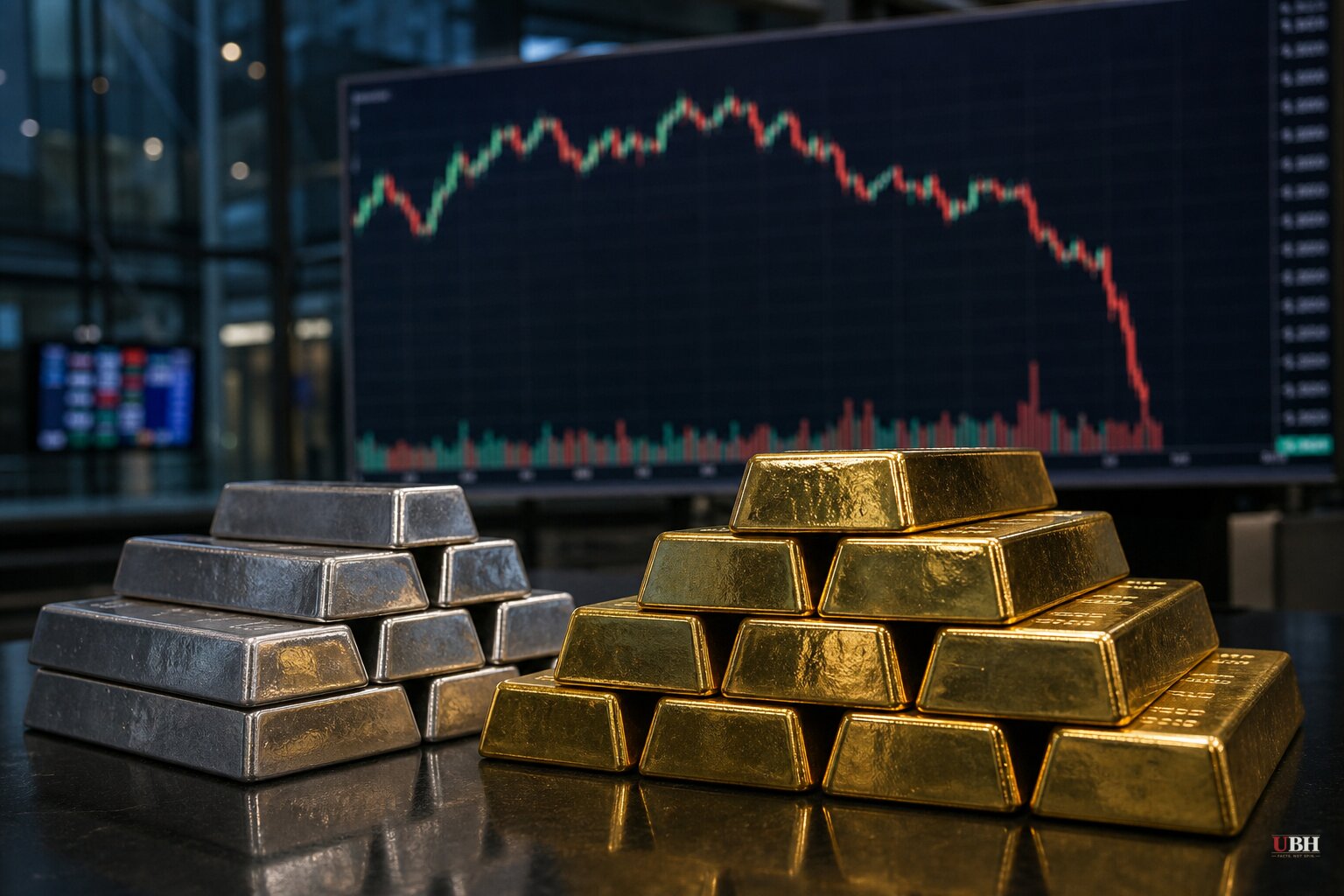
Since gold set its record high of $5,602 an ounce in late January 2026, the metal has been on a wild ride: it fell during the oil-price spike from the U.S.-Iran war, rallied roughly 11% in August alone, and then dropped hard on Friday, August 28, after Federal Reserve Chairman Kevin Warsh's first major speech since taking the job in May.
What Warsh Said
Speaking at the Kansas City Fed's Jackson Hole symposium, Warsh told the audience the central bank's 2% inflation goal is "firm and fixed" and that short-term interest rates remain its predominant tool, according to Mining.com. He said underlying summer inflation has not "meaningfully improved," a comment the Epoch Times reported was the chief catalyst for the selloff.
Warsh also pushed back on the Treasury Department's recent bond-buyback expansion, an intervention Mining.com says had helped fuel gold's August rally by reviving what traders call the "debasement trade." Warsh said unconventional policies to spur the economy "should be used sparingly, if at all."
The Numbers
Comex December gold fell as much as 3.2% on Friday to $4,515.30 an ounce, a $173 swing from the overnight high of $4,688, according to Mining.com. Front-month futures settled at $4,504.10, a weekly loss of 3.4%, the Epoch Times reported, cutting gold's year-to-date gain to below 4%.
Silver dropped even harder in percentage terms. Comex December silver fell 4.1% to $67.34 an ounce, wiping out a week of gains, per Mining.com. The Epoch Times put the silver drop at 3.37% to $67.09, with a weekly decline near 3%. Silver remains about 45% below its January record but is still up 71% over the past 12 months, the best of any precious metal, according to Mining.com.
Mining stocks fell harder than the metals themselves. Coeur Mining dropped 5.7%, Eldorado Gold 5.3%, Hecla Mining 5.3%, AngloGold Ashanti 4.6% and Equinox Gold 4.6% on Friday. But August as a whole was historic for the sector: Eldorado Gold gained 51% for the month as it began crushing first ore at its Skouries project in Greece, Hecla rose 44%, Equinox 43%, AngloGold Ashanti 42%, Gold Fields 42%, Coeur 40% and Agnico Eagle 41% after reporting record quarterly free cash flow above $1.3 billion, according to Mining.com.
The Rate Bet
Before Warsh spoke, futures markets were pricing roughly one-in-three odds of a September rate hike, Mining.com reported. His remarks pushed the dollar higher and kept a September move in play. The Epoch Times cited fresh CME FedWatch data showing traders now see an 80% chance of a December hike, even as they remain split on September.
ING commodities strategist Ewa Manthey told the Epoch Times that persistent inflation and restrictive policy could put a floor under gold near $4,150 an ounce, but that "renewed ETF buying, a weaker dollar and mounting fiscal concerns are creating increasingly clear upside risks." Bill Adams, chief U.S. economist at Fifth Third Commercial Bank, said the case for rate hikes "looks set to become more compelling over the next six months" even if the Iran war de-escalates, noting core inflation excluding food and energy was firmly above 3% in July.
The Bigger Picture: Central Banks Keep Buying
The Friday drop hasn't dented the longer-term case gold bulls have been making all year. A World Gold Council survey found 89% of central banks expect global gold reserves to grow over the next 12 months, and a record 45% plan to add to their own holdings, Fox News reported. Global central bank net demand hit 289 tons in the second quarter of 2026, a record for that quarter and a jump from a revised 57 tons in the first quarter, according to top1markets.
That demand reflects a significant concern: central banks and private investors have watched U.S. debt cross $40 trillion, with debt-to-GDP now at 124%, and are treating gold as insurance against currency debasement and Treasury market stress rather than betting on a near-term crisis. Fox News quoted an analyst identified only as Cavatoni saying central banks are "diversifying" because gold "provides liquidity, diversification and protection against inflation and geopolitical uncertainty."
Not every outlet's numbers line up. Crypto Briefing, citing the Wall Street Journal, reported gold down 7% for the year based on World Gold Council figures. That conflicts with the Epoch Times' report of a sub-4% year-to-date gain and Mining.com's tally showing gold up roughly 11% in August alone and still about 16% below its January record. The discrepancy likely reflects different reference dates within a volatile year, but it underscores how much gold has whipsawed in 2026 rather than moved in one clean direction.
The open question now is what the Fed actually does next month. Traders are split on September, but increasingly convinced a hike is coming by December if Warsh's inflation warnings hold up against a Treasury Department still leaning on bond-market interventions that have been bullish for gold all year.
Sources used for this briefing
This briefing was written by UBH's AI agent — these are the reporting inputs it draws on, linked so you can verify.


