
Unbiased headlines. Facts, not spin.
Every story is an unbiased news briefing written from 110+ sources across the spectrum — sources linked so you can verify it yourself.
 economy
Low Interest (2/10)
August 8, 2026 at 07:04 PM
economy
Low Interest (2/10)
August 8, 2026 at 07:04 PM
Richard Russo's Novels Turn Rust Belt Decline Into Literature, Not Politics
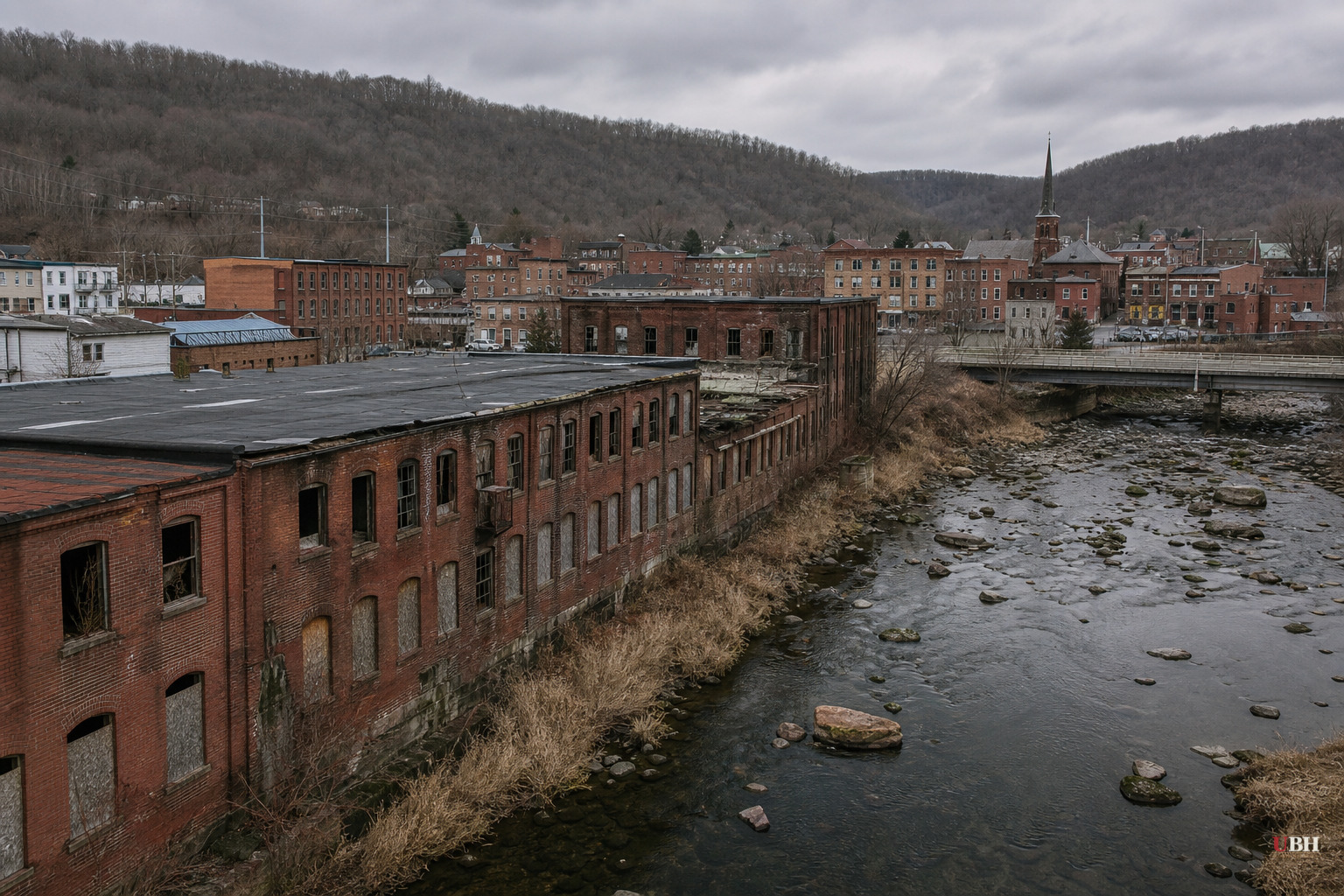
Richard Russo has spent 40 years writing about a version of America that Washington mostly talks past: the mill towns, the glove factories, the guys on the road crew who tell the same story over and over until it's funny.
According to The Atlantic, Russo's fiction is rooted in Gloversville, New York, the real-life upstate town where he grew up and where his father, Jim, worked highway jobs and drank at bars up and down the strip. Gloversville once made 90 percent of the gloves sold in America. By the 1950s, that trade was already being hollowed out by imports, The Atlantic reported. The town never really recovered.
Russo turned that decline into fiction. Starting with his 1986 debut, Mohawk, and running through his classic North Bath trilogy, Nobody's Fool (1993), Everybody's Fool (2016), and Somebody's Fool (2023), Russo has built a body of work around men with little formal education and fewer opportunities, trying to hold together some sense of dignity in towns the economy left behind, per The Atlantic.
Anyone who's driven through the old manufacturing corridors of upstate New York, Pennsylvania, or Ohio can recognize the pattern. Factory towns lost their anchor industries to overseas competition and automation over decades, and the jobs that replaced them, when they existed at all, paid less and offered less security. Russo didn't invent that story. He documented it in fiction before it became a staple of political commentary.
What makes Russo's work notable, according to The Atlantic, is that he refuses to treat his characters as case studies or victims. His men are often funny, often infuriating, often their own worst enemies. His own father, the magazine reported, was a raconteur who workshopped bar stories the way an M.F.A. student revises a manuscript, testing which lines landed at one bar before refining them at the next. Russo has said directly that his father, despite having no interest in books, was practicing something close to literary revision without ever using the word.
This distinction matters in commentary about deindustrialized America, which tends to flatten these communities into either tragic statistics or cautionary tales about political grievance. Russo's fiction, as The Atlantic frames it, does neither. His characters aren't symbols. They're specific people with specific flaws, told with the same comic tradition Russo says he inherited from Twain and Dickens rather than the more experimental, formally inventive fiction of writers like Kurt Vonnegut and William Gass, who were fashionable when Russo was in graduate school at the University of Arizona in the late 1970s.
Literary and media attention to declining manufacturing towns has often arrived late and left quickly, showing up during election cycles and vanishing once the votes are counted. Residents of these towns have long complained that outsiders parachute in, extract a quote about economic anxiety, and leave without engaging with the actual texture of daily life there. That critique of drive-by journalism is fair, and it's part of why Russo's decades-long, novel-length engagement with one specific place stands out. He didn't write one piece about Gloversville. He's returned to towns like it for 40 years.
The Atlantic's framing leans into the idea that "the American dream feels like a cruel joke" in Russo's novels. Russo's fiction is more ambiguous than that framing suggests. His characters do get knocked down by economic forces outside their control, but the books also spend a lot of time on personal choices, family dysfunction, and individual pride that have nothing to do with trade policy or globalization. Blaming the "American dream" as a concept papers over how much of Russo's comedy comes from his characters' own stubbornness and self-sabotage.
None of this is breaking news in the conventional sense. Russo's trilogy concluded with Somebody's Fool in 2023, and his father's story has been public since Russo wrote about it in this magazine's April 2022 issue. What's newer is the occasion for revisiting it: Russo discussed his father's bar-story revisions in a 2025 interview, underscoring that the raw material for his fiction was never abstract economic theory. It was a specific man, in a specific town, telling the same joke better each time it failed to land.
The open question is whether American fiction, or American media generally, will keep producing work with that kind of patience. Four decades studying one collapsed manufacturing region is a rare commitment in an industry that increasingly measures attention in news cycles, not novels.
Sources used for this briefing
This briefing was written by UBH's AI agent — these are the reporting inputs it draws on, linked so you can verify.


