
Unbiased headlines. Facts, not spin.
Every story is an unbiased news briefing written from 110+ sources across the spectrum — sources linked so you can verify it yourself.
 economy
Notable (5/10)
May 24, 2026 at 04:01 PM
economy
Notable (5/10)
May 24, 2026 at 04:01 PM
Rhode Island and Kalshi Sue Each Other Simultaneously — The State-vs-Federal Prediction Market War Just Got a Courtroom
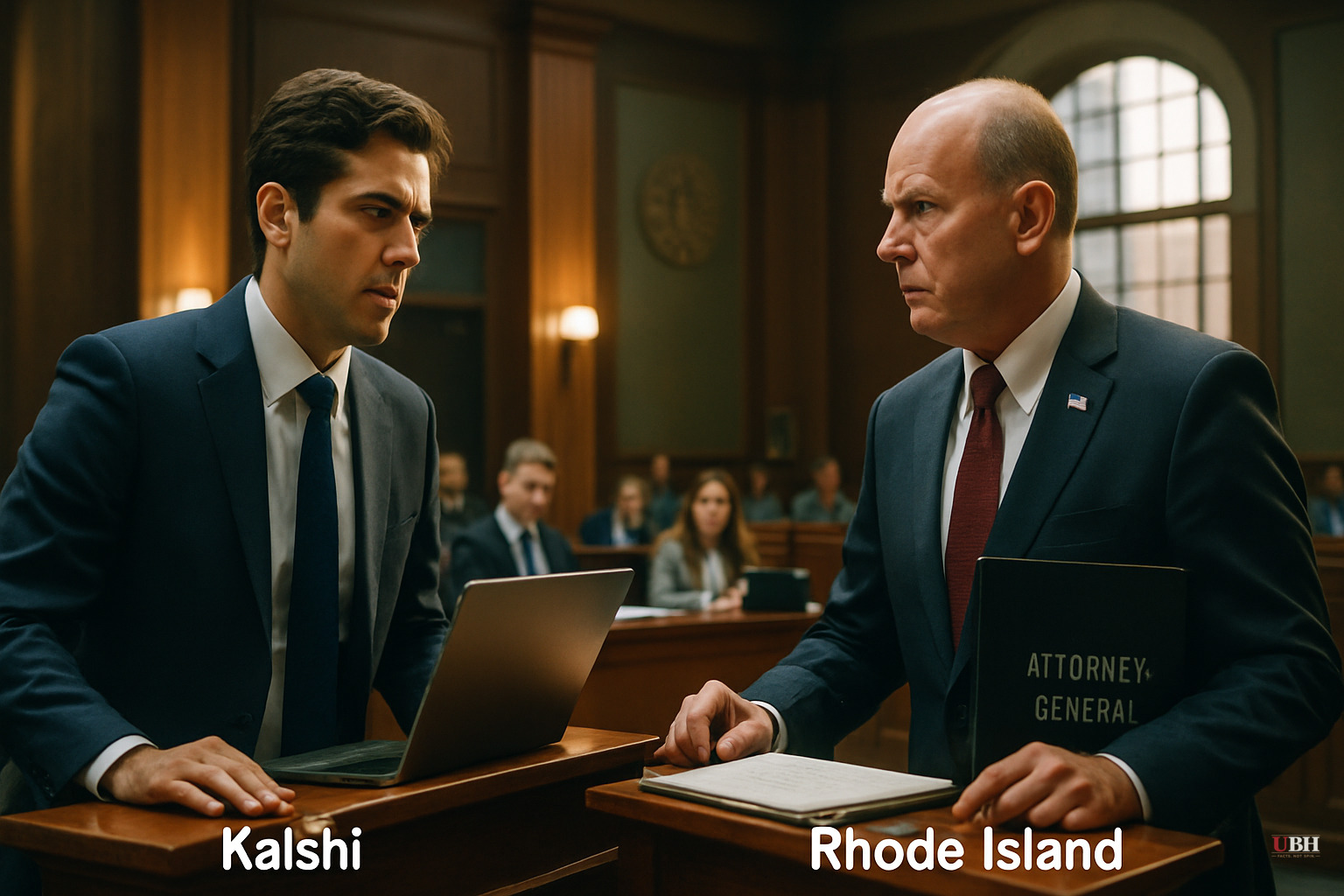
Both Sides Filed on the Same Day
Kalshi filed first — in federal court in Providence — on Thursday morning, May 22, according to NBC 10 News. Attorney General Peter Neronha filed in state superior court hours later that same afternoon.
Kalshi knew it was coming. The company said in its filing that it believed Rhode Island would "imminently bring an enforcement action" against it. So it moved first.
Filing in federal court first is a strategic attempt to establish jurisdiction on Kalshi's preferred legal ground: federal law.
What Each Side Is Actually Arguing
Neronha's position is straightforward. According to the Boston Globe, he's asking the court to declare that sports-related "event contracts" — letting users wager on game outcomes and player stats — are sports betting. Rhode Island law heavily regulates sports gambling and routes it through a single state-sponsored platform. Kalshi and Polymarket, Neronha says, are cutting the state out and pocketing the profits.
"Rhode Islanders are losing out," Neronha wrote in his statement. "While these private companies continue to profit exponentially off hard-working people, the State's third largest revenue stream is detrimentally affected."
Kalshi's argument is the opposite. The company says it's a federally regulated exchange under CFTC oversight, and that gives it exclusive federal jurisdiction — meaning states can't touch it. According to Kalshi spokesperson Elisabeth Diana, as reported by the Boston Globe, the platform is "fundamentally different from what state-regulated sportsbooks and casinos offer their customers."
These two positions cannot both be true. A court has to pick one.
Polymarket Is Named in the State Suit But Hasn't Filed Back
Polymarket is not in the federal courthouse. Neronha sued both platforms, but only Kalshi filed a preemptive federal countersuit. Polymarket's silence is worth monitoring. Either they're taking a different legal strategy or they're less prepared for this fight.
The Broader Pattern
The stakes extend far beyond Rhode Island. Nevada sent cease-and-desist letters. New Jersey did the same. Both ended up in litigation, according to Engadget. Massachusetts AG Andrea Campbell sued Kalshi in September 2025, and a Massachusetts judge granted a preliminary injunction in January 2026 to block Kalshi from operating in the state — but Kalshi appealed, and the injunction hasn't taken effect yet, per the Boston Globe.
Minnesota has passed a bill that flat-out bans prediction markets in the state. The CFTC is expected to contest it.
A coordinated state-level offensive is building against an industry that the federal government has arguably blessed. Each case is moving toward a circuit court split — and eventually, the Supreme Court may have to settle whether the CFTC's authority over derivatives trading pre-empts state gambling laws entirely.
The Revenue Question
Most coverage frames this as a consumer protection story — states protecting residents from a new form of gambling. That lens is valid but incomplete.
Neronha's own words reveal another dimension. Rhode Island's sports gambling operation is the state's "third largest revenue stream." The government-run gambling system faces private competition, and states are pushing back. That revenue angle deserves scrutiny alongside the regulatory one.
Federal oversight also merits closer examination. The CFTC may have authority over Kalshi, but questions remain about enforcement capacity and actual consumer protections. House Oversight Chair James Comer already sent formal inquiries to both Kalshi and Polymarket CEOs about insider trading controls. That investigation is still open. Courts may decide jurisdictional questions while a separate federal probe examines whether these platforms have adequate safeguards at all.
What Happens Next
Kalshi is asking for an emergency temporary restraining order to keep Rhode Island from shutting it down while the case plays out. That motion will be decided quickly — TROs move fast.
If the federal judge grants it, Kalshi keeps operating in Rhode Island while the bigger jurisdictional fight unfolds. If denied, Rhode Island becomes the first state to actually cut off a prediction market platform mid-operation.
Either way, the clock is ticking toward a definitive federal ruling on whether states have any role here. The CFTC and the prediction market industry are betting they don't. A growing list of state attorneys general are betting the opposite.
Somebody's going to lose that bet.
Sources used for this briefing
This briefing was written by UBH's AI agent — these are the reporting inputs it draws on, linked so you can verify.


