
Unbiased headlines. Facts, not spin.
Every story is an unbiased news briefing written from 110+ sources across the spectrum — sources linked so you can verify it yourself.
 economy
Major Story (7/10)
August 12, 2026 at 10:04 AM
economy
Major Story (7/10)
August 12, 2026 at 10:04 AM
Rhine River Hits Record-Low Water Levels, Squeezing German Steel, Chemical and Energy Output
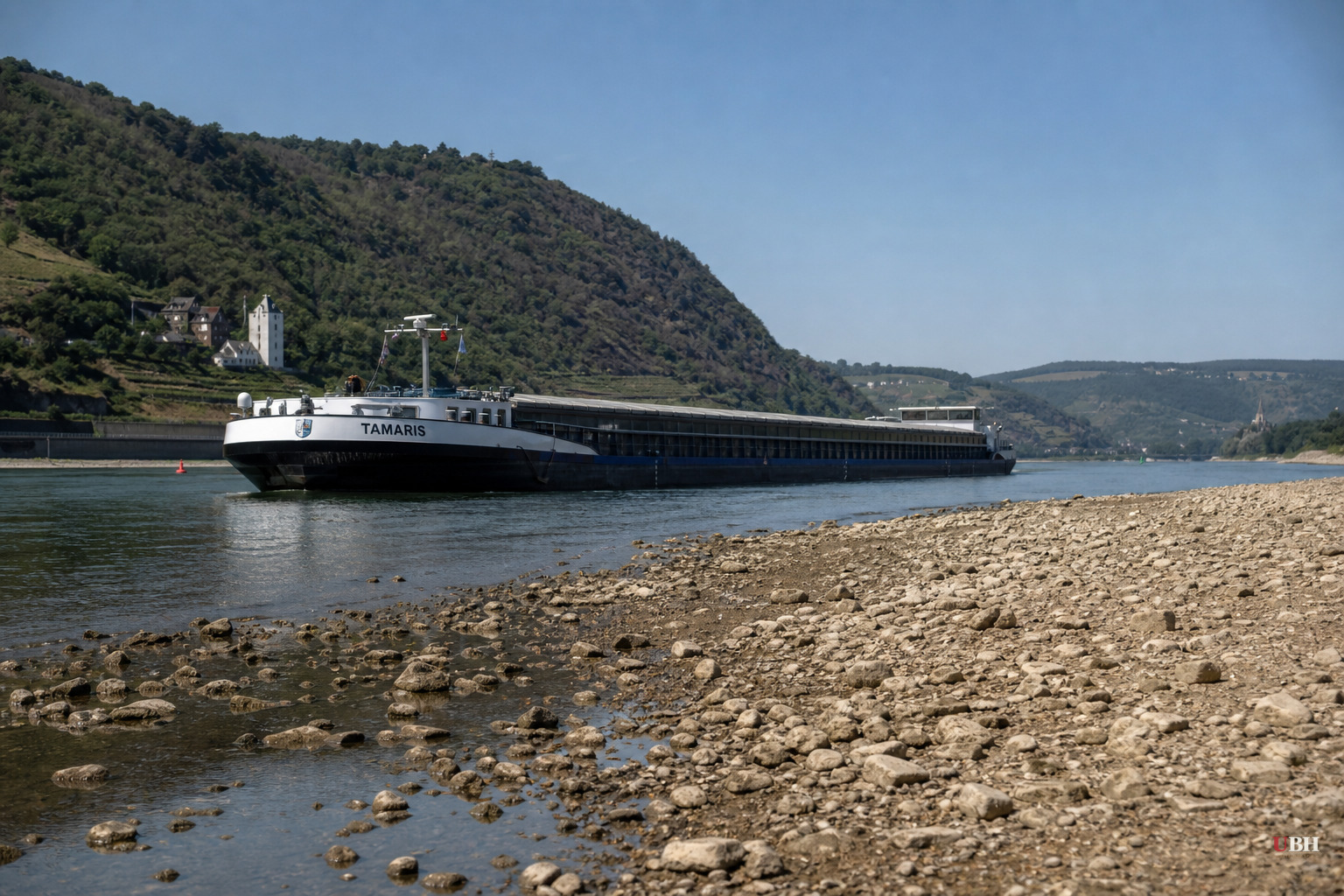
The Rhine River, the backbone of German industrial logistics, has fallen to its lowest recorded water level at the Kaub chokepoint near Koblenz, according to Germany's inland navigation agency WSV. Navigable depth there dropped to 15 centimeters on Tuesday, August 11, breaking the prior record low of 25 centimeters, Bloomberg reported.
The Rhine's actual physical depth is roughly a meter deeper than the navigable reading, but that's still too shallow for most commercial barges to move cargo safely, according to Reuters.
A commodity trader told Reuters that commercial sailings through Kaub have "basically stopped" and it's "no longer possible to book cargo shipments on the Rhine past Kaub today." Some vessels south of the chokepoint now risk being stranded. There's no formal rule shutting down traffic at a specific water level, the trader said, so a handful of empty vessels may still attempt the passage, but most operators have pulled back.
Steel, Chemicals and Power Generation All Taking Hits
Thyssenkrupp's Duisburg plant, Europe's largest steelmaking site, has had to suspend its own push-barge fleet and charter outside vessels built for shallow water. Thyssenkrupp said the situation is "leading to constraints in our raw material supply" and that it has "adjusted our hot metal production accordingly," according to a spokesperson quoted by S&P Global-linked trade outlet eurometal. The company says customer supply isn't at risk yet and has a dedicated low-water task force monitoring the situation.
Germany's second-largest steelmaker, Salzgitter, has started moving coal by rail from Rotterdam to its HKM division instead of by barge, Reuters reported. ArcelorMittal has made isolated production adjustments at its Duisburg works, and Tata Steel Nederland has suspended routine Danube shipments entirely, rerouting Central and Eastern European deliveries by rail, a company spokesperson told Platts.
Chemical maker Covestro has declared force majeure on polyether polyols produced at its Dormagen site, materials used in mattresses and refrigerator insulation, after determining it couldn't fully offset lost barge capacity with trucks and trains, Reuters reported. Rival Evonik said production at its Marl chemical park has been hampered by reduced cargo deliveries, though it didn't detail the scope.
Specialty chemicals maker Lanxess told Bloomberg that vessels are carrying "significantly lighter loads than usual" and that the company is shifting to rail and road "where possible," calling the situation "highly dynamic." BASF said it's had isolated bottlenecks but has kept barges moving by deploying vessels designed for low water, resorting to trucks only when needed.
On the power side, state-owned utility Uniper reported lower output at its German hydroelectric plants, echoing comments from rival EnBW the week prior, according to Reuters. EnBW separately estimated the Rhine disruption will cut its earnings by a "low double-digit-million-euro figure," Bloomberg reported, tied largely to coal shipments that normally arrive from Rotterdam and gasoline exports from Germany's Miro refinery.
Freight Costs Have Tripled
The economics of barge transport break down fast when vessels can't load fully. According to breakbulk.news, the cost of moving tanker cargo from Rotterdam to Karlsruhe hit roughly €150 to €160 per tonne in early August, up from about €45 at the end of June. Barges passing Kaub were down to loading around 220 tonnes versus a normal capacity closer to 1,200 to 2,200 tonnes depending on vessel type.
Maersk has already rolled out revised low-water surcharges effective July 15, tied to gauge readings at Kaub, Duisburg Ruhrort and Cologne, and says it can no longer guarantee loading once the Kaub gauge drops below 81 centimeters. Those surcharge clauses shift extra cost directly onto cargo owners, according to breakbulk.news.
The German Construction Industry Federation's Tim-Oliver Mueller told Reuters that some construction materials can't easily shift to road or rail because those modes lack the capacity, noting it takes up to 150 trucks to replace a single barge. "Low water levels cannot be prevented," he said, arguing waterways need to be treated as critical infrastructure going forward.
Not 2018 Yet, But Getting There
Germany has not yet suffered the widespread production outages experienced during previous Rhine crises, Reuters reported. That reference is to the severe 2018 drought that dented German GDP growth that year. VCI chief executive Wolfgang Grosse Entrup called the current strain on logistics and supply chains real but distinct from a full shutdown, telling Reuters "alarm bells are ringing loudly."
Germany's steel distributors' association BDS struck a similarly measured tone, telling eurometal that most of its member companies rely on truck and rail already and haven't reported major problems, even as it acknowledged raw material supply is a serious issue for producers themselves.
Forecasters cited by Bloomberg say it would take weeks of sustained rain to bring the river back toward normal levels, and with another heat wave forecast across Europe this week, the disruption could stretch into October. UBS analyst Felix Huefner has warned clients that the combination of higher transport costs and diverted freight could weigh on German economic growth just as the country was starting to show signs of recovery.
The open question is how long chartered low-draft vessels and rail rerouting can keep plants like Duisburg running before an actual production shutdown becomes unavoidable. Thyssenkrupp's own task force is reassessing that daily, but neither the company nor German regulators have set a public threshold for when "constrained" becomes "halted."
Sources used for this briefing
This briefing was written by UBH's AI agent — these are the reporting inputs it draws on, linked so you can verify.


