
Unbiased headlines. Facts, not spin.
Every story is an unbiased news briefing written from 110+ sources across the spectrum — sources linked so you can verify it yourself.
 politics
Major Story (7/10)
August 5, 2026 at 01:15 PM
politics
Major Story (7/10)
August 5, 2026 at 01:15 PM
RFK Jr. Weighs Lab-Leak Author Steven Quay for Fauci's Old NIAID Post After Staff Passed Him Over
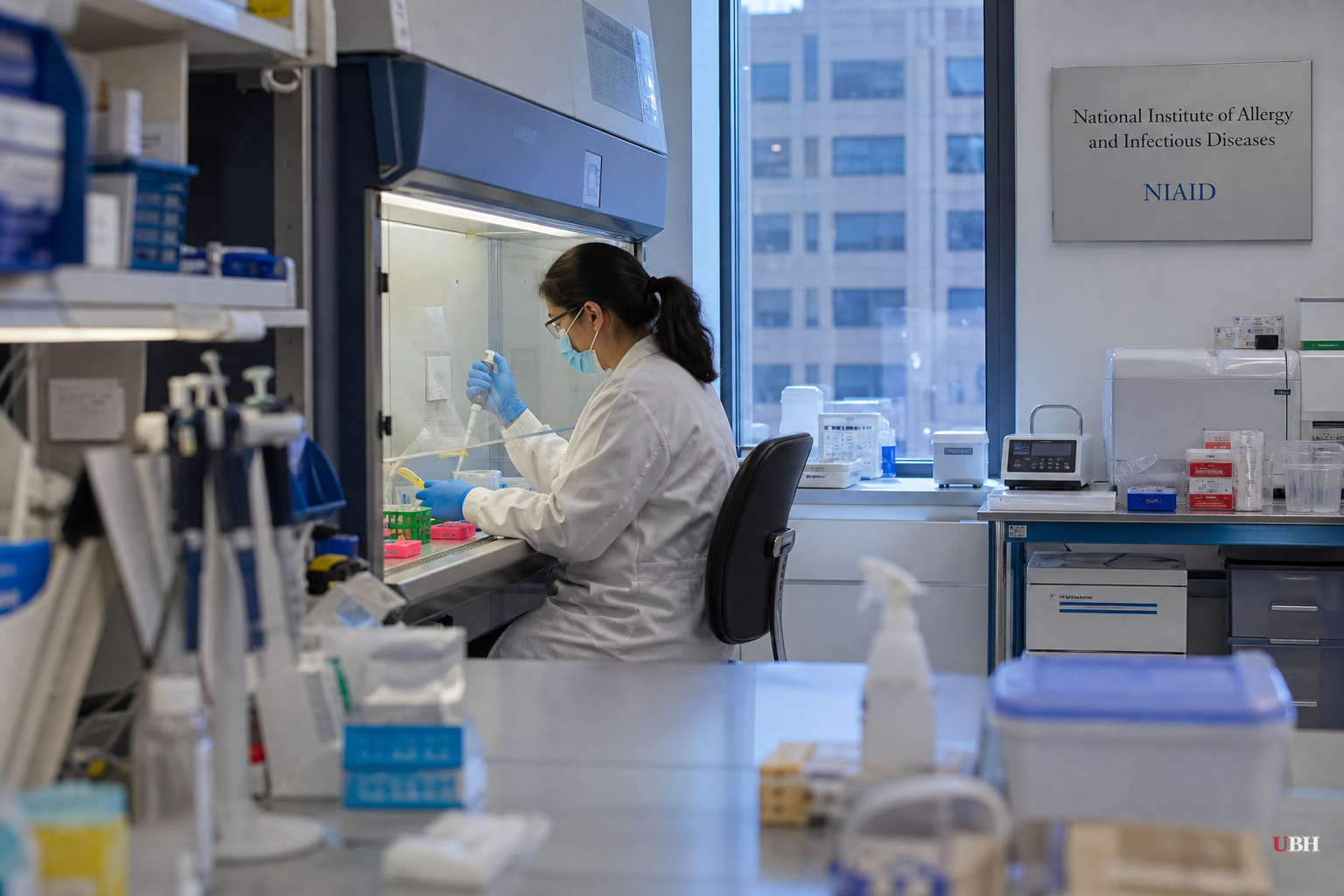
Steven Quay, a pharmaceutical executive with no formal training in infectious disease, is a finalist to become the next director of the National Institute of Allergy and Infectious Diseases, the post Anthony Fauci held for 38 years, according to Politico. Two people briefed on the process, granted anonymity because the hire isn't final, told Politico that Health Secretary Robert F. Kennedy Jr. selected Quay personally after NIH staff who screened applicants declined to move him to the interview stage.
Quay is best known outside pharma circles for writing books arguing COVID-19 originated in a Chinese lab rather than jumping naturally from animals to humans. The job carries authority over roughly $6.5 billion in annual research funding, according to Politico's reporting.
Senate Republicans are moving to hold Fauci himself in contempt of Congress, according to KFF Health News, part of a broader push by GOP lawmakers to unwind what they see as COVID-era failures inside the federal health bureaucracy. Sen. Rand Paul (R-Ky.) has separately summoned Fauci before committee, alleging he lied to Congress about the pandemic's origins.
The case for shaking things up
The lab-leak theory was treated as fringe or conspiratorial by much of the public health establishment early in the pandemic, and several prominent virologists privately expressed more uncertainty about COVID's origins than they stated publicly, according to emails and messages that surfaced in later congressional investigations. A 2023 Department of Energy assessment and an FBI assessment both concluded a lab-related origin was plausible, even as other intelligence agencies favored natural spillover. Reasonable people can conclude the scientific establishment was too quick to dismiss a real possibility, and that voters who want fresh leadership at NIAID have a legitimate grievance.
Kennedy's defenders would argue that installing someone who took the lab-leak theory seriously early is a corrective, not a purge, especially after years in which NIAID and NIH leadership resisted transparency requests about gain-of-function research funding tied to the Wuhan Institute of Virology.
The case against it
Quay's lack of formal infectious disease credentials is a real gap for a role that sets scientific priorities across HIV, flu, and emerging pathogen research, and the fact that NIH's own screening process passed him over before Kennedy intervened raises a legitimate question about whether the selection was merit-based or political.
The American Association of Immunologists put its objection on the record, calling the broader campaign against Fauci and federal scientists an effort to "politicize science and discredit scientists." AAI argues that publicly targeting researchers "erodes public trust, silences scientific expertise" and could discourage young scientists from entering the field, warning that rebuilding lost trust and capacity "can take decades."
That statement doesn't address Quay specifically, but it reflects a broader alarm inside the immunology and virology community about the direction of NIH leadership under Kennedy.
The prosecutions add fuel
The search isn't happening in isolation. According to KFF Health News, the Trump administration has escalated arrests and public condemnation of federal virus researchers even as the world faces one of its worst Ebola epidemics. In June, NIH researcher Vincent Munster was charged with bringing biological specimens into the U.S. without proper documentation. A former Fauci aide was detained by the FBI this spring, and a virus researcher in North Carolina was banned from receiving federal funding.
Scientists interviewed by KFF Health News, including Kim Hasenkrug, a scientist emeritus at NIH's Rocky Mountain Laboratories who spent 31 years there, said Munster's alleged violations appear to be paperwork issues involving inactivated mpox samples for research, not a public safety threat. Hasenkrug said the case "gives ammunition to the people that are trying to stop this valuable research" and "sows seeds of distrust" even among people who previously trusted federal scientists.
Kristian Andersen, an evolutionary biologist at Scripps Research who co-authored studies dismissing an early lab-leak hypothesis, warned that funding cuts have left tens of millions of dollars in gaps fighting Ebola and mpox, and said China could out-develop the U.S. on vaccines for the next pandemic as a result. Andersen has a direct stake in this fight: his own research is among the work lab-leak proponents have criticized, so his warning should be read as that of an interested party, not a neutral referee.
No formal charges of scientific misconduct have been filed against Fauci, and the Senate contempt vote is a political and procedural escalation, not a criminal proceeding. Munster's case remains an open prosecution over documentation, not proven bioterrorism or research misconduct, despite rhetoric from some conservative commentators framing it that broadly.
Quay's nomination still requires completing vetting inside HHS before any formal announcement. If confirmed in the role, he would oversee NIAID's COVID-origins research posture, its infectious disease funding priorities, and its response to the ongoing Ebola outbreak that current NIH scientists say is already underfunded.
Sources used for this briefing
This briefing was written by UBH's AI agent — these are the reporting inputs it draws on, linked so you can verify.


