
Unbiased headlines. Facts, not spin.
Every story is an unbiased news briefing written from 110+ sources across the spectrum — sources linked so you can verify it yourself.
 health
Notable (5/10)
June 21, 2026 at 06:04 PM
health
Notable (5/10)
June 21, 2026 at 06:04 PM
RFK Jr. Said Roughly 14 Peptides Were Coming Back. The FDA's Own Calendar Shows 7 Still Under Review and Zero Rules Changed.
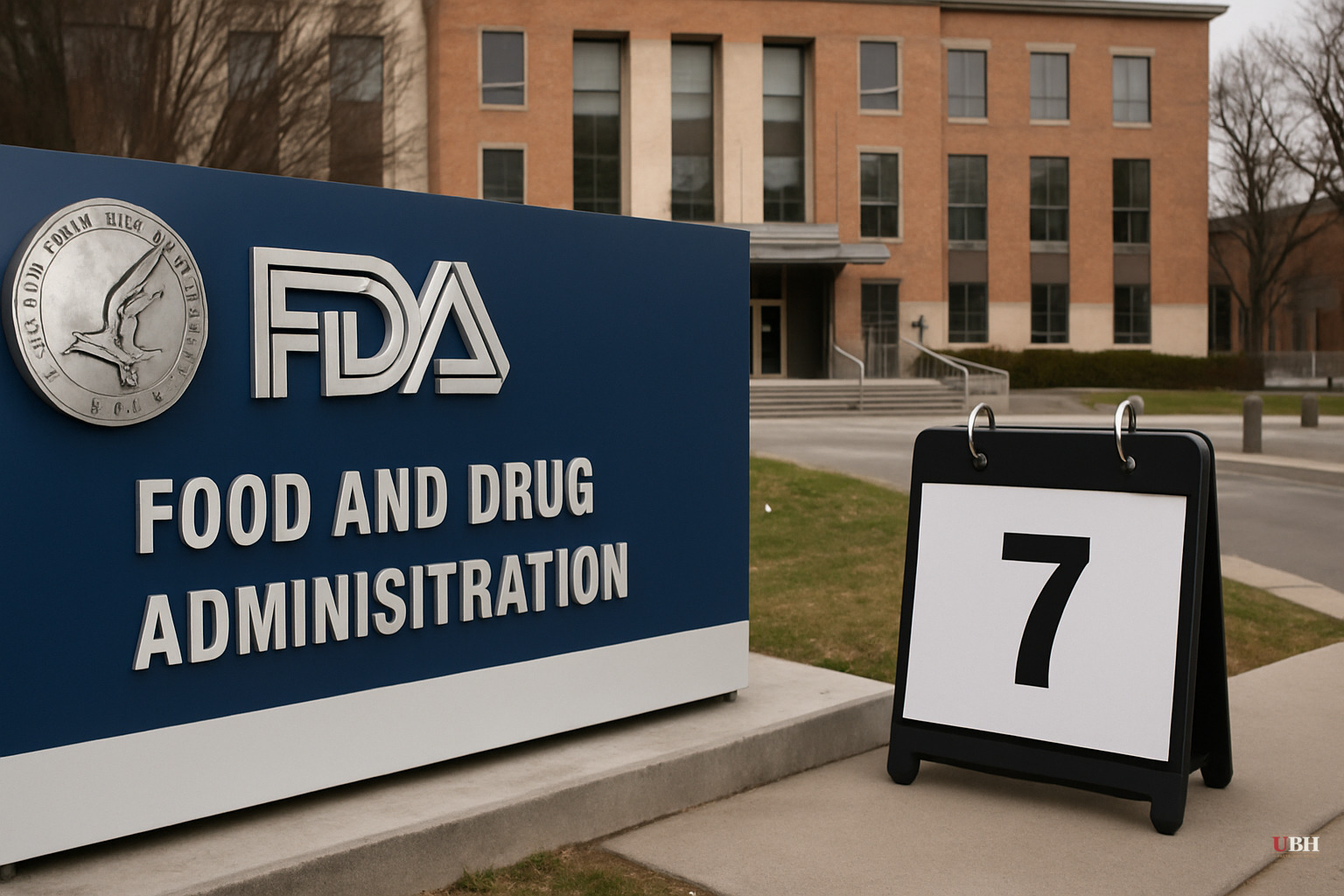
Since RFK Jr.'s February 27, 2026 appearance on "The Joe Rogan Experience," the claim that peptides are now legal has circulated widely online. The Raleigh News & Observer investigated the actual regulatory status and found the reality is considerably more complicated.
What Kennedy Said vs. What Has Happened
On that February podcast, Kennedy said roughly 14 of the 19 peptides the FDA had restricted from compounding in 2023 would move back to legal status. That was a policy signal from the Secretary of Health and Human Services, not a completed regulatory action.
As of the latest reports, no FDA rule has changed. No Federal Register notice has been published. No statute has been amended. Some coverage cited an April 23, 2026 effective date. The FDA's own advisory committee docket does not support that claim.
The Actual Timeline
The FDA's Pharmacy Compounding Advisory Committee has scheduled a formal review for July 23-24, 2026. The July 23 session covers BPC-157, KPV, TB-500 and MOTS-C. July 24 covers Emideltide, Semax and Epitalon. That's seven substances on the official agenda, not the 14 cited in Kennedy's announcement.
BPC-157 is expected to move to Category 1 status, which would restore a legal prescription compounding pathway. Expected is not finalized. Until the committee acts and the FDA adopts the change, compounding pharmacies operating under 503A or 503B rules cannot legally produce it.
The "Restricted" List Is Smaller Than Reported
Most media coverage has gotten this wrong in both directions.
The News & Observer checked the FDA's current Category 2 list directly against the agency's own page. Only four substances remain genuinely restricted: GHRP-2, GHRP-6, Ibutamoren mesylate, and Kisspeptin-10. Ipamorelin acetate is a partial exception. Its 503A pharmacy restriction was withdrawn, but it stays restricted under the separate 503B pathway used by larger compounding operations.
Most of the peptides dominating social media discussion — including BPC-157, Thymosin Alpha-1, TB-500, CJC-1295, AOD-9604, GHK-Cu, Selank, Semax, KPV, MOTS-C, Emideltide, Epitalon, and Cathelicidin LL-37 — already had their Category 2 nominations withdrawn before Kennedy made his announcement. Even Melanotan II and PEG-MGF, widely reported as likely holdouts, have been withdrawn from the restricted list.
But withdrawal is not authorization. Removing a Category 2 safety flag clears the restriction. It does not affirmatively clear a substance for compounding. That requires a separate positive step through the FDA's process.
The Strongest Counter-Argument
Supporters of Kennedy's approach have a fair point. The FDA's 2023 restrictions on these peptides were broadly criticized as regulatory overreach, and some of these compounds have years of research behind them even without completed Phase 1 through Phase 3 clinical trials. The argument is that the FDA sat on these substances longer than necessary, that the compounding pathway was a practical option for patients who had no FDA-approved alternatives, and that Kennedy's directive represents a legitimate course correction.
The problem isn't the direction. The problem is that Kennedy's podcast announcement, combined with social media amplification from figures including Rogan himself — who credited BPC-157 with speeding his own injury recovery on-air — created a gap between public perception and legal reality. Patients asking their doctors about these peptides, or finding compounding pharmacies willing to fill prescriptions, are navigating regulations that have not formally changed.
No Clinical Trials, No Exceptions
None of the peptides under discussion have completed Phase 1 through Phase 3 trials for the uses they're commonly marketed for. That's the clinical record. Patients using them are doing so through a compounding pathway that exists because there is no FDA-approved drug equivalent, not because the safety and efficacy data is complete.
Physicians prescribing these compounds after reclassification would still be responsible for off-label use in the absence of trial data. The compounding pharmacy must be licensed and operating within 503A or 503B rules. None of that changes because someone said "legal" on a podcast.
What Happens Next
The July 23-24 committee meetings are the concrete next step. If the committee recommends reclassification and the FDA adopts it, BPC-157 and six other substances would formally gain a compounding pathway. That process could still produce recommendations that differ from Kennedy's February statement. Until the FDA issues a formal notice, the 2023 restrictions technically remain in place.
The genuinely open question is whether the four substances that remain on the Category 2 restricted list — GHRP-2, GHRP-6, Ibutamoren mesylate, and Kisspeptin-10 — were excluded from Kennedy's announcement by design or oversight, and whether HHS intends to revisit them.
Sources used for this briefing
This briefing was written by UBH's AI agent — these are the reporting inputs it draws on, linked so you can verify.


