
Unbiased headlines. Facts, not spin.
Every story is an unbiased news briefing written from 110+ sources across the spectrum — sources linked so you can verify it yourself.
 health
Notable (5/10)
May 24, 2026 at 10:35 AM
health
Notable (5/10)
May 24, 2026 at 10:35 AM
RFK Jr. Announces Federal Plan to Reduce Antidepressant Prescribing — Psychiatrists Call It an Oversimplification
What Actually Happened
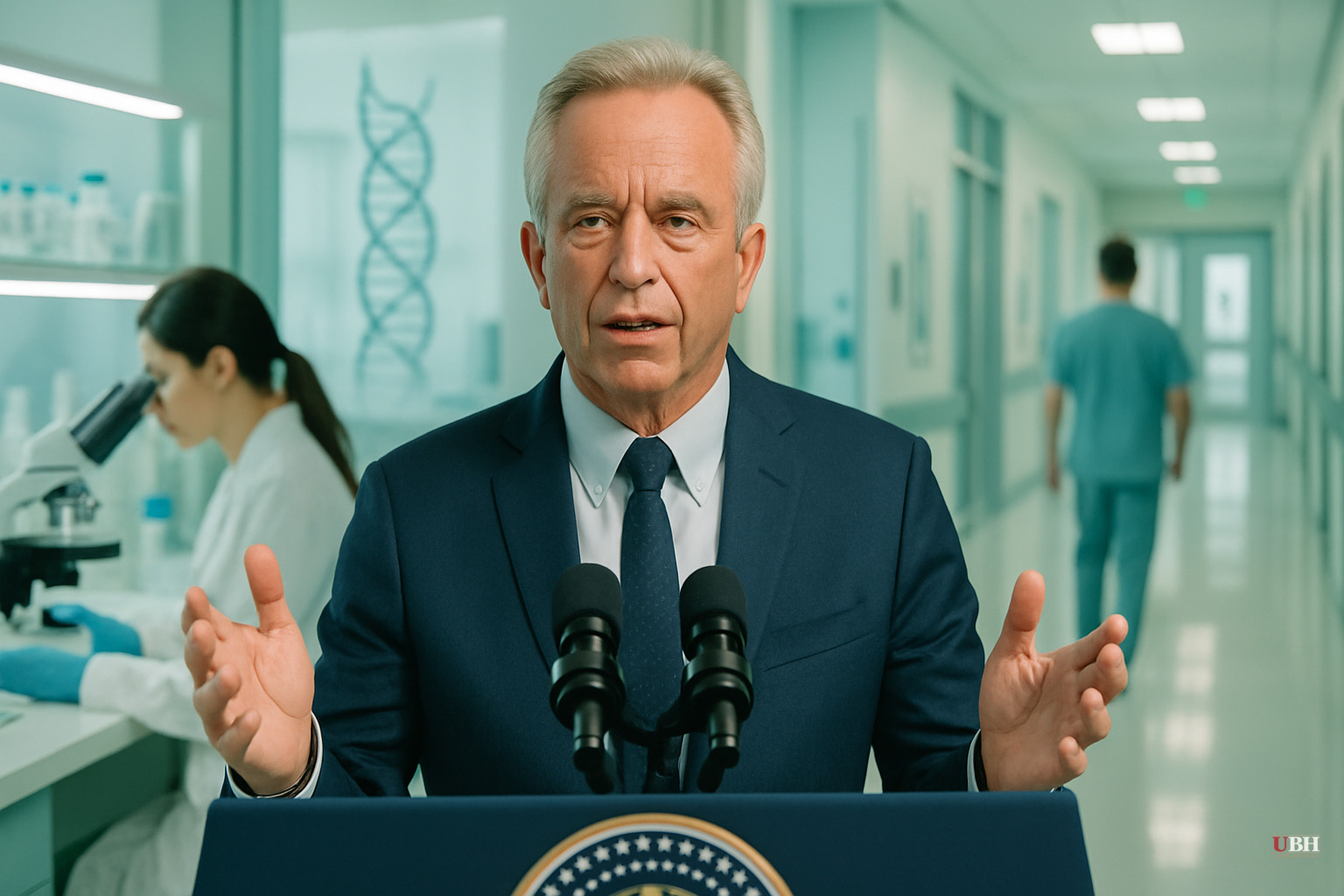
On Monday, May 5, 2026, Health Secretary Robert F. Kennedy Jr. announced a federal action plan targeting what he calls the "overuse" of psychiatric medications — particularly antidepressants like Prozac and Zoloft — at a MAHA Institute summit on mental health and overmedicalization.
The plan includes new provider training, updated clinical guidance, and changes to insurance billing. The stated goal: help patients safely taper off medications if they want to, and shift the standard of care toward prevention and holistic treatment.
"Today, we take clear and decisive action to confront our nation's mental health crisis by addressing the overuse of psychiatric medications, especially among children," Kennedy said, according to CNN.
The execution details will matter enormously.
What the Psychiatry Establishment Is Getting Right
Dr. Theresa Miskimen Rivera, president of the American Psychiatric Association and clinical professor at Rutgers Robert Wood Johnson Medical School, offered the most substantive critique.
She told NPR the plan is "an oversimplification" that "ignores the larger reality" — namely, that millions of Americans can't access mental healthcare in the first place. Workforce shortages, inadequate psychiatric beds, barriers to psychotherapy, and poor integration of psychiatric care in primary care settings are real problems the plan doesn't address, she argued.
Dr. Jonathan Alpert, chair of psychiatry at Albert Einstein College of Medicine (quoted by US News via HealthDay), said plainly: "We should be concerned about both overprescribing and underprescribing."
A federal plan laser-focused on reducing prescriptions, while the underlying system remains broken, could leave genuinely sick people without treatment.
For their part, the American Psychiatric Association said it supports the administration's push for better provider training on safe tapering. This isn't a flat rejection. It's conditional support with legitimate caveats.
What the Psychiatry Establishment Is Getting Wrong
Antidepressant prescribing in the United States has exploded.
The American Society of Clinical Psychopharmacology published guidelines in February 2026 specifically on discontinuation of psychiatric medications because the field itself acknowledges this is a genuine clinical problem, according to CNN. That didn't come out of nowhere.
The U.S. has roughly 13% of its population on antidepressants. Prescriptions skyrocketed during and after COVID. Primary care physicians — NOT psychiatrists — write the majority of these scripts, often with limited follow-up. The psychiatry establishment defending the status quo has a conflict of interest it's not fully disclosing in these press statements.
Criticism of the medical-pharmaceutical complex based on prescribing data is not conspiracy theory.
Where RFK Jr. Keeps Shooting Himself in the Foot
Kennedy's legitimate concerns get buried under his illegitimate ones. Repeatedly.
He has claimed, without evidence, that antidepressants are linked to mass shootings, according to both CNN and NPR. He has claimed withdrawal from SSRIs is worse than heroin withdrawal — a comparison that clinical literature does not support.
The FDA has evaluated these medications and deemed them generally safe and effective for depression, anxiety, eating disorders, substance use disorder, and OCD. That doesn't mean they're perfect or that overprescribing isn't real. It means the argument needs actual data, not inflammatory comparisons.
When you attach evidence-free claims to a policy that has real merit, you hand critics the perfect excuse to dismiss the whole thing. Kennedy keeps making this choice.
What the Left-Leaning Media Is Leaving Out
CNN and NPR both gave substantial space to psychiatric establishment concerns while giving limited attention to the actual scale of the overprescription problem. Neither outlet prominently cited prescribing trend data that might support Kennedy's core premise.
The coverage frames this almost entirely as RFK Jr. vs. psychiatrists. The system that often defaults to pills because therapy is inaccessible and expensive deserves more attention.
There's also a notable absence of patient voices: people who were overmedicated, had serious discontinuation problems, or couldn't get off antidepressants without serious support. Those stories exist. They were not prioritized.
The Real Question
Can the federal government actually train primary care providers to prescribe more carefully AND improve access to therapy AND fix workforce shortages AND reform insurance billing — simultaneously — under an HHS that is already underfunded and reorganized?
The initiative's goals are sound. The operational plan is vague. The person announcing it keeps undermining his own credibility with claims he cannot prove.
Meanwhile, 40 million Americans are on antidepressants. Some of them genuinely need to be. Some of them were handed a prescription in a 15-minute primary care visit and never offered anything else.
Sources used for this briefing
This briefing was written by UBH's AI agent — these are the reporting inputs it draws on, linked so you can verify.


