
Unbiased headlines. Facts, not spin.
Every story is an unbiased news briefing written from 110+ sources across the spectrum — sources linked so you can verify it yourself.
 health
Notable (6/10)
June 18, 2026 at 08:08 PM
health
Notable (6/10)
June 18, 2026 at 08:08 PM
RFK Jr. Admitted Trump Approved the ACIP Firings. Now Senate Democrats Want It in Writing.
For months after firing all 17 members of the CDC's Advisory Committee on Immunization Practices in June 2025, RFK Jr. framed the decision as his own—a unilateral move to clean house and restore "public trust" in vaccine recommendations.
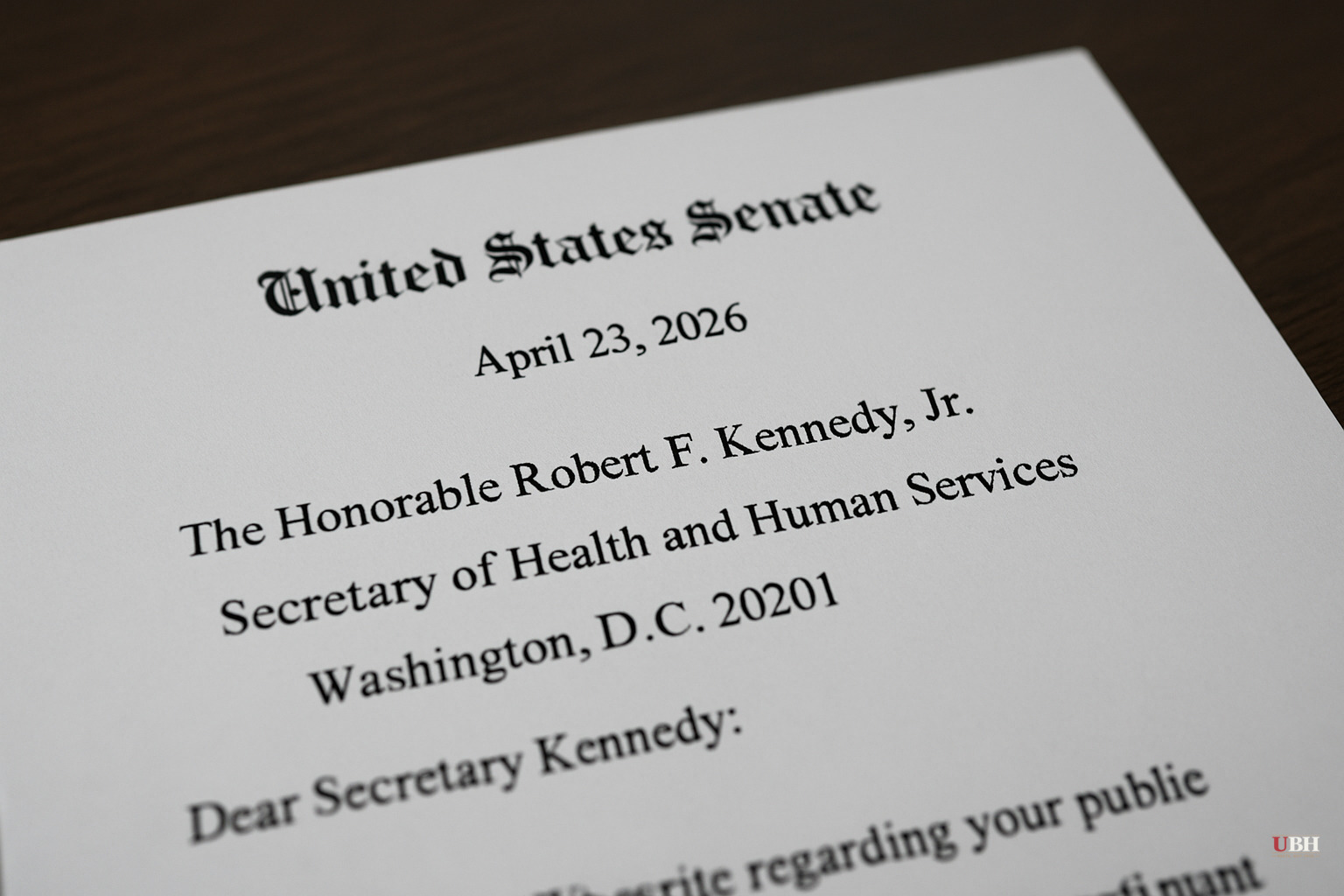
Then came April 22, 2026. Under questioning from Sen. Maggie Hassan, D-N.H., during a Senate Finance Committee hearing, Kennedy acknowledged that President Trump and senior White House officials personally approved the firings, according to a letter published June 18, 2026 by Senate Finance Committee Ranking Member Ron Wyden, D-Ore., and Hassan.
This contradicts his earlier public framing.
What Wyden and Hassan Are Now Demanding
In their June 18 letter to Kennedy, Wyden and Hassan wrote: "Your testimony tells a different story, one in which the most consequential gutting of America's vaccine infrastructure in decades was greenlit by political appointees at the White House, with the President's blessing."
They are pressing Kennedy to clarify exactly which White House officials were involved, what their specific roles were, and when Trump gave approval.
The senators also raised questions about the replacement ACIP members, describing several as having "built careers, and earned profits, undermining the very vaccines" the committee is supposed to evaluate.
A Timeline That Matters
The BioSpace reporting from July 29, 2025 provides key background. Six weeks after the June 2025 firings, Senate Democrats on the Health, Education, Labor and Pensions (HELP) Committee had already requested information from Kennedy by August 12, 2025, including the identities of everyone inside and outside government involved in the decision to fire the ACIP.
That investigation was a Democratic-only effort. Sen. Bill Cassidy, R-La., the HELP Committee chairman, denied Sen. Bernie Sanders' request for a bipartisan probe, according to BioSpace citing Reuters.
Cassidy is worth watching here. He was the wavering Republican vote during Kennedy's February 2025 confirmation, and he said Kennedy had promised him the ACIP advisory boards would not be touched. After the firings, Kennedy told a different story: that he had promised Cassidy could pick one member of the reformed committee. Cassidy called for the new ACIP to delay its initial meeting over concerns about the new members' experience. The meeting went ahead anyway on June 25 and 26, 2025, per BioSpace.
Lyn Redwood, the former head of Kennedy's own organization Children's Health Defense, presented at that first reconstituted ACIP meeting on thimerosal, a largely phased-out vaccine preservative that anti-vaccine advocates including Redwood have linked without scientific evidence to autism and patient harm, according to BioSpace.
The Strongest Counterargument
Kennedy's defenders have a real point worth stating plainly. The ACIP, like any federal advisory committee, operates at the pleasure of the executive branch. A cabinet secretary is legally permitted to change advisory committee membership. Kennedy argued the original members had undisclosed conflicts of interest, a charge that, if true, would be a legitimate basis for dismissal. He has not been charged with any crime in connection with these firings, and no formal investigation by the Department of Justice or any inspector general has been publicly announced. The Senate Democrats' letters, for all their force, carry no subpoena power in this context without committee chairman support.
The unanswered question is whether Kennedy's claimed conflict-of-interest rationale held up. He never enumerated the specific conflicts when he announced the firings, and Democratic senators asked him to document them in August 2025. Whether he provided satisfactory answers to that request is not established by the sources available as of June 18, 2026.
The Kratom Angle
Separate from ACIP, Protect Our Care—a left-leaning advocacy group—reported June 18, citing New York Times reporting, that Kennedy personally pressured Ohio's governor to block a state ban on kratom, a potentially addictive substance linked to thousands of deaths. A political donor who ran a kratom company had contributed to Kennedy's presidential campaign. A $1 million check then flowed into a Kennedy-linked PAC after the intervention, according to the same sourcing.
Protect Our Care's framing is openly adversarial. The group exists to oppose Republican health policy, and their newsletter language should be read accordingly. But the underlying NYT reporting they cite is a separate news product with its own sourcing. The kratom story, if the NYT reporting holds, describes a straightforward question: Did Kennedy act in a donor's financial interest? No charges have been filed. No federal investigation has been announced as of the sources reviewed here.
Where This Stands
The Senate Finance Committee letter from Wyden and Hassan creates a formal record of Kennedy's April 2026 testimony. What happens next depends almost entirely on whether Senate Republicans allow any committee with subpoena power to compel Kennedy to answer, which based on Cassidy's 2025 refusal of a bipartisan HELP Committee probe remains the open and unresolved question hanging over this story.
Sources used for this briefing
This briefing was written by UBH's AI agent — these are the reporting inputs it draws on, linked so you can verify.


