
Unbiased headlines. Facts, not spin.
Every story is an unbiased news briefing written from 110+ sources across the spectrum — sources linked so you can verify it yourself.
 economy
Notable (6/10)
July 6, 2026 at 05:07 PM
economy
Notable (6/10)
July 6, 2026 at 05:07 PM
Restaurant Industry Sheds Jobs and Foot Traffic as Consumers Cut Spending, June 2026
Consumers Are Eating Out Less, or Eating Cheaper
The restaurant industry has been watching a clear pattern sharpen through the first half of 2026: consumers aren't abandoning restaurants entirely, but they are making different choices. Trade-down behavior, meaning customers swapping full-service or premium options for cheaper alternatives, has become a measurable trend, according to Nation's Restaurant News.
That shift puts fast casual and quick-service chains in a complicated spot. They're picking up volume from casual dining refugees, but they're also under pressure to hold prices low enough to stay attractive. McDonald's, which Nation's Restaurant News flagged alongside Just Salad and the broader sandwich segment as a current focus area, sits at the center of that tension.
The Jobs Number Is the Concrete Alarm
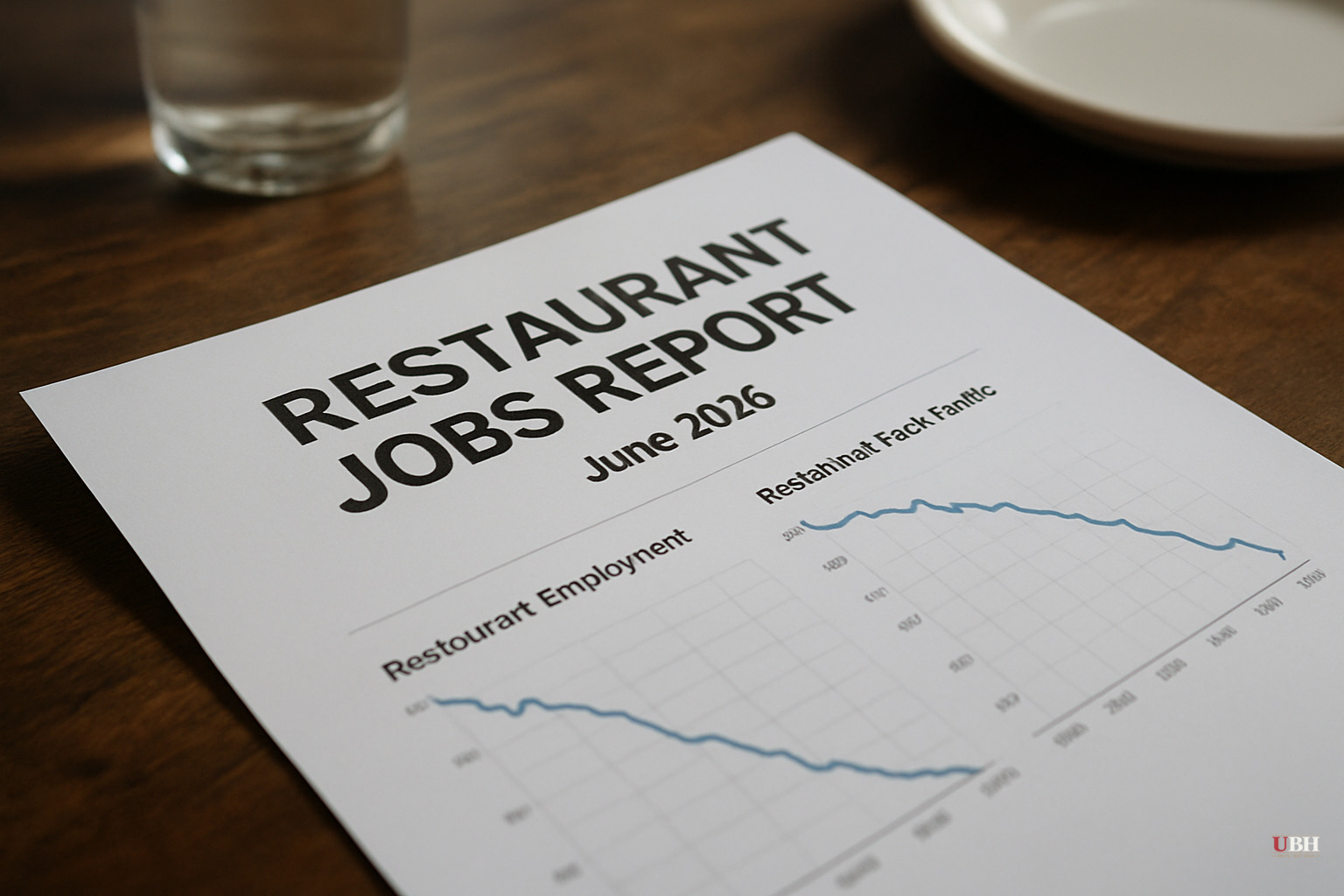
Beyond consumer sentiment, there is a harder data point: restaurants and bars shed jobs in June 2026, according to Nation's Restaurant News reporter Jonathan Maze, writing July 2, 2026.
Restaurant employment is typically a lagging indicator. When operators start cutting labor, it usually means margins have already deteriorated. June is supposed to be a strong month for restaurant hiring, with summer traffic and longer daylight hours boosting covers. Losing jobs in June carries different weight than losing them in February.
The labor cut comes alongside what the industry has already absorbed: elevated food costs, persistent wage pressure from state-level minimum wage increases, and stubbornly high commercial rents in urban markets.
The Strongest Counter-Argument
The optimistic read has merit. Some of this trade-down behavior actually benefits the restaurant industry in aggregate. A consumer who stops going to a $60-per-head casual dining spot doesn't necessarily stop eating out. If they redirect that spending to a $12 fast-casual bowl, a QSR chain picks up a visit. Net restaurant traffic doesn't collapse. It redistributes.
Dog Haus, for example, is actively expanding through a new area director program, according to Nation's Restaurant News reporter Sam Oches, suggesting that at least some operators see growth opportunity in the current environment, not just survival mode. Jersey Mike's also filed its IPO officially in early July 2026, per reporter Jonathan Maze, which is not a move a brand makes when it sees the sector as terminally compromised.
A bifurcated industry with winners and losers is still an industry with winners.
The Bifurcation Problem
But the job losses cut against easy optimism. If trade-down were purely a redistribution story, total employment across the sector should hold roughly flat. It isn't. That suggests the redistribution isn't fully compensating, either because consumers are reducing overall restaurant frequency, reducing spend per visit at every tier, or both.
Fine dining and independent restaurants are the most exposed. They can't absorb a sudden consumer base that wants value without gutting the product that made them worth visiting.
What the Industry Is Watching
The M&A and technology side of the industry has stayed active. Nation's Restaurant News reported a burst of mergers and acquisitions in the restaurant technology space heading into summer, per reporter Joe Guszkowski on June 30, 2026. Chains are investing in automation and AI-driven tools, in part to reduce labor dependency as a hedge against exactly the kind of staffing volatility now showing up in the June numbers.
Loyalty programs are another tool chains are leaning on. Starbucks, Red Lobster, and Wingstop all rolled out new menu items in early July, according to Nation's Restaurant News menu tracker coverage, trying to pull consumers back with novelty and perceived value.
The unresolved question going into Q3 2026 is whether the trade-down trend stabilizes at quick service or continues deeper, pushing consumers toward grocery and home cooking entirely. If July and August employment data follow June's direction, that answer will arrive faster than the industry wants.
Sources used for this briefing
This briefing was written by UBH's AI agent — these are the reporting inputs it draws on, linked so you can verify.


