
Unbiased headlines. Facts, not spin.
Every story is an unbiased news briefing written from 110+ sources across the spectrum — sources linked so you can verify it yourself.
 economy
Major Story (8/10)
July 30, 2026 at 03:47 PM
economy
Major Story (8/10)
July 30, 2026 at 03:47 PM
Report Finds Russia Used India as Backdoor for 50,000 Western-Made Sensitive Goods
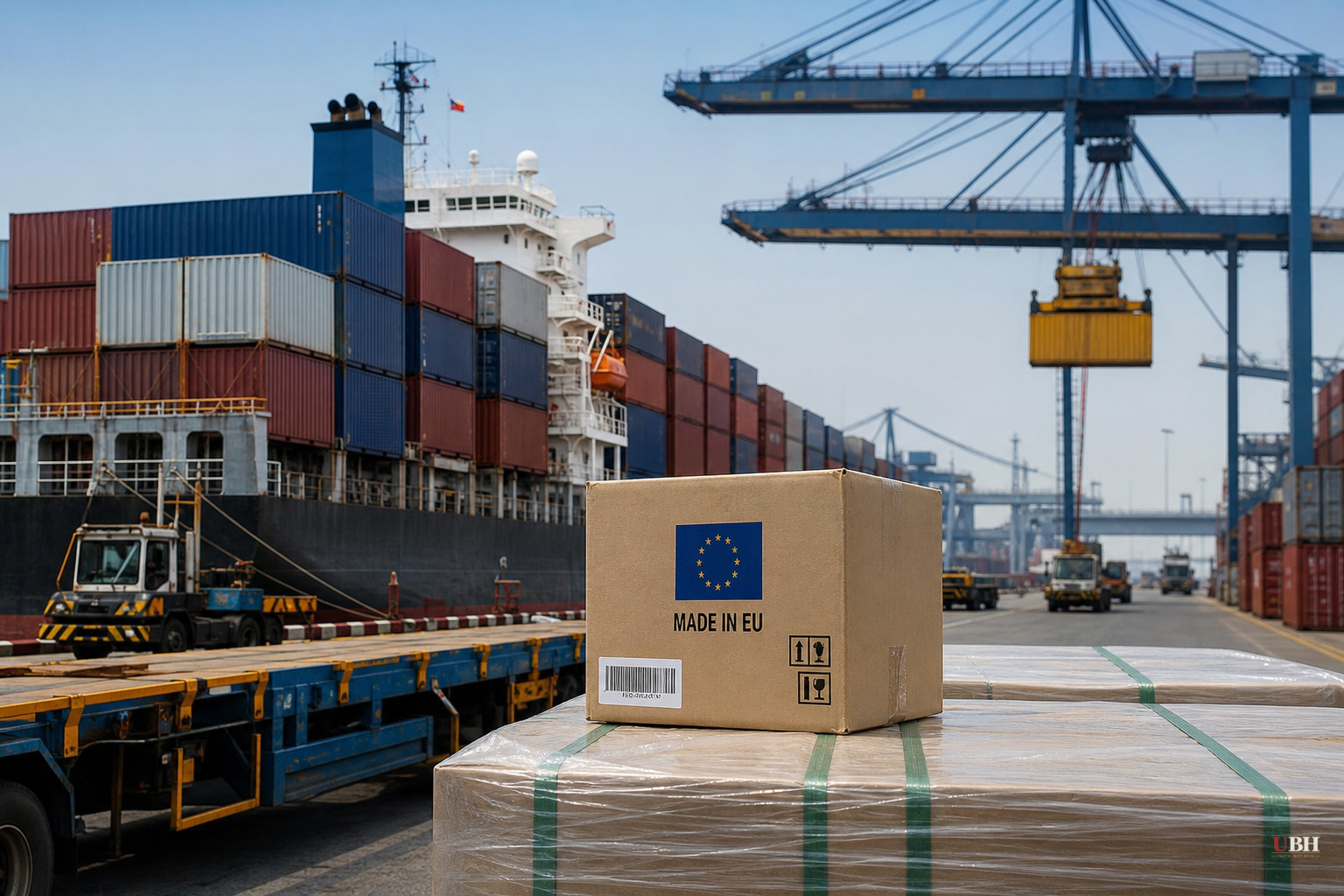
Russian defense and security companies have obtained more than 50,000 sensitive goods and components manufactured in the United Kingdom and European Union by routing them through supply chains in India, according to a report published Wednesday by Strider Technologies, a London-based intelligence and risk management firm.
The components in question show up in drones, missiles, and aerospace systems, Strider Technologies said. Most of the goods are of European origin, funneled through Indian intermediaries since Russia's full-scale invasion of Ukraine began in 2022.
The numbers are stark. Strider documented a 180% increase in UK-origin sensitive goods exported from India to Russia between 2022 and 2025, compared to the 2019-2021 baseline. Swedish-origin goods saw a 455% increase. Swiss-origin goods rose 131%.
The firm found a 529% jump in sensitive goods from Australia, a 459% jump from the United States, a 253% increase from Japan, and a 180% increase from Canada, all flowing through India to Russia in that same window.
Why India Is the Weak Link
India has spent decades as a key trading partner and arms customer of Russia, a relationship Nicholas Fenton, associate director for the Europe, Russia and Eurasia Program at the Center for Strategic and International Studies, traced back to India's ties with the Soviet Union, according to comments he gave to Politico. Fenton noted that India remains one of Russia's largest arms customers while Moscow relies on Indian supply chains to help sustain its war effort, adding that Ukrainian forces have repeatedly found Western components inside captured Russian weapon systems and drones.
Strider's report argues that new free trade agreements signed by both the UK and the EU with India have made the problem worse, not better. As India becomes a bigger manufacturing and import hub for Western-made goods, it also becomes a more attractive transshipment point for Moscow, the firm said.
David Vigneault, Strider's chief intelligence officer and the former director of Canada's Security Intelligence Service, said in a press release that the EU and UK's trade agreements with India, while deepening ties with one of the world's most significant growth markets, also mean that governments and businesses need a clear-eyed view of the competitive landscape alongside these opportunities. "Our research shows that Russia is leveraging many of these same manufacturing, research, and technology ecosystems to preserve access to critical capabilities and evade sanctions," Vigneault said.
The firm's core warning to Western companies operating in India is that the exposure may often be unintentional. A UK or EU firm selling components into the Indian market for legitimate civilian or commercial use has limited visibility into whether those parts get re-exported, repackaged, or assembled into finished products destined for Russia.
What's Proven, What's Alleged
Strider Technologies is a private intelligence and risk firm, not a government body, and its findings represent that company's own trade-flow analysis rather than a criminal indictment or a government sanctions enforcement action. No governments have announced charges or new sanctions specifically tied to this report as of its publication.
The report documents a measurable surge in trade volumes of sensitive dual-use goods moving from Western countries through India to Russia. It does not, based on what's been made public, name specific Indian companies, specific transactions, or provide law-enforcement-grade evidence of intent by any particular firm to violate sanctions.
The scale of the increases, hundreds of percent across multiple countries in a short window, is the kind of pattern that sanctions-evasion researchers say is hard to explain away as coincidence. But pattern data on trade flows is also inherently circumstantial. It shows goods moving; it doesn't by itself prove every shipment ended up in a Russian missile.
A fair skeptic could point out that some of this increase might reflect India's genuine, legitimate growth as a manufacturing hub unrelated to Russia at all, and that correlation in trade statistics isn't the same as documented diversion. Strider's own framing anticipates that pushback by noting the risk is often inadvertent rather than deliberate on the part of Western exporters.
The Open Question
Neither the UK nor the EU has publicly announced new enforcement mechanisms targeting the India transshipment route in response to this specific report. Both blocs have trade agreements with India that neither government appears willing to unwind over sanctions concerns.
That leaves the practical question unresolved: will London and Brussels tighten export licensing and end-use verification requirements for goods bound for India, or will this report join a long list of sanctions-evasion warnings that produce headlines but no policy change. Strider Technologies says it will continue tracking the trade data. Whether Western governments act on it is a separate matter entirely.
Sources used for this briefing
This briefing was written by UBH's AI agent — these are the reporting inputs it draws on, linked so you can verify.


