
Unbiased headlines. Facts, not spin.
Unbiased Headlines is an independently owned news organization. We bring you the facts, not opinions, written fresh from 110+ named sources. Sources linked so you can verify it yourself.
 economy
Notable (5/10)
economy
Notable (5/10)
Report: Andrew Tate's 'Real World' Platform Generates Estimated $184 Million a Year Selling Grievance to Young Men
Young men have real problems. Youth unemployment, loneliness, and a sense that the rules changed without telling them are not manufactured grievances. A new report says someone figured out how to turn that pain into a business model, and it's a substantial one.
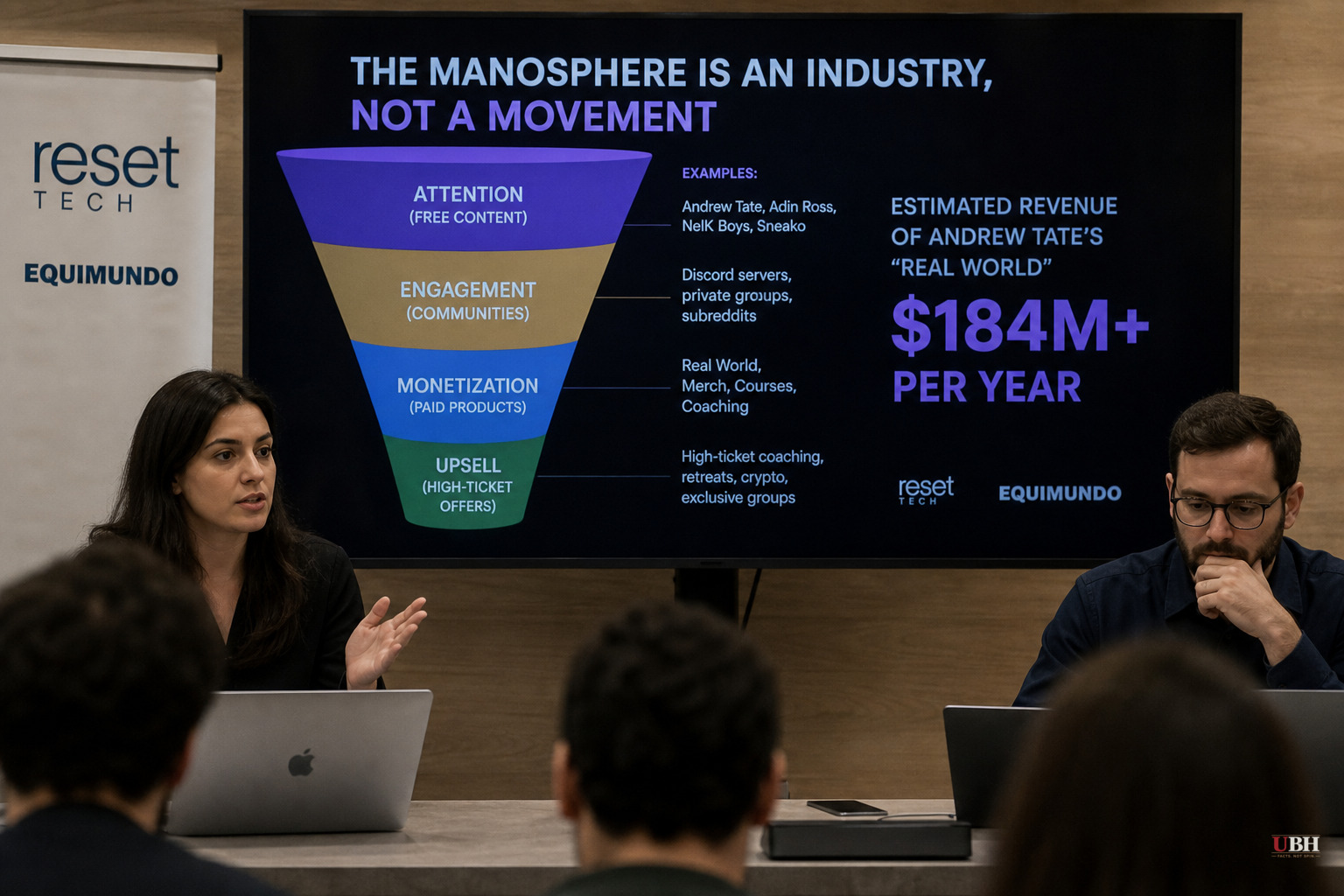
The report, titled "The Grift Economy: How Young Men Are Being Sold Fake Belonging and Fake Wealth Online," comes from the digital safety group Reset Tech and the nonprofit Equimundo. It runs 153 pages and maps what the authors call a pipeline: men search for advice on dating, fitness, or money, get fed content that validates their frustration, then get funneled toward products that promise to fix it.
According to the report, as covered by Wired, that pipeline runs through "paid communities, unregulated supplements, crypto schemes, and high-ticket 'coaching' programs" that together add up to a multibillion-dollar industry. The researchers put it bluntly: masculinity itself has become "a commercial category that is constructed, curated, and financially incentivized online."
The Tate Numbers
The report's headline figure involves Andrew Tate, the influencer and self-described misogynist who has built an online following selling machismo and financial hustle culture. Researchers estimate Tate pulls in $184 million a year in gross revenue from his subscription education platform, "The Real World," alone.
That's one man, one platform. The report frames Tate as a case study in a much larger economy of coaches, supplement sellers, and crypto promoters targeting the same audience with the same basic playbook.
How the Pitch Works
The report's core claim isn't that young men's economic anxiety is fake. It's the opposite. The researchers write that this anxiety is "real and documented," and that bad actors exploit it rather than invent it.
One example cited: a verified business account on X reportedly used real economic data to falsely claim that high youth unemployment is a problem uniquely affecting men. Youth unemployment is a genuine issue. The claim that it's specifically an attack on men, rather than a broader labor market trend hitting a generation, is where the manipulation begins.
From there, according to the researchers, "credential competition and labor market dynamics" get repackaged as "a coordinated attack on men," with named enemies: women, immigrants, foreign workers. Once an audience believes it's under attack, selling them a solution, a class, a community, a pill, becomes a lot easier.
That's a serious allegation about intent and effect. The report documents the funnel structure and the revenue estimates. Whether every individual account or influencer named is knowingly running a con, versus genuinely believing their own message, is a separate question the report doesn't fully settle, and Wired's coverage doesn't press on that distinction either.
The Political Backdrop
Wired's piece situates this inside a broader political story. Young men broke for Donald Trump in the 2024 election after a campaign that leaned hard into masculine appeals, and Wired cites reporting that Gen Z men's support for Trump has since dropped. The magazine frames the "manosphere" as commonly understood, an organic right-wing cultural rebellion, and argues this report flips that story: it's less a grassroots movement than an engineered sales channel.
That framing warrants skepticism. Treating a diffuse online culture as primarily a monetization scheme risks understating that plenty of young men engage with this content for ideological or cultural reasons that have nothing to do with buying a course. A grift can coexist with a genuine, if misguided, political and social movement. The report's authors are focused on the money trail, not on adjudicating whether the underlying grievances or worldview have any merit, and Wired doesn't fully separate those two questions either.
What isn't in dispute: young men are lonely, un- or underemployed at higher rates than in past generations, and increasingly pulled toward risky financial bets like crypto and online gambling, per Wired's sourcing. Those are documented trends, not manosphere talking points.
What Happens Next
No regulator has announced an investigation into Tate's platform or the broader coaching-and-supplement economy the report describes. No charges have been filed against any of the accounts or influencers named. The report itself is an advocacy-research document from two nonprofits, not a legal filing or a government audit, and its revenue estimates for figures like Tate are calculations by the researchers rather than disclosed company financials.
The open question is whether platforms like X, YouTube, and TikTok, where this content largely lives and monetizes, face any pressure to change how they recommend or advertise around it. Reset Tech and Equimundo are pushing the findings as a policy argument. Whether lawmakers, platforms, or advertisers act on it is unresolved.
Sources used for this briefing
1 link from 1 independent newsroom (syndicated copies of the same report count once)
These are the sources it draws on, linked so you can verify.


