
Unbiased headlines. Facts, not spin.
Unbiased Headlines is an independently owned news organization. We bring you the facts, not opinions, written fresh from 110+ named sources. Sources linked so you can verify it yourself.
 tech
Notable (5/10)
Event date: October 16, 2026 ·
Rep. Ritchie Torres Announces Bill to Give Digital Game Buyers Ownership Instead of Licenses
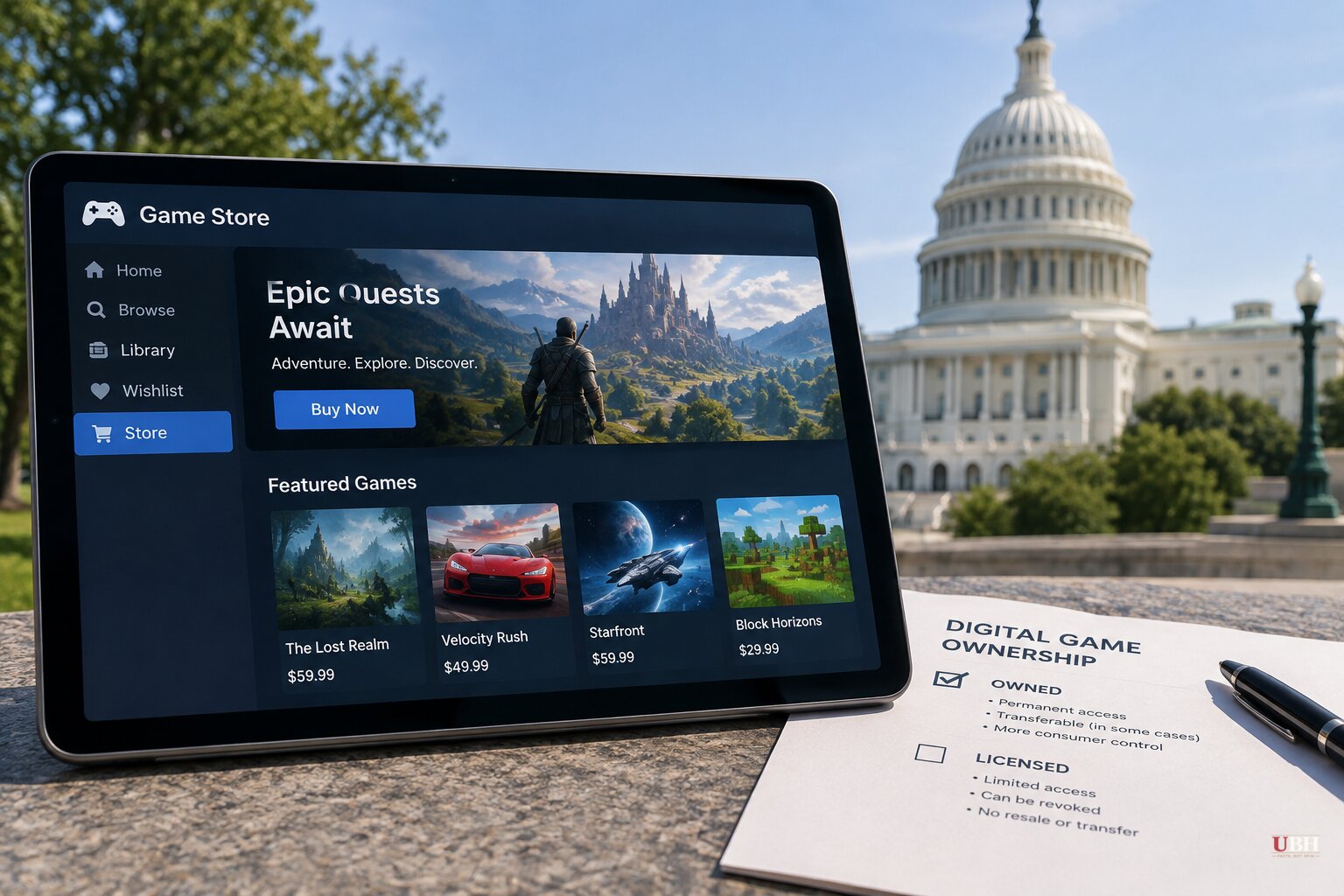
Rep. Ritchie Torres, a New York Democrat who has represented the Bronx's 15th District since 2021, announced on Oct. 15 that he will introduce the Power to the Players Act. The bill would direct the Federal Trade Commission to write regulations so that paying for a digital game gives the buyer ownership, not a revocable license.
Torres put the idea in one line to Kotaku: "I think there should be a simple rule: if you pay for it, you own it."
He has not announced cosponsors, and he has not said whether any Republicans will sign on.
What the bill would do
Torres lays out three rights: the right to own, the right to play and the right to transfer the games people buy. In his statement he called a game that can be pulled whenever a company chooses "a rental disguised as a sale."
The bill has two main pieces:
- Ownership rules. The FTC would write regulations converting digital game purchases from licenses into ownership rights.
- Offline modes. Games with online features would have to offer a working offline mode before their servers are retired.
The bill leaves the details to the FTC. It does not spell out in statute what "ownership" means for a download, or how an offline mode must work for a game built around live servers.
Torres told Kotaku the change would be a "restoration to the historical norm" from before games were sold mainly as downloads. He also suggested the principle could be extended to digitally purchased books, movies and music.
NBA 2K25 is the test case
Torres's announcement cites NBA 2K25. The game came out in 2024, sold for $69.99 at the standard tier and $99.99 for the All-Star Edition, and was the fifth-best-selling game in the U.S. that year.
2K has confirmed it will delist the game from digital storefronts on Oct. 30. Its online servers are scheduled to shut down at the end of the year, with Dec. 31 the date cited in most accounts. That takes MyCAREER, MyTEAM, multiplayer, online leagues and the virtual-currency economy offline.
Players who spent real money on virtual currency inside the game will lose access to it. The game was on sale for roughly two years before the plug gets pulled.
The licensing fine print
The legal basis for all of this is the end-user license agreement. Standard EULAs say the buyer is purchasing a license to use the software, not the software itself, and that the publisher can terminate it.
That language also covers boxed games. Many disc-based titles need online servers to run, and the license terms are the same whether the files arrive by download or on plastic.
The broader backdrop is a shift away from physical media. Sony has said it will stop producing discs for its next console generation starting in 2028. Sony's latest earnings report put digital downloads at 82 percent of full-game unit sales across PlayStation 4 and PlayStation 5 for the covered fiscal year.
Grand Theft Auto 6 arrives in November as a download code in a box, starting at $80. That means no disc and no used copies.
The Stop Killing Games campaign has pushed for rules preventing publishers from selling games that become unplayable when support ends. Torres's bill lines up with that goal.
Hurdles before it becomes law
The bill still has to be formally introduced, and it then faces the committee process. A California bill with similar protections died at the state level in June.
The FTC route is also shakier than it once was. In 2024 the Supreme Court overturned Chevron deference, the doctrine that had courts defer to agencies on ambiguous statutes. Engadget noted that the FTC's rule banning noncompete clauses was blocked after a single judge ruled the commission lacked authority to set it. A rule redefining what a video game sale means could face the same challenge.
That is a live problem for the bill's design. A statute that hands the FTC broad rulemaking power and leaves the definitions to the agency invites exactly the kind of litigation that sank the noncompete rule. Congress writing the ownership and offline-mode terms into the bill itself would be the more durable path.
Torres has not said how he would handle that. Engadget has asked him for a draft of the bill and for comment on the court risk.
Publishers and platform holders have not weighed in on the proposal in any of the material tied to the announcement. Their standing position is written into the license agreements: players buy access, not property.
What comes next
The first date that matters is Oct. 30, when NBA 2K25 disappears from storefronts. The second is the end of the year, when its servers go dark.
Whether the Power to the Players Act can get a hearing before then, or find a Republican cosponsor, is the open question. Torres has not said when he will file.
Sources used for this briefing
7 links from 7 independent newsrooms (syndicated copies of the same report count once)
These are the sources it draws on, linked so you can verify.


