
Unbiased headlines. Facts, not spin.
Unbiased Headlines is an independently owned news organization. We bring you the facts, not opinions, written fresh from 110+ named sources. Sources linked so you can verify it yourself.
 tech
Notable (6/10)
Event date: October 16, 2026 ·
Alibaba to Build Qwen Work AI Into Taobao and Tmall Merchant Operations Starting in 2027
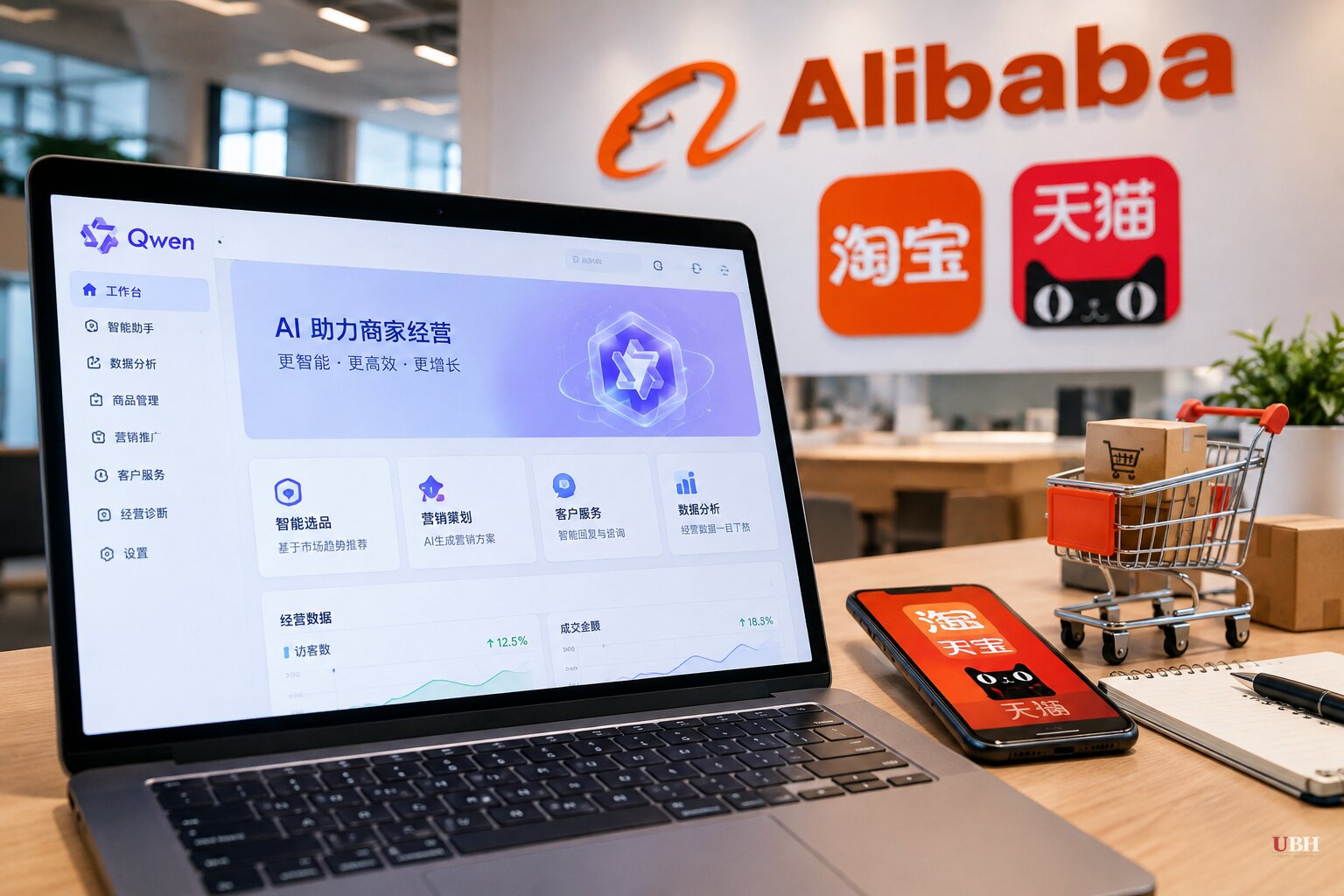
Alibaba plans to push AI into the day-to-day operations of the merchants who sell on Taobao and Tmall. The company's executives say the work starts in 2027.
"Starting next year, AI will comprehensively enter the internal enterprise workflows of merchants," Liu Bo, president of Tmall, told reporters at Alibaba's Singles' Day media briefing on Thursday, Oct. 15.
The lead product is Qwen Work, Alibaba's enterprise AI assistant. An e-commerce edition, built for merchants who sell across several platforms, went into testing on Oct. 14, according to Liu.
What Alibaba says it is building
Liu said the past year's rollout of AI on Taobao and Tmall "exceeded expectations." Merchants already use platform-level AI tools for product launches, advertising and customer service, he said.
The company first deployed generative AI at large scale across both platforms during Singles' Day 2025, folding large language models into core search and recommendation. A Qwen-powered shopping assistant for consumers launched in May. It compares products, virtually tries on clothes and picks promotional discounts.
Liu set a specific target on the consumer side. Young, active shoppers buy from an average of 15 product categories a year. Alibaba wants that at 25 to 30, with AI matching shoppers to a wider range of goods than traditional algorithms could.
Alibaba is also adding "AI tokens" as a product category on its marketplaces. It is packaging computing power from Chinese model developers, including Z.ai and MiniMax, into bundles for students, researchers and small teams. Tmall is working with Intel and Advanced Micro Devices to sell PCs with Qwen models pre-installed.
The competitive backdrop is plain. Alibaba is pushing AI to drive growth in a weak consumer market while rivals JD.com and PDD Holdings fight for the same shoppers.
The Singles' Day stakes
Presales opened Oct. 15. Official sales are set to begin Tuesday, Oct. 20. Alibaba expects a record 1 million global brands, with more than 70 million products listed.
That makes this year's festival the first big test of the AI-heavy approach. Alibaba launched Singles' Day in 2009 and is using this year's event to show AI can lift sales.
The data question for foreign sellers
Tech Times argues the 2027 plan carries a legal risk that no privacy policy can fix. Its analysis points to China's National Intelligence Law, which it says requires Alibaba to cooperate with state intelligence requests. Inventory levels, ad strategy, customer interactions and pricing would all run through Qwen Work, the outlet writes, and so would sit with an operator bound by that law.
Tech Times also describes the rollout as effectively mandatory. It says opting out of Qwen Work would mean, in practice, opting out of China's largest e-commerce ecosystem.
That is the outlet's reading, not Alibaba's. In the remarks reported from the briefing, Liu did not say merchants would be required to use Qwen Work. He also did not address who could access merchant data inside the system. The company's stated position is that merchants are already adopting the tools and that results beat expectations.
The concern is still concrete for any international brand selling through Tmall, because the planned scope covers pricing, advertising and customer service. Those are core competitive data.
Beijing's own rules for AI agents
The rollout lands as Chinese regulators set their own terms for AI agents. On Sept. 18, the National Cybersecurity Standardization Technical Committee issued draft Security Guidelines for Intelligent Agent System Development. Public consultation closed Oct. 2.
The draft covers security across design, implementation, testing and release. It addresses risks tied to autonomous actions, tool use, system access and data security. Reed Smith partner Barbara Li, writing for the International Association of Privacy Professionals, notes the guidelines are not mandatory legislation. She says they point companies toward limiting an agent's permissions, supervising high-risk actions and keeping records of its activity.
On Oct. 9, the Communist Party leadership and State Council published broader guidelines on "new quality productive forces." The 19-measure document calls for full implementation of the "AI Plus" initiative and wider AI adoption in traditional industries. It also demands technology monitoring, risk-warning and emergency-response systems to keep AI "safe, reliable and controllable."
Voice of America's analysis says the document sets a policy direction but does not itself create a detailed regulatory system. Agencies still have to write the standards, enforcement mechanisms and corporate responsibilities. The same analysis notes that Beijing's definition of AI safety extends beyond technical threats to controlling politically sensitive information.
The final text of the agent security guidelines is the next concrete marker. It will show how much control Chinese regulators expect platforms like Alibaba to exercise over what agents like Qwen Work can touch inside merchants' businesses.
Sources used for this briefing
6 links from 6 independent newsrooms (syndicated copies of the same report count once)
These are the sources it draws on, linked so you can verify.


