
Unbiased headlines. Facts, not spin.
Unbiased Headlines is an independently owned news organization. We bring you the facts, not opinions, written fresh from 110+ named sources. Sources linked so you can verify it yourself.
 tech
Major Story (7/10)
FT Counts 47 Large U.S. Data Center Projects Delayed, Withdrawn or Blocked in 2026; Bernstein Rates 35% of Pipeline Credible
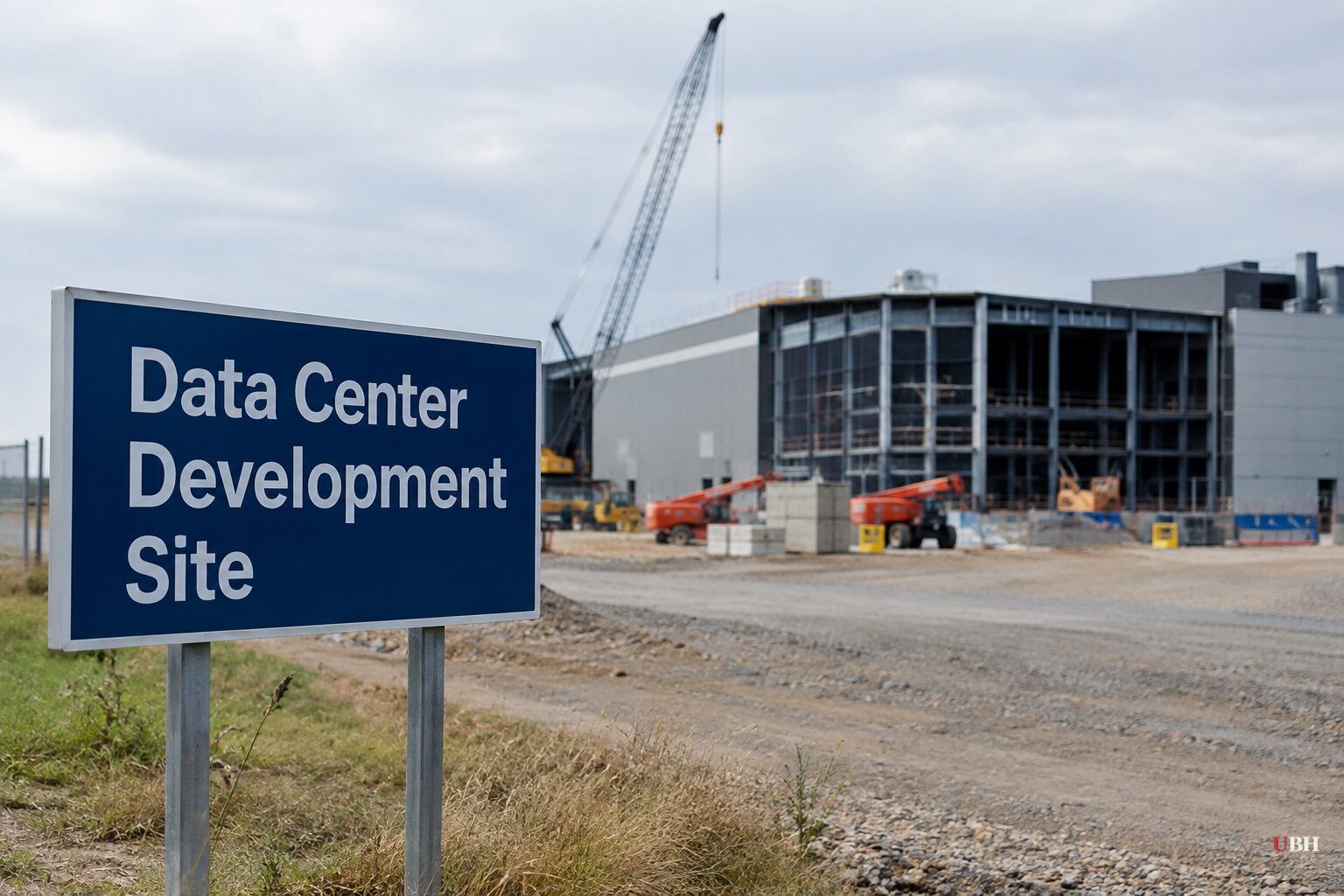
Since utilities began demanding collateral and longer contracts from speculative data center applicants, the financial side of the AI build-out has come under harder scrutiny. A Financial Times investigation published Oct. 18 now puts numbers on the wreckage.
At least 47 large U.S. data center projects were delayed, withdrawn or blocked in 2026, according to data from RegLayer, a regulatory intelligence firm. RegLayer calls that a conservative count because it covers only the biggest sites.
Bernstein analysts estimated this month that only about 35% of the planned U.S. pipeline is credible. They cite grid-connection timelines, transformer shortages and liquid-cooling bottlenecks.
Local opposition is spreading
The FT's own research found more than 1,000 U.S. communities have sought moratoriums or other restrictions on AI infrastructure in 2026. The complaints center on power, water and tax breaks.
A separate tracker, Data Center Watch, a project of research firm 10a Labs, recorded at least 75 projects disrupted by local opposition in the first quarter. Its second-quarter report counted 45 projects worth nearly $68 billion blocked or delayed between April and June.
Those counts cannot be added together. The second-quarter report noted continuing opposition to projects already disrupted earlier, so 75 plus 45 does not equal 120 failed developments. Data Center Watch also separates projects blocked outright from those merely delayed, which can stay active.
The trackers measure different things. RegLayer counts major developments. Data Center Watch counts projects hit by community opposition.
Credit markets are reacting
Debt tied to AI infrastructure companies sold off sharply this week, the FT reported. One CoreWeave unsecured bond slid into distressed territory, and CoreWeave shares lost almost 25% of their value over the week.
Bonds funding sites leased to CoreWeave also weakened. A Virginia deal has dropped around 5% since it priced three weeks ago.
People involved in the market told the FT that higher interest rates and a weaker debt market could make it harder for neocloud companies to raise construction money. The FT also reported that higher rates and rising inflation have sharpened questions over whether revenue at labs such as OpenAI and Anthropic can cover the costs.
Listings are stalling too. SoftBank-backed SB Energy, which has yet to complete a data center, has shelved a planned $50 billion listing, the FT reported. The company has capital needs of around $175 billion to fulfill roughly $430 billion in contracted future revenue. Nvidia-backed Firmus has also delayed its plans to go public.
How big is the exposure?
The headline figure is about $10 trillion. That is a forecast, not money spent. Columbia Business School professor Stijn Van Nieuwerburgh estimated that building 188 gigawatts of additional U.S. AI infrastructure by 2032 could take nearly $9 trillion, and other accounts of his work put the cumulative figure above $10 trillion.
He has warned that the scale of borrowing and the complexity of financing structures could create financial risk if expected demand and revenue fail to materialize. A warning about risk is not a forecast of collapse.
A delayed or canceled project also does not mean the full dollar value was lost. Before construction, developers risk land options, engineering, legal work and permits. If a project fails after financing closes, lenders and equity investors face larger exposure. Many large campuses are financed through special-purpose vehicles that borrow against future lease payments, and customer contracts can carry delivery deadlines and termination rights.
Bernstein's 35% figure does not mean the other 65% has been canceled. It reflects doubt about financing, execution and delivery schedules.
The strain is also uneven. Investing Live's market analysis says the heaviest pressure falls on companies that need outside capital to build, including Oracle, SoftBank and former bitcoin miners turned AI hosts such as Cipher and TeraWulf. Cash-rich hyperscalers Microsoft, Alphabet, Meta and Amazon are far less exposed, and some of their shareholders may welcome slower capital spending, it says. The same analysis flags Nvidia and chip suppliers SK Hynix, Samsung and TSMC as second-order risks, since part of their future demand depends on customers that have not yet secured financing.
The grid is the other bottleneck
On Oct. 9, the Federal Energy Regulatory Commission approved a large-load registry proposed by PJM Interconnection, the grid operator serving much of the Mid-Atlantic and Midwest. It covers users at or above 50 megawatts and will collect expected service dates and power requirements.
FERC rejected separate provisions on service and curtailment, including a proposal that would have allowed some data centers to be temporarily disconnected during peak demand.
The registry will not settle the competing project counts. That would require comparable project identities, development stages, connection dates and planned capacity.
What to watch
Investing Live's market analysis names the signs that would turn a sector repricing into a broader problem: hyperscaler capital spending cuts or wider credit spreads. Earnings from Meta, Tesla and major chipmakers are due in the coming days.
On the policy side, the next moves by governors and legislatures in Louisiana, Oklahoma and Missouri, where moratoriums on data center construction are under consideration, will show whether local resistance hardens into state law.
Sources used for this briefing
7 links from 7 independent newsrooms (syndicated copies of the same report count once)
These are the sources it draws on, linked so you can verify.


