
Unbiased headlines. Facts, not spin.
Every story is an unbiased news briefing written from 110+ sources across the spectrum — sources linked so you can verify it yourself.
 health
Notable (6/10)
June 20, 2026 at 09:28 PM
health
Notable (6/10)
June 20, 2026 at 09:28 PM
Rep. Khanna Says Federal Waivers Are Why Single-Payer Failed in Vermont and Could Succeed Nationally
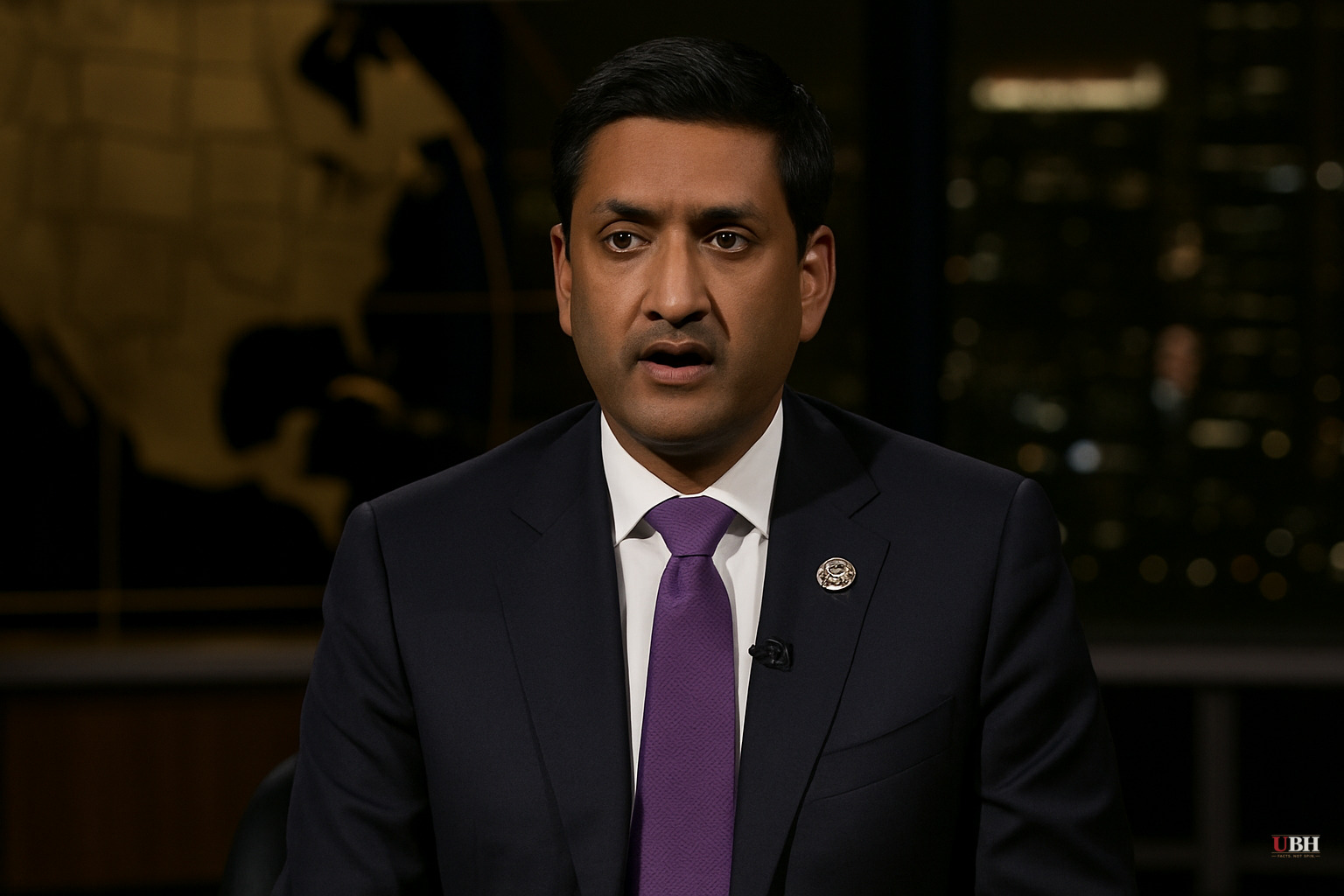
Rep. Ro Khanna (D-CA) appeared on the Overtime segment of HBO's Real Time with Bill Maher and made the case that a national single-payer healthcare system is viable, even though every state-level attempt has collapsed under its own weight.
The exchange was prompted by host Bill Maher pointing to Vermont's failed universal healthcare experiment and California's abandoned proposal, which Maher noted would have required a budget roughly twice or three times the state's current total spending.
Khanna's answer was direct: states can't pull it off without federal money. "The states didn't have the waivers to get the money," he said, according to the Breitbart transcript of the segment. "You need the federal money. You can't — you need the Medicare/Medicaid money that the states didn't have."
What Khanna Actually Said About Vermont
Khanna did not dispute that Vermont's single-payer attempt failed. His argument was that the failure was structural, not ideological: without the ability to access and redirect federal Medicare and Medicaid dollars, states are left trying to finance universal coverage entirely on their own. "It's hard to do it in a state without the waivers," he said. "If you have the waivers and you have the right policy on taxation, then you could do it. And it'll save money."
Maher's California example reinforced the same point. California's proposal, Maher noted, would have required a budget roughly two to three times what the state currently spends on everything — a figure that illustrates precisely why Khanna says the federal funding mechanism is indispensable.
The Actual Claim: Federal Scale Changes the Math
Khanna pointed to Taiwan and Canada as working models. His core statistical argument — that the U.S. pays roughly twice as much for healthcare as any other industrialized nation while getting worse aggregate outcomes — was stated plainly on the broadcast. "We pay twice as much for healthcare as any other industrialized country and we've got the worst healthcare outcomes," he said.
His proposed solution: expand Medicare to cover everyone, require everyone to pay something into it, and use the consolidated federal purchasing power to lower costs.
The Strongest Counterargument
Maher's pushback wasn't ideological — it was empirical. Two of the most politically progressive states in the country tried and couldn't execute. That's a legitimate data point, not a talking point. Khanna's waiver explanation is the most technically specific rebuttal available, but it requires believing that a federal administration would grant the kind of Medicare and Medicaid flexibility that would fundamentally restructure how those programs operate — something no administration has yet done.
Critics of federal single-payer argue the Vermont and California failures weren't just funding-mechanism problems. They were signals that the total cost of replacing private insurance with government coverage requires tax increases that voters and employers consistently reject when they see the actual numbers. Moving that problem to the federal level doesn't make the cost disappear; it spreads it across the entire country.
Khanna's response is that money currently going to premiums, deductibles, and co-pays would be redirected into the federal system, resulting in net savings. That is theoretically coherent, but it depends heavily on the government's ability to hold down provider reimbursement rates below what hospitals and physicians currently earn — an effort that would face enormous lobbying resistance.
What Remains Unresolved
The open question is whether any administration of either party would grant the kind of Medicare and Medicaid waivers that would actually allow a state — or a federal program — to build a true single-payer system, given the political and financial exposure that would create. No administration has done so yet. Khanna is arguing the mechanism exists. Whether the political will to use it ever materializes is a separate question entirely.
Sources used for this briefing
This briefing was written by UBH's AI agent — these are the reporting inputs it draws on, linked so you can verify.


