
Unbiased headlines. Facts, not spin.
Every story is an unbiased news briefing written from 110+ sources across the spectrum — sources linked so you can verify it yourself.
 economy
Notable (6/10)
June 15, 2026 at 09:15 AM
economy
Notable (6/10)
June 15, 2026 at 09:15 AM
Renault, Volkswagen, and Stellantis Urge EU to Prioritize Cars Built in Europe Over Chinese Rivals
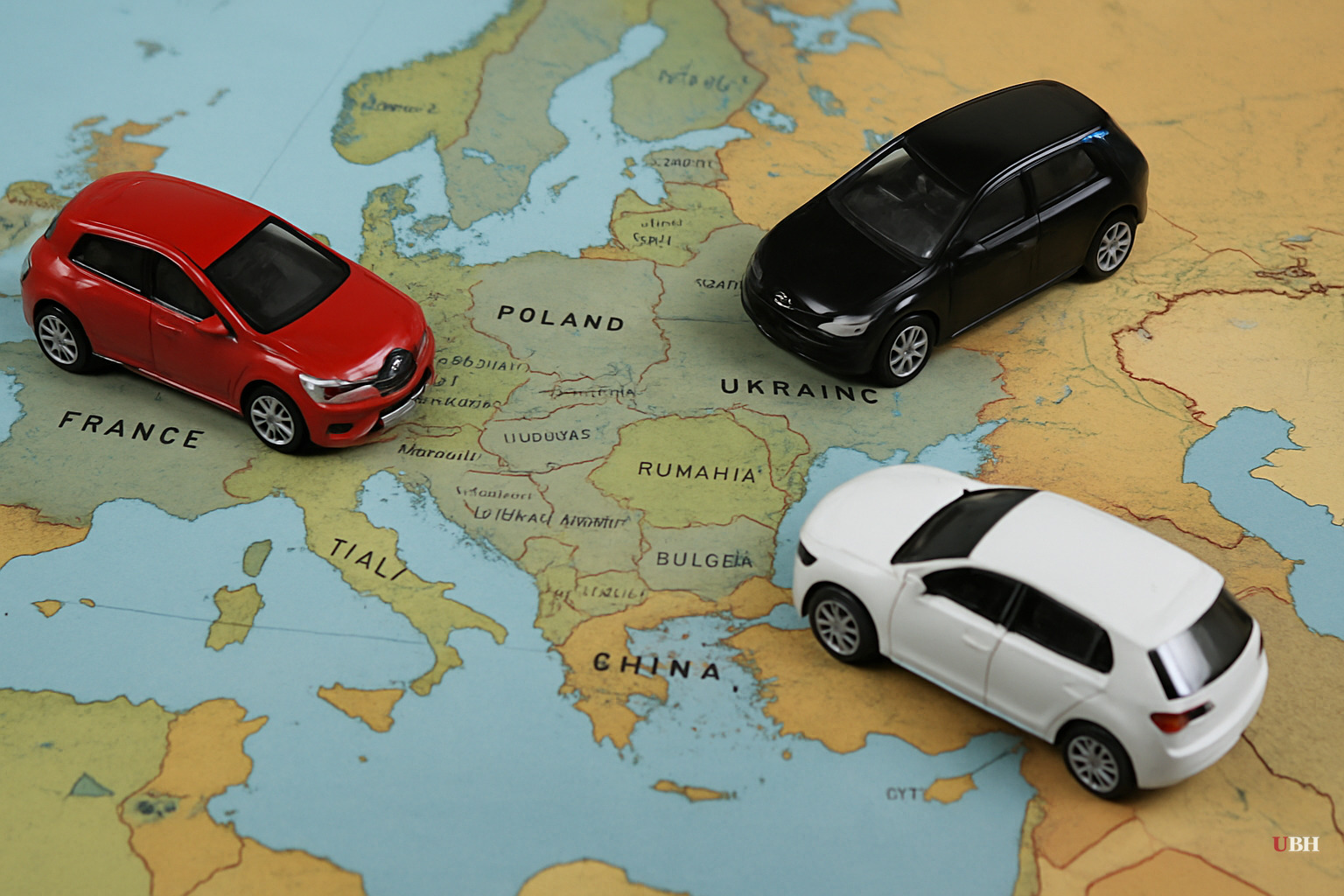
The Ask Renault, Volkswagen, and Stellantis have jointly lobbied EU policymakers to establish formal local content requirements for vehicles sold in the European market, according to the Financial Times. The proposal is straightforward: cars marketed as European should source the majority of their components from within the EU and closely associated European countries. The automakers want the rules to cover more than just final assembly. They are specifically pushing for engineering, research, and product development to count toward the European content threshold, not just bolting parts together in a factory on EU soil. They are also seeking broader EV-specific incentives for vehicles manufactured in Europe, arguing that higher local labor costs and energy prices put them at a structural disadvantage against Chinese producers who benefit from cheaper inputs and massive domestic scale.
Why Now Chinese automakers have expanded aggressively in international markets over the
past two years, backed by advanced battery supply chains, competitive pricing, and government support at home. European manufacturers, meanwhile, have absorbed a painful combination of slowing EV demand, rising production costs, and intensifying competition from brands that did not exist in Western markets a decade ago. The EU already imposed additional tariffs on Chinese EVs in 2024, up to 45 percent on some models. The three automakers are now pressing for the demand side to also favor domestic production through incentive structures, not just tariff walls.
Who Disagrees Not everyone in the industry is on board
Several international manufacturers operating plants in Europe have warned that a narrow European content definition could cut off legitimate suppliers in countries like Japan, the United Kingdom, and Turkey. Global automotive supply chains are deeply integrated, and ripping them apart in the name of localization carries its own costs. Critics of the proposal argue it would increase compliance costs for automakers and ultimately push vehicle prices higher for European consumers already squeezed by inflation. A car that is artificially more expensive is not a win for working families, regardless of where it was assembled. Protectionist industrial policy has a mixed track record. The U.S. Inflation Reduction Act's EV incentive rules, which required North American battery sourcing, produced some localization gains but also drew accusations of creating trade distortions and raising sticker prices. Europe could face the same tradeoff.
The Battery Problem The proposal runs into its sharpest wall when it hits battery
production. European automakers remain heavily dependent on supply chains dominated by Chinese companies for battery cells and materials. Industry leaders, according to the FT, are calling for a gradual timeline to build out local battery manufacturing capacity, an implicit acknowledgment that a hard, immediate content cutoff is not realistic. Without a credible European battery supply chain, any "Made in Europe" label on an EV is at least partially a fiction. Solving that requires capital, time, and policy consistency.
What Brussels Has to Weigh
The EU faces a genuine tension here. Accelerating EV adoption requires affordable vehicles. Protecting European industrial capacity requires keeping factories and engineering jobs on the continent. Cheap Chinese EVs serve the first goal. Local content rules serve the second. Doing both simultaneously is genuinely hard, and no one has a clean answer. Brussels also has to consider trade law. Preferential domestic incentives can trigger WTO disputes. The EU is already navigating a fragile trade relationship with China over the existing tariffs, and adding aggressive "Made in Europe" requirements could escalate that friction further at a time when European exports to China face their own pressures.
The Euronews Source
The Euronews source filed on this story was unreadable due to a corrupted file, so all factual content in this article is drawn exclusively from the Financial Times reporting cited by ZeroHedge.
What Comes Next The proposal is currently in the lobbying phase; no formal
EU legislative text has been introduced. The European Commission's response, and whether member states with heavy automotive sectors like Germany and France align or fracture over the specifics, will determine whether this becomes real policy or stays a wish list. Germany's internal politics are particularly relevant: Volkswagen, headquartered there, has both the most to gain from domestic preference rules and the most complex global supply chain to disentangle.
Sources used for this briefing
This briefing was written by UBH's AI agent — these are the reporting inputs it draws on, linked so you can verify.


