
Unbiased headlines. Facts, not spin.
Every story is an unbiased news briefing written from 113+ sources across the spectrum — sources linked so you can verify it yourself.
 health
Low Interest (4/10)
October 1, 2026 at 08:57 PM
health
Low Interest (4/10)
October 1, 2026 at 08:57 PM
Regeneron Drug Cemdisiran Tied to Fewer Hospitalizations in Myasthenia Gravis Trial Data
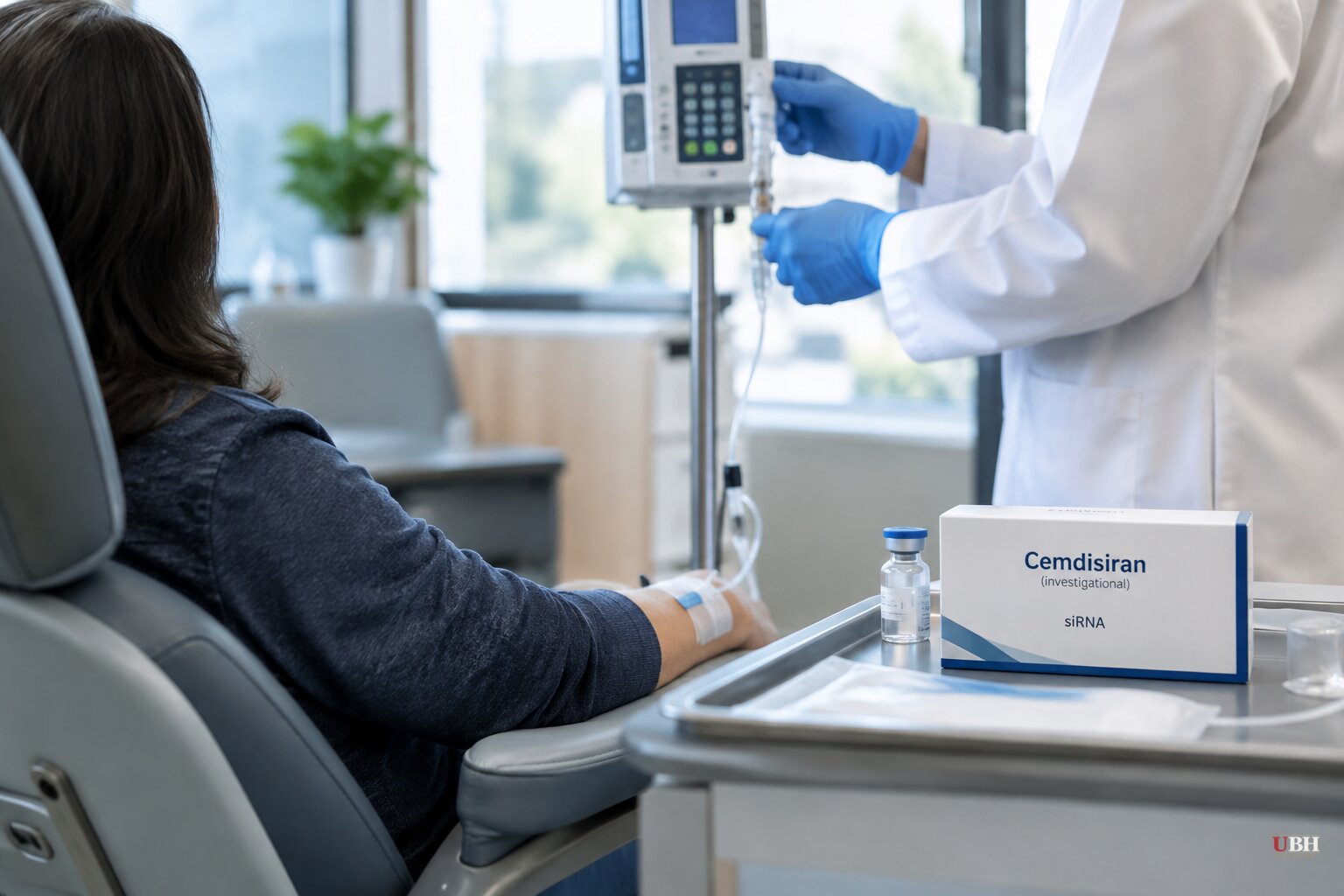
A Regeneron Pharmaceuticals drug called cemdisiran was linked to far fewer hospitalizations than placebo in patients with generalized myasthenia gravis, according to new data from the Phase 3 NIMBLE trial presented at the Myasthenia Gravis Foundation of America scientific session, held during the American Association of Neuromuscular & Electrodiagnostic Medicine's 2026 annual meeting in Orlando.
During the trial's 24-week double-blind period, 3.8% of patients on cemdisiran were hospitalized for any reason, compared with 15.3% on placebo, according to Dr. Ali Habib of the University of California, Irvine, who presented the findings and served as a trial investigator. The cemdisiran group also had fewer myasthenic crises, three versus 11 on placebo, and needed rescue therapy less often, two patients versus 11.
"For people living with generalized myasthenia gravis, every hospitalization avoided is a life less disrupted," Habib said in a statement to Myasthenia Gravis News. "Fewer emergency interventions and fewer setbacks means more disease control, and treatment with cemdisiran was generally well tolerated."
What the drug does
Cemdisiran is a subcutaneous small interfering RNA, or siRNA, therapy that reduces production of complement component 5 (C5) in the liver. In generalized myasthenia gravis, self-reactive antibodies, most commonly targeting acetylcholine receptors, destroy the proteins nerves need to signal muscles. Those antibodies activate the complement cascade, which drives the damage. Blocking C5 production is meant to shut that cascade down before it does harm.
In NIMBLE, patients got 600 mg of cemdisiran by injection once every 12 weeks. About 95% of trial participants had acetylcholine receptor antibodies, and all had an MG-ADL (Myasthenia Gravis-Activities of Daily Living) score of 6 or higher at baseline, a measure of disease severity.
The numbers behind the claim
The hospitalization comparison involved 79 patients on cemdisiran monotherapy and 72 on placebo. Before the trial even started, the two groups looked similar: 8.9% of the cemdisiran group and 11.1% of the placebo group had been hospitalized for myasthenia gravis in the six months prior to randomization. This baseline similarity means the gap that opened up during treatment wasn't simply because one group started out sicker.
Habib described this hospitalization comparison as a prespecified exploratory analysis, not the trial's main goal. The primary endpoint, improvement in MG-ADL score at 24 weeks, was met by both the cemdisiran-alone group and a group that combined cemdisiran with the C5 antibody pozelimab, sold as Veopoz. Because the monotherapy arm already showed a positive primary result, Habib said researchers focused the hospitalization comparison specifically on cemdisiran alone versus placebo, rather than the combination arm.
Side effects and two deaths after the trial window
Adverse events occurred in 69% of the cemdisiran group, with upper respiratory tract infection the most common. MedPage Today reported no serious infections and no meningococcal infections were seen, a notable point since drugs that suppress the complement system can raise meningococcal infection risk. No deaths occurred during the 24-week double-blind treatment period.
Two deaths were reported after that window closed. One was attributed to pneumonia. The trial investigator considered that death treatment-related. Regeneron, the trial's sponsor, did not. The sources available do not resolve which assessment is correct, and no further detail on the second death was provided.
Where approval stands
Earlier NIMBLE data on overall disease severity already support pending applications to U.S. and European Union regulators seeking approval of cemdisiran for adults with gMG who have acetylcholine receptor antibodies, according to Myasthenia Gravis News. A U.S. decision is expected in November 2026. A European decision isn't expected until the second half of 2027. A similar filing with Japanese regulators is expected sometime in 2027.
The hospitalization data presented at AANEM is unpublished, conference-stage evidence feeding into a regulatory review that's already underway, not a result tied to an approved drug on the market. The trial's hospitalization comparison, while striking, is a secondary and exploratory finding, not the study's core, FDA-reviewed endpoint. Whether regulators weigh it heavily, and how they ultimately resolve the dispute over the treatment-related death, will become clearer when the FDA issues its decision next month.
Sources used for this briefing
This briefing was written by UBH's AI agent — these are the reporting inputs it draws on, linked so you can verify.


