
Unbiased headlines. Facts, not spin.
Every story is an unbiased news briefing written from 110+ sources across the spectrum — sources linked so you can verify it yourself.
 economy
Major Story (7/10)
August 13, 2026 at 08:42 AM
economy
Major Story (7/10)
August 13, 2026 at 08:42 AM
Record Heat Kills 900,000 Livestock and 31 People in South Korea, Wrecks Crops Across Asia
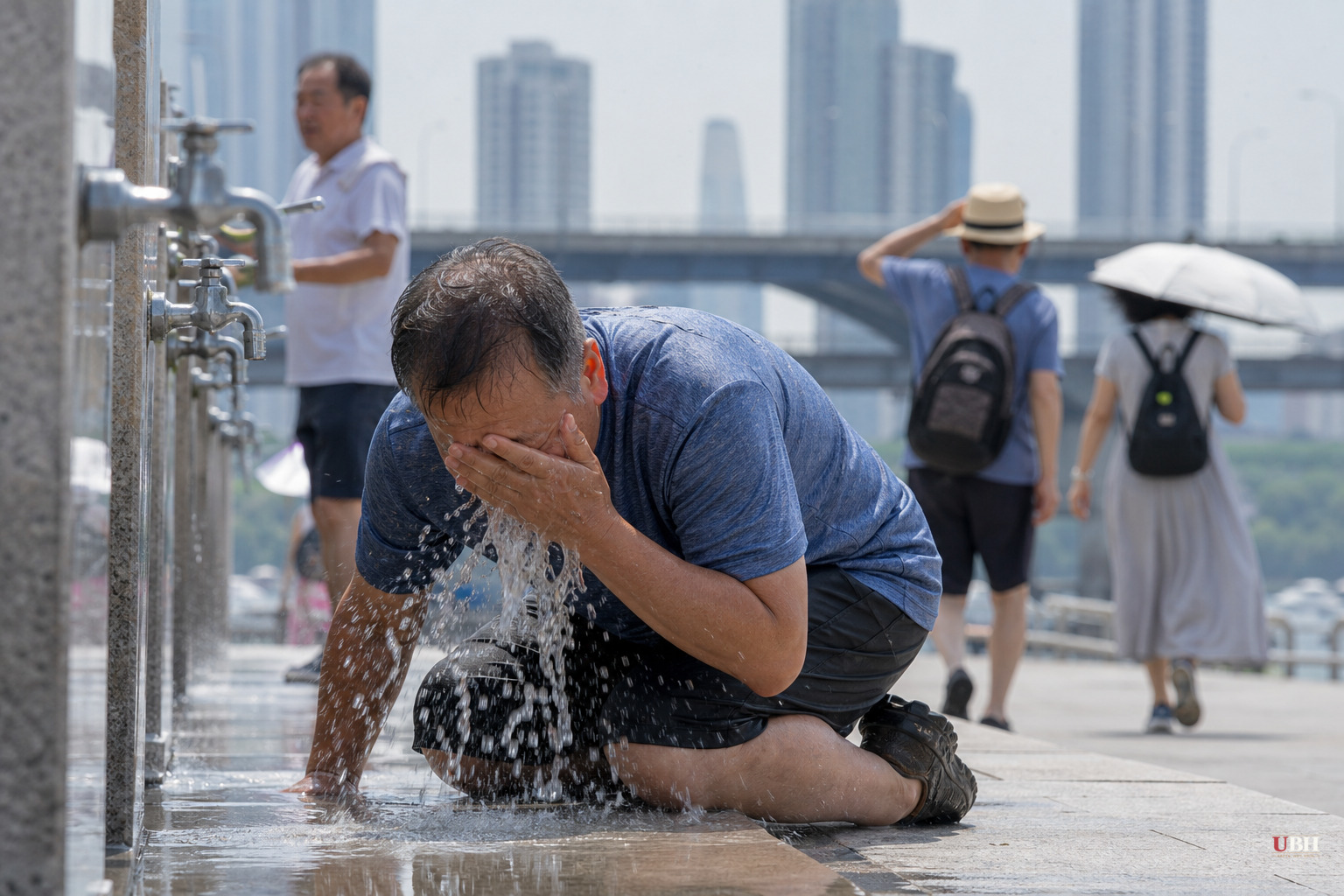
A South Korean potato farmer named Lee Sang-hyuk dug into his field in Yanggu county two weeks ago expecting a normal harvest. He found mush instead.
"It's not just one or two fields like this. How can I even put it into words? It's so upsetting," Lee told local broadcaster SBS. His potatoes had looked healthy a week earlier. Then the heat turned the soil into an oven, and the tubers came up soft and collapsing, what Lee called "boiled potatoes."
He's not alone. South Korea just had its hottest summer since modern weather records began in 1904. The southeastern city of Yangsan hit 42.5 degrees Celsius on August 2, according to South Korea's disease control agency, cited by both the Times of India and The Guardian. The heat has killed at least 31 people nationwide, and more than 900,000 livestock, mostly chickens and ducks, plus 1.4 million farmed fish, according to the same agency data reported by aaj.tv.
Prices Are Already Moving
The Korea Agro-Fisheries & Food Trade Corp reported that the retail price of 100 grams of spinach jumped 152.3 percent in the month leading up to August 7, according to the Korea Herald. Cucumbers rose 54.8 percent. Blue lettuce climbed 41.7 percent.
South Korea's agriculture ministry blamed the spikes directly on the heat wave, telling the Korea Herald that vegetables like spinach and zucchini "grow well in cool temperatures and tend to surge in prices as their supply drops in the summer season." Flounder prices at auction rose 2.29 percent week over week and 13.2 percent year over year, per data from the National Federation of Fisheries Cooperatives. One industry watcher told the Korea Herald that fish prices will likely peak in September, since ocean temperatures cool more slowly than land.
South Korea's government is responding with more chicken imports and discount promotions at fish retailers, the Korea Herald reported. President Lee Jae Myung told his cabinet the extreme weather was "unlike anything we have experienced before" and called for "a fundamental overhaul of the national crisis system," according to both The Guardian and the Times of India.
Japan and Hong Kong Also Hit Records
Japan logged its first-ever "kokushobi," or "cruelly hot day," a new category the national weather agency introduced this year for temperatures above 40C. Three lions died of suspected heatstroke at a Tokyo zoo, according to The Guardian.
Scientists at Japan's Weather Attribution Centre found the country's intense July heat would have been "virtually impossible" without human-caused global warming, estimating a heatwave of that scale would occur roughly once every 10,000 years absent that warming. Notably, the extremes hit even as an El Nino pattern was underway, one that has historically been linked to a lower chance of severe summer heat in Japan, per The Guardian's reporting.
Hong Kong posted 36.9C, its highest reading since records began in 1884, as outer bands of Typhoon Dolphin pushed hot air over the city. That exposed a real gap in the city's worker-safety system. The heat stress warning stayed at its lowest tier even as the mercury hit an all-time high. Lam Chiu Ying, former head of the Hong Kong Observatory, called the red-warning threshold "clearly set too high," asking on Facebook whether the system is "just a display." Hong Kong's Labour Department said it's reviewing the threshold with the observatory, according to aaj.tv.
A Bigger Pattern Forming
The UN's Food and Agriculture Organization reported that its cereal price index rose 3.4 percent in July versus June, with global wheat prices up 5.8 percent amid Black Sea export disruptions and heat-driven yield concerns, according to eunews.it. Global maize prices rose 3.6 percent. Sugar prices jumped 5.6 percent, which the FAO tied partly to dry conditions in the EU. The EU's Joint Research Centre separately warned that a dry spring and repeated summer heatwaves have hurt winter crop prospects across western, central, and eastern Europe.
Meanwhile, Southeast Asia is bracing for what climate scientists are informally calling a "Super El Nino." Seree Supratid, director of the Climate Change and Disaster Center at Rangsit University, told Channel News Asia that "we have never encountered a situation like this before," noting that past Super El Nino events happened on a planet roughly 1.4 to 1.5 degrees Celsius cooler than today. Ming Yi, a physical climate scientist at the National University of Singapore, cautioned that "super" isn't an official scientific classification, just shorthand for an event where ocean temperatures surge unusually high. Thai rice and sugarcane farmer Surachai Parunram, 55, told CNA he's already switching to drought-resistant livestock like boars because "we don't know where our income will come from when there's no water for farming."
Energy costs, geopolitical disruptions in the Black Sea, and ordinary supply cycles are all mixed in with the heat, as the FAO's own bulletin acknowledges. Governments across four continents are not treating the pattern of record highs in Korea, Japan, and Hong Kong, crop stress in Europe, and a looming El Nino in Southeast Asia as a one-off. The open question is whether South Korea's promised "overhaul" of its crisis response system produces anything concrete before next summer, or whether farmers like Lee Sang-hyuk are left adapting field by field on their own.
Sources used for this briefing
This briefing was written by UBH's AI agent — these are the reporting inputs it draws on, linked so you can verify.


