
Unbiased headlines. Facts, not spin.
Every story is an unbiased news briefing written from 110+ sources across the spectrum — sources linked so you can verify it yourself.
 economy
Low Interest (3/10)
June 3, 2026 at 07:47 AM
economy
Low Interest (3/10)
June 3, 2026 at 07:47 AM
RBI MPC Convenes Amid Gold Sale Denial, Lending Surge, and Friday Rate Call
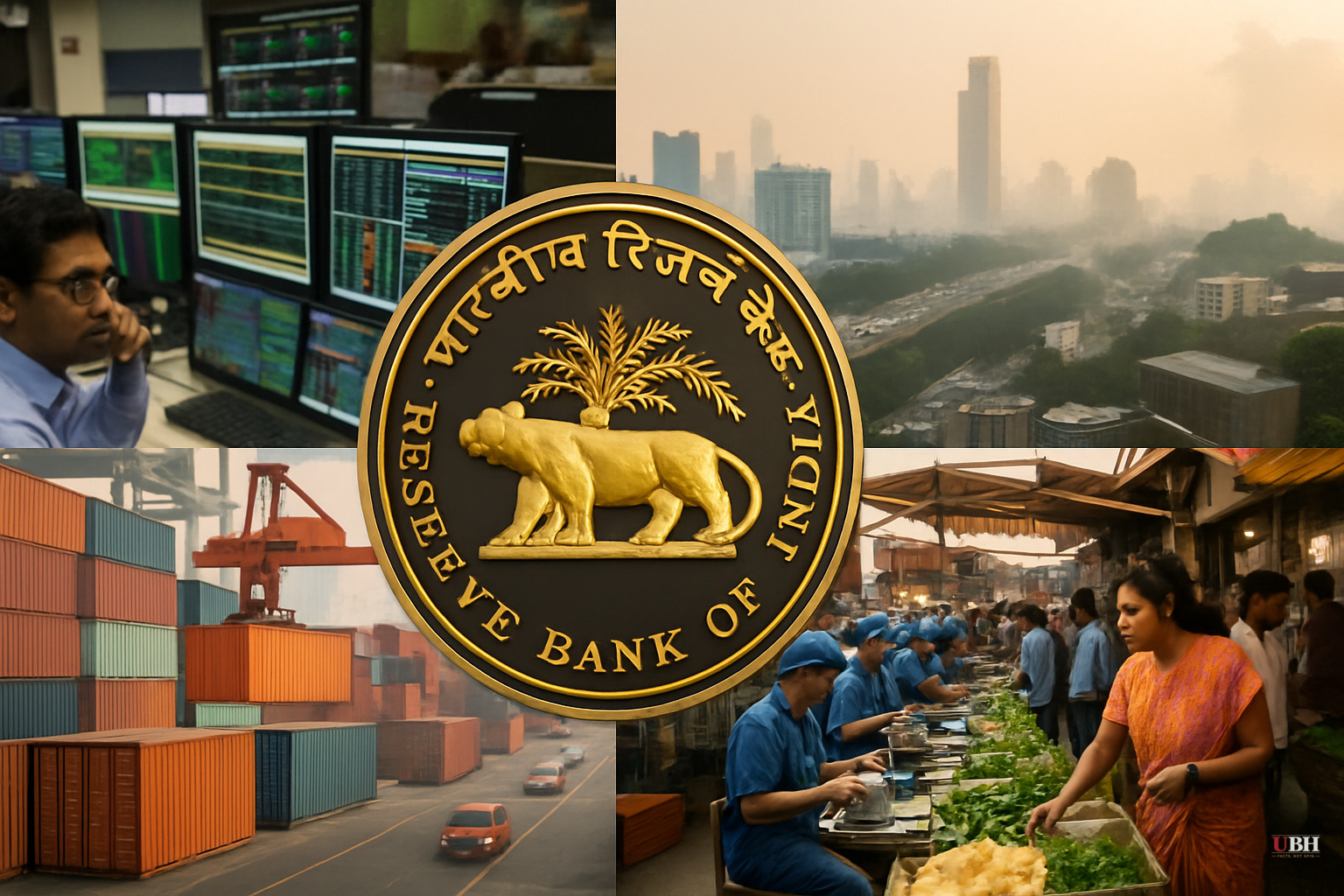
Since the Iran conflict pushed oil toward $96 and the rupee to record lows, India's central bank has been navigating one of the toughest monetary policy environments in years. The MPC officially convened Wednesday, June 3. Friday's decision will define the RBI's credibility on multiple fronts simultaneously.
RBI Kills the Gold Sale Story — Flatly
Bloomberg Economics had reported that the RBI may have sold roughly $12 billion in gold reserves in the two weeks through May 22 to protect liquid foreign-currency assets amid capital outflows and rising oil prices. That report moved markets and raised serious questions about the depth of India's forex buffer.
The RBI's response Wednesday was blunt: the report is "not correct."
According to Bloomberg, the central bank pointed to its own Monthly Bulletin showing physical gold holdings steady at 880.52 metric tons as of April — and stated that figure remains unchanged "as on date." The Economic Times confirmed the RBI's denial, noting the central bank directly refuted claims of a $12 billion sale.
If the RBI had been liquidating gold, it would signal genuine panic about reserves. A denial backed by official data carries weight — but Bloomberg Economics doesn't publish $12 billion gold-sale estimates by accident. The discrepancy between Bloomberg Economics' analysis and the RBI's official statement remains unexplained.
Bank Lending Running Hot — But Bonds Are Getting Skipped
Indian bank credit grew at 16.2% year-over-year through May 15, according to Reserve Bank of India data reported by Bloomberg. That's the fastest pace since June 2024 — a near two-year high.
Companies are choosing loans over bonds. Local bond sales dropped 11% to 10.9 trillion rupees ($114 billion), per Bloomberg-compiled data. Why? Bond yields are elevated, making bank loans comparatively cheaper.
Strong credit growth signals economic vitality — exactly what the RBI would want to protect. But rapid lending at 16.2% growth also means more money flowing through the economy at the precise moment inflation risks are rising from oil prices and a weak rupee. The central bank faces competing pressures on Friday.
The Rate Decision: Pause Is the Consensus, But It's Not Unanimous
A Reuters poll conducted between May 22 and May 29 — 44 out of 56 economists, or roughly 80% — expect the RBI to hold the repo rate at 5.25% this Friday. Eleven forecast a 25-basis-point hike. One expects a 50-basis-point jump.
SBI Chairman CS Setty came out Wednesday saying a pause is "appropriate," citing growth-inflation dynamics. Speaking to Moneycontrol, Setty said SBI's internal assessment pegs GDP growth around 6.6% against the RBI's official 6.9% projection, with inflation likely landing at 4.6%-4.7%. His position: conditions don't demand an emergency hike right now.
Venugopal Garre, managing director and head of India research at Bernstein, argued on CNBC's Inside India Tuesday that a rate hike is actually "more logical" at this stage. His reasoning: it aligns India with how global rates have moved recently and stops currency-driven capital outflows, which he called "the biggest pain point for policymakers."
Setty and Garre are addressing different problems. Setty prioritizes near-term growth; Garre prioritizes currency stability and alignment with global monetary tightening.
The Regional Context Makes the Pause Look Riskier
India's neighbors didn't wait. Indonesia hiked by a larger-than-expected 50 basis points on May 20 to defend its currency. Sri Lanka raised its policy rate by 100 basis points on May 26 — the biggest hike in four years. Both were wrestling with the same falling-currency problem India faces.
The rupee currently sits around 95.27 against the dollar, having slipped 29 paise on Tuesday alone, according to The Economic Times. It remains close to record lows and is still among the most fragile currencies in Asia, per CNBC's assessment. Prime Minister Narendra Modi has already appealed to citizens to help conserve foreign exchange. The government raised import duties on gold to curb demand and protect reserves.
The RBI has also been selling dollars through state-run banks to defend the rupee, according to Reuters. The central bank booked ₹1.69 lakh crore in forex gains in FY26 — up 52% from the prior year — by selling a record $53.13 billion from reserves, per Economic Times. That's how much intervention it's required just to keep the rupee from complete freefall.
What Mainstream Coverage Is Missing
Most headlines frame Friday as a binary: hike or pause. That framing misses the broader picture.
The RBI is simultaneously managing a record-low currency, rising oil-driven inflation, a credit boom that complicates tightening, gold reserve rumors it had to publicly deny, and a geopolitical shock — the Iran conflict — with no clear end date. Friday is not a routine rate decision.
The gold denial specifically warrants closer attention. Bloomberg Economics produced a specific, sourced estimate. The RBI denied it with official data. One analysis is incorrect, or the methodology gap is wider than public explanation suggests.
Friday's Stakes
Friday's RBI decision affects every Indian with a loan, a savings account, or a grocery bill. A pause protects growth in the short run. A hike defends the rupee and signals the RBI won't tolerate rising inflation. Either carries genuine trade-offs.
The data — 16.2% credit growth, a 95+ rupee, $53 billion in reserve drawdowns, an active conflict affecting the Strait of Hormuz — indicates this is no ordinary meeting. Governor Sanjay Malhotra and the MPC must choose which priority takes precedence.
Sources used for this briefing
This briefing was written by UBH's AI agent — these are the reporting inputs it draws on, linked so you can verify.


