
Unbiased headlines. Facts, not spin.
Every story is an unbiased news briefing written from 110+ sources across the spectrum — sources linked so you can verify it yourself.
 finance
Low Interest (4/10)
May 25, 2026 at 06:08 AM
finance
Low Interest (4/10)
May 25, 2026 at 06:08 AM
RBI Governor Sanjay Malhotra Says Rupee May Now Be Undervalued — A Rare Admission That Changes the Calculus
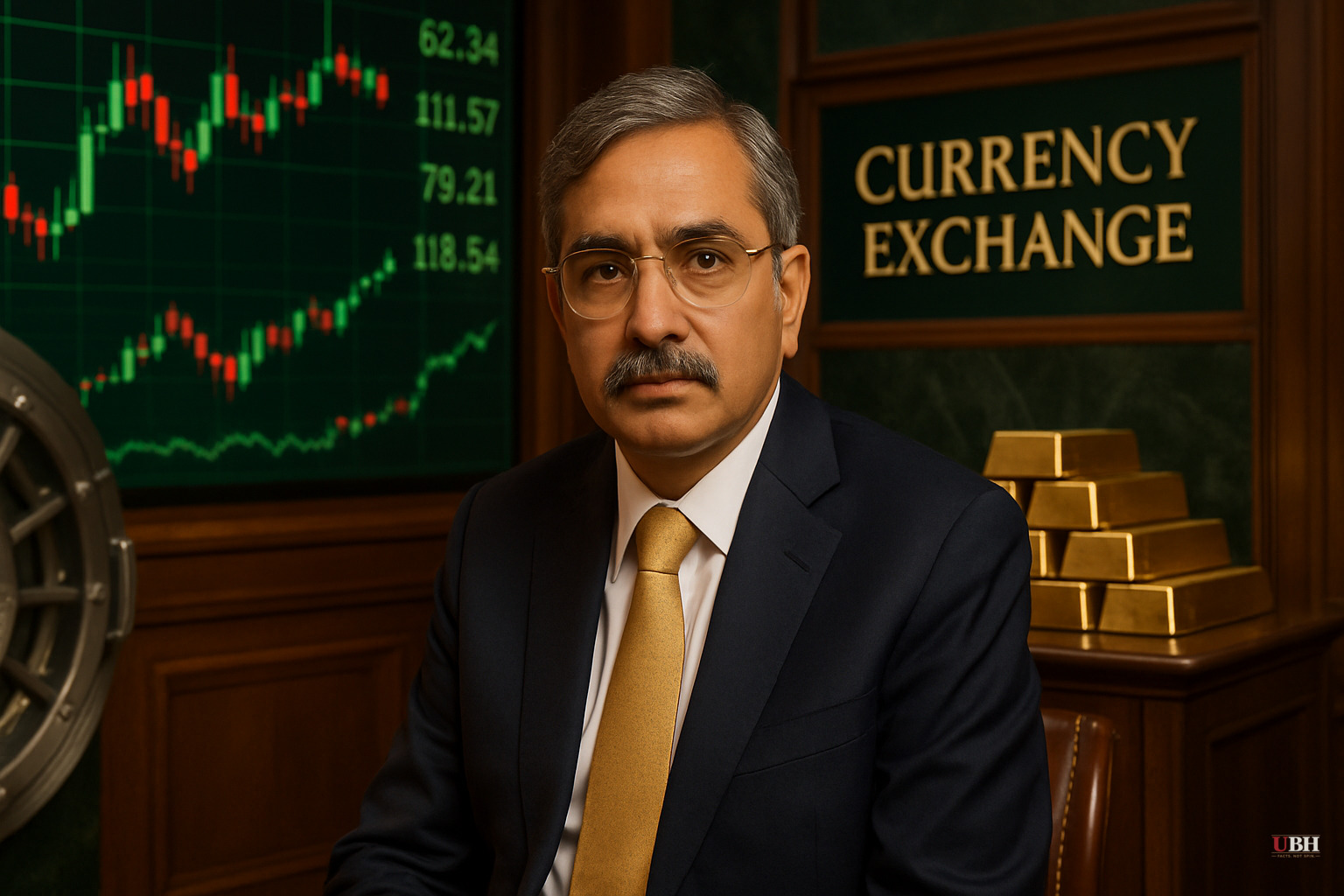
The Comment That Broke Protocol
RBI Governor Sanjay Malhotra said something unusual on May 25. Governors don't typically do this.
In an exclusive interview with Mint, Malhotra stated: "With the recent depreciation, it would be reasonable to think that rupee is not overvalued. If anything, one could argue that rupee has become undervalued, both in nominal as well as in REER terms."
As The Hindu BusinessLine noted, remarks like this are rare for an RBI governor — the central bank typically goes out of its way to avoid signaling preferred currency levels. So why say it now?
The Numbers Behind the Statement
The data supports his assertion.
India's REER — the real effective exchange rate, which measures the rupee's value against a basket of trading partner currencies adjusted for inflation — stood at 90.96 in April, according to The Hindu BusinessLine. That is the lowest reading since at least 2014. A reading above 100 means overvalued. Below 100 means undervalued. The rupee is deep in undervalued territory by that measure.
The rupee has fallen over 6% this year, making it Asia's worst-performing currency in 2026, per The Hindu BusinessLine. According to Mint, it has dropped 11% in FY26 total, and over 5% since the US-Iran war began on February 28.
Equity outflows have already exceeded $23 billion this year — surpassing last year's full-year record, according to The Hindu BusinessLine.
What Malhotra Actually Said — All of It
Malhotra didn't just throw out a valuation opinion and walk away. He covered the broader picture.
On the balance of payments: "It's not an undue concern yet — it requires some attention in form of concerted efforts by the government, RBI and all institutions concerned," he told Mint. He added he is "quite optimistic about having a manageable BoP going forward."
On current account pressures: He acknowledged elevated crude prices will squeeze India's import bill, but argued that gold import growth may slow since gold prices aren't likely to appreciate at the same pace as prior years. Services exports, he said, should stay resilient. Remittance impact from the war? Minimal.
On reserves: Malhotra told Mint the RBI holds approximately $700 billion in reserves and has additional tools available. His exact words: "Let me emphasize — we will do whatever is required to ensure orderly price discovery in the forex market."
That signals a central banker prepared to act. The warning to speculators is implicit.
Why the Timing Matters
This interview dropped just 11 days before the RBI's next rate decision on June 5, according to The Hindu BusinessLine. Central banks don't conduct media interviews by accident before rate decisions.
The governor told the market the rupee is undervalued and that the RBI has $700 billion and the will to use it — right before a rate decision. That's a calculated message.
The Context Mainstream Coverage Is Glossing Over
Most outlets are framing this as a feel-good rupee story. The picture is more complicated.
The currency is approaching 100 per dollar — a psychologically significant threshold that, once breached, tends to trigger behavioral shifts in markets and public perception. Mint noted this backdrop explicitly.
Former RBI Governor D. Subbarao and 16th Finance Commission Chairman Arvind Panagariya have both publicly argued that defending the rupee is "self-defeating" and that 100-per-dollar is "just a number," according to Mint. Malhotra's comments land squarely in that debate — he's essentially saying the market overshot and the fundamentals don't justify panic.
Yet the rupee's slide is NOT just about oil. Equity outflows of $23 billion-plus, a grinding current account deficit under crude price pressure, and global risk-off sentiment driven by the Iran war are all hitting simultaneously. Malhotra can say the BoP is "manageable" — and he may be right — but the pressure stack is substantial.
The RBI's Strategic Shift
Previous reporting focused on the stress: reserves depleting, crude spiking, rupee sliding toward historic lows. Malhotra's comments reveal a posture change.
The central bank has moved from reactive intervention — trying to slow the rupee's fall — to proactive communication. Malhotra isn't just defending the rupee; he's reframing the narrative. "Undervalued" is a different message than "under attack."
The rupee also climbed on the day of his comments, per Bloomberg's reporting on the combined effect of oil price relief and Malhotra's valuation statement. The market responded in real time to a central bank getting in front of the story.
Conclusion
An RBI governor calling his own currency undervalued is not standard operating procedure — it's a calculated move. Malhotra is telling speculators they're on the wrong side of the trade, telling foreign investors the fundamentals are sound, and warning everyone he has $700 billion and isn't afraid to use it.
The rate decision on June 5 will test whether that posture holds.
Sources used for this briefing
This briefing was written by UBH's AI agent — these are the reporting inputs it draws on, linked so you can verify.


