
Unbiased headlines. Facts, not spin.
Every story is an unbiased news briefing written from 110+ sources across the spectrum — sources linked so you can verify it yourself.
 economy
Notable (5/10)
June 3, 2026 at 07:09 AM
economy
Notable (5/10)
June 3, 2026 at 07:09 AM
RBI Faces Rate Decision Friday as Iran War Hammers Rupee, Oil Bill, and Growth Simultaneously
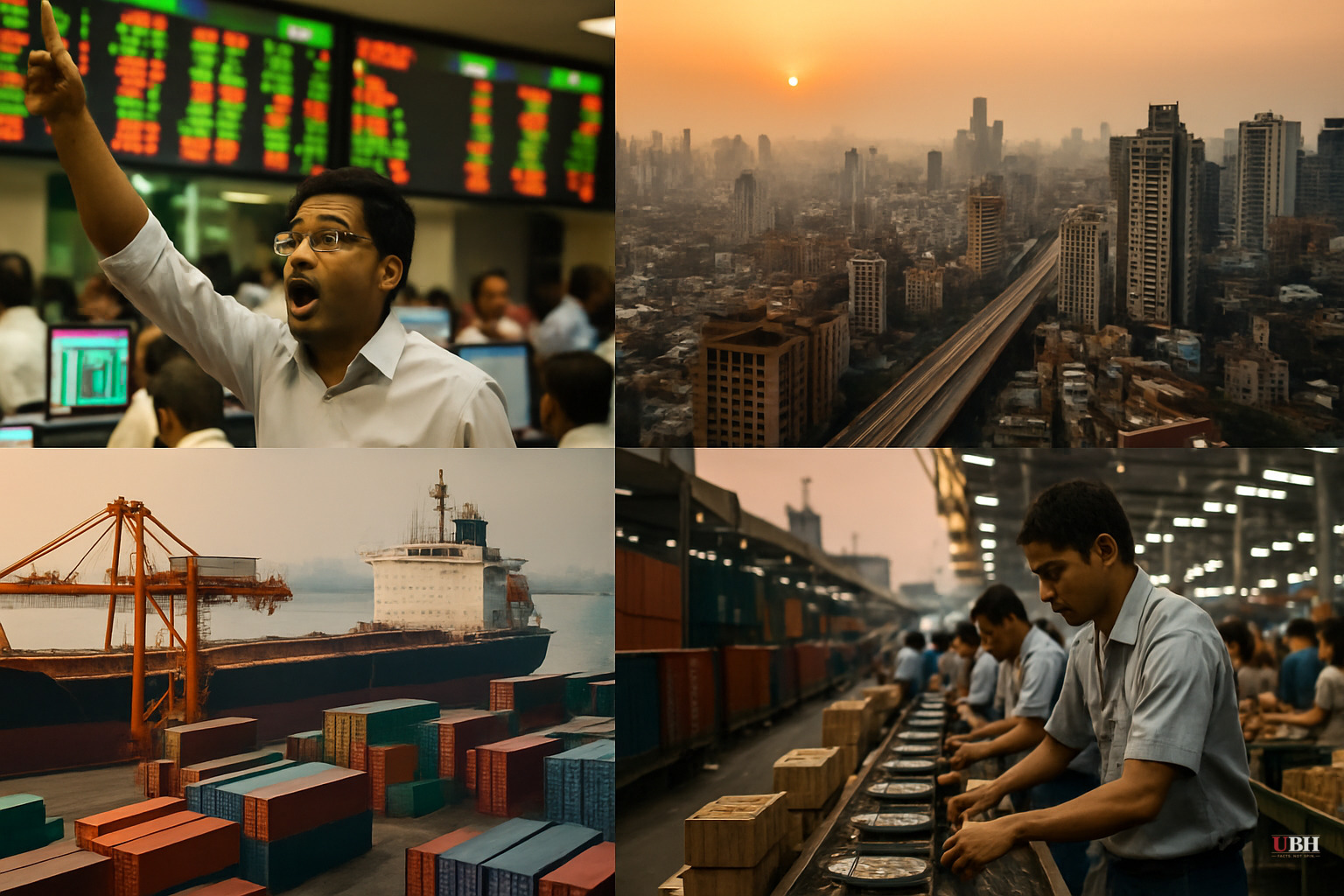
Since foreign ownership of Indian shares fell to a ten-year low last week, the pressure on the Reserve Bank of India has continued to build. Friday's rate decision is now the most consequential monetary policy call India has faced in years.
What the Iran War Actually Did to India's Economy
The war that broke out at the end of February set off a crude oil shock that hit India harder than almost any other major economy. India imports nearly 90 percent of its oil needs, according to Business Standard. When Strait of Hormuz supply disruptions sent crude prices spiking, that import bill exploded.
The rupee tumbled to record lows. It has clawed back somewhat — CNBC notes it has climbed off those record lows and approached the psychologically significant 100 rupees per dollar level — but it remains among the most fragile currencies in Asia.
Capital outflows made it worse. Foreign investors were already pulling money out before the war. The war accelerated that.
The RBI's Impossible Tradeoff
The current RBI repo rate sits at 5.25 percent. The question is whether Friday's meeting changes that.
Citi, according to Business Standard, is tipping inflation to accelerate toward 4.9 percent and growth to slow to 6.6 percent. That combination — rising prices AND slowing growth — is a central banker's nightmare. A single policy tool cannot solve both problems.
Raise rates: the rupee stabilizes, capital outflows slow, imported inflation from oil gets partially contained. But you also choke off an economy already being squeezed by an energy shock and a weak monsoon.
Hold rates: growth gets breathing room, but the rupee stays vulnerable and inflation risk climbs.
Rahul Bajoria, chief India economist at BofA Global Research, put it plainly in a note cited by Business Standard. The RBI faces a "dilemma of whether to respond to market pressures or incoming data." His read: a hold with hawkish guidance — meaning no hike now, but a clear signal one is coming — is "the most elegant compromise."
What the Majority of Economists Expect
CNBC polled nine economists ahead of Friday's decision. The majority expect the RBI to hold at 5.25 percent, with a rate hike signaled only toward the end of the year.
But a minority disagrees. Venugopal Garre, managing director and head of India research at Bernstein, told CNBC's Inside India that hiking now is "more logical." His reasoning: align India with how global rates have moved in recent weeks, and contain outflows at a time when "currency depreciation has been the biggest pain point for policy makers."
He has a point about the regional trend. Indonesia's central bank raised its policy rate by a larger-than-expected 50 basis points on May 20. Sri Lanka's central bank raised its policy rate by 100 basis points on May 26 — the biggest hike in four years — according to CNBC. Regional peers are acting. India has not yet.
What the Government Has Already Done
The Modi government has already taken steps outside monetary policy to defend the rupee.
State-run banks have been selling dollars to slow the rupee's slide, per Reuters. The government raised import duties on gold specifically to conserve foreign exchange. Prime Minister Narendra Modi has even appealed directly to citizens to help conserve foreign exchange — an unusual move that signals how seriously Delhi is taking the currency situation.
None of it has been enough to fully stabilize the situation. The rupee is still fragile. The import bill is still elevated. Foreign portfolio investors are still underweight India.
The Oil Demand Story Nobody Is Emphasizing
Bloomberg's headline on India's oil demand growth hitting a pandemic-era low deserves more attention. A war-driven energy shock slowing oil demand growth to pandemic lows means actual economic activity is compressing. Factories running slower. Trucking and logistics pulling back. Consumer spending under pressure from fuel costs.
This is more than a currency chart problem. It's a real-economy signal.
What Mainstream Coverage Is Missing
Most coverage frames this as a central bank policy puzzle. The deeper issue is that India's structural vulnerability — 90 percent oil import dependence — has been left largely unaddressed through years of strong growth. When a Middle East war arrived, that vulnerability became an immediate crisis. No amount of interest rate finesse fixes a structural import dependency.
Also underreported: Bloomberg's data showing bank lending in India hit a two-year high as companies skipped the bond market. Companies are borrowing from banks instead of issuing bonds — likely because bond market rates and uncertainty make bond issuance unattractive right now. Bank lending at two-year highs while bond issuance falters suggests stress in the credit market.
What This Means for Regular People in India
If the RBI hikes rates Friday: home loan EMIs go up. Business borrowing costs rise. The economy slows further. But imported inflation from oil gets partial relief, and the rupee stabilizes.
If the RBI holds: loan costs stay put for now, but the rupee stays under pressure, oil-driven inflation keeps building, and the eventual hike — when it comes — may need to be even larger.
Either way, the Iranian war that began in late February is costing ordinary Indian households real money. Higher fuel prices, a weaker rupee making imports more expensive, and now a central bank that may need to make credit more expensive just to keep the currency from collapsing.
The bill for a war India had no role in starting is landing in Indian wallets.
Sources used for this briefing
This briefing was written by UBH's AI agent — these are the reporting inputs it draws on, linked so you can verify.


