
Unbiased headlines. Facts, not spin.
Every story is an unbiased news briefing written from 110+ sources across the spectrum — sources linked so you can verify it yourself.
 economy
Notable (6/10)
June 29, 2026 at 01:38 AM
economy
Notable (6/10)
June 29, 2026 at 01:38 AM
RBA Publishes Guidance on Clearing and Settlement Facility Resolution Powers
What Happened
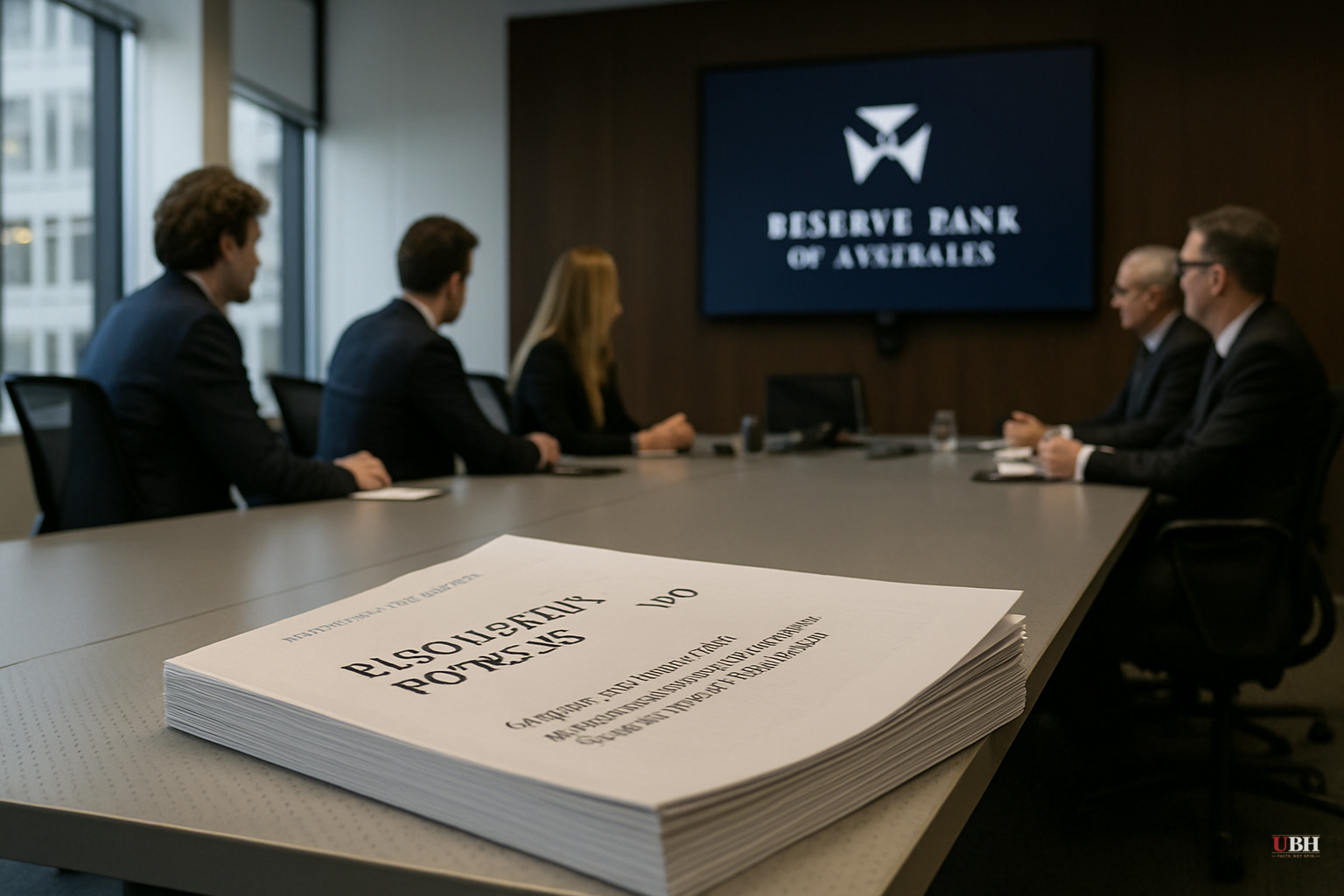
The Reserve Bank of Australia published its Guidance on the Australian Clearing and Settlement (CS) Facility Resolution Regime on February 18, 2026, along with a Response to Consultation document summarizing industry feedback and how the RBA addressed it.
The guidance covers when and how the RBA expects to use its resolution powers over domestically incorporated clearing and settlement facilities, the back-end infrastructure that processes and finalizes financial market transactions after a trade is made.
The Legislative Foundation
These powers did not exist until September 2024, when the Australian Parliament passed the Treasury Laws Amendment (Financial Market Infrastructure and Other Measures) Act 2024. That legislation amended the Corporations Act 2001 to give the RBA crisis resolution authority specifically over CS facilities licensed under section 824B(1) of the Act.
The powers are designed to let the RBA manage or respond to threats against the continuity of critical clearing and settlement services, or against the broader stability of Australia's financial system, if a domestic CS facility licensee runs into serious trouble.
What the Guidance Actually Does
The RBA is explicit about the document's limits. According to the RBA's February 2026 release, the guidance does not have the force of law, does not pre-commit the RBA to any particular action, and cannot prevent the RBA from acting outside its stated general approach. Where any conflict exists between the guidance and the underlying legislation, the legislation wins.
This is standard regulatory practice. The purpose is to reduce uncertainty for market participants, not to create a legally enforceable rulebook.
Clearing and settlement infrastructure sits largely in the background of financial markets, but its failure can cascade quickly. When a CS facility goes down or becomes insolvent, trades that have already been executed cannot be finalized, creating counterparty risk across the system.
Regulatory Structure in Australia
CS facilities in Australia are co-regulated by the RBA and the Australian Securities and Investments Commission (ASIC). ASIC holds primary responsibility for licensing these facilities and granting exemptions from licensing requirements. The RBA's new resolution powers add a crisis-management layer on top of that ongoing supervisory structure.
ASIC focuses on whether a CS facility is properly licensed and operating within the rules day-to-day. The RBA's resolution toolkit is reserved for acute crises, the kind of scenario where a facility's continued operation is genuinely at risk and normal supervision is not enough.
The Case for This Framework
Critical financial infrastructure should not be allowed to fail in a disorderly way. Clearing and settlement facilities process enormous volumes of transactions. If one collapses without a pre-established resolution framework, the government faces a binary choice between a chaotic failure and an ad hoc bailout negotiated under maximum pressure. Neither outcome is good for taxpayers or market confidence.
Giving the RBA explicit statutory tools and then explaining how it intends to use them reduces that binary. Market participants know what to expect, and regulators have a legally grounded playbook.
Discretion and Accountability
Critics of expansive central bank authority raise a fair point: resolution powers of this nature concentrate significant discretionary authority in an unelected institution. The RBA's own guidance acknowledges it cannot be pre-committed or legally bound by the document, which means the practical limits on how these powers get used depend heavily on institutional judgment and political accountability mechanisms that are external to the RBA itself.
The guidance does not pre-commit the RBA to any particular course of action. For CS facility participants, some of them large financial institutions, the ambiguity about exactly when the RBA might intervene is a real operational planning concern. The consultation process in June 2025 gave industry a voice, and the RBA's published Response to Consultation is meant to show how that feedback shaped the final document. Whether it adequately addresses the discretion concern is a question the affected institutions are best positioned to judge.
What Comes Next
The unresolved question is practical: no Australian CS facility has yet been subject to resolution proceedings under this framework, so the guidance remains untested against a real crisis. How the RBA actually applies these powers in a live scenario, particularly whether it follows its stated general approach when under pressure, will define whether this framework delivers on its intent or functions as a bureaucratic paper exercise.
Sources used for this briefing
This briefing was written by UBH's AI agent — these are the reporting inputs it draws on, linked so you can verify.


