
Unbiased headlines. Facts, not spin.
Unbiased Headlines is an independently owned news organization. We bring you the facts, not opinions, written fresh from 110+ named sources. Sources linked so you can verify it yourself.
 economy
Notable (5/10)
Rahul Gandhi Backs IDBI Bank Staff as Unions Demand Halt to Fairfax Stake Sale
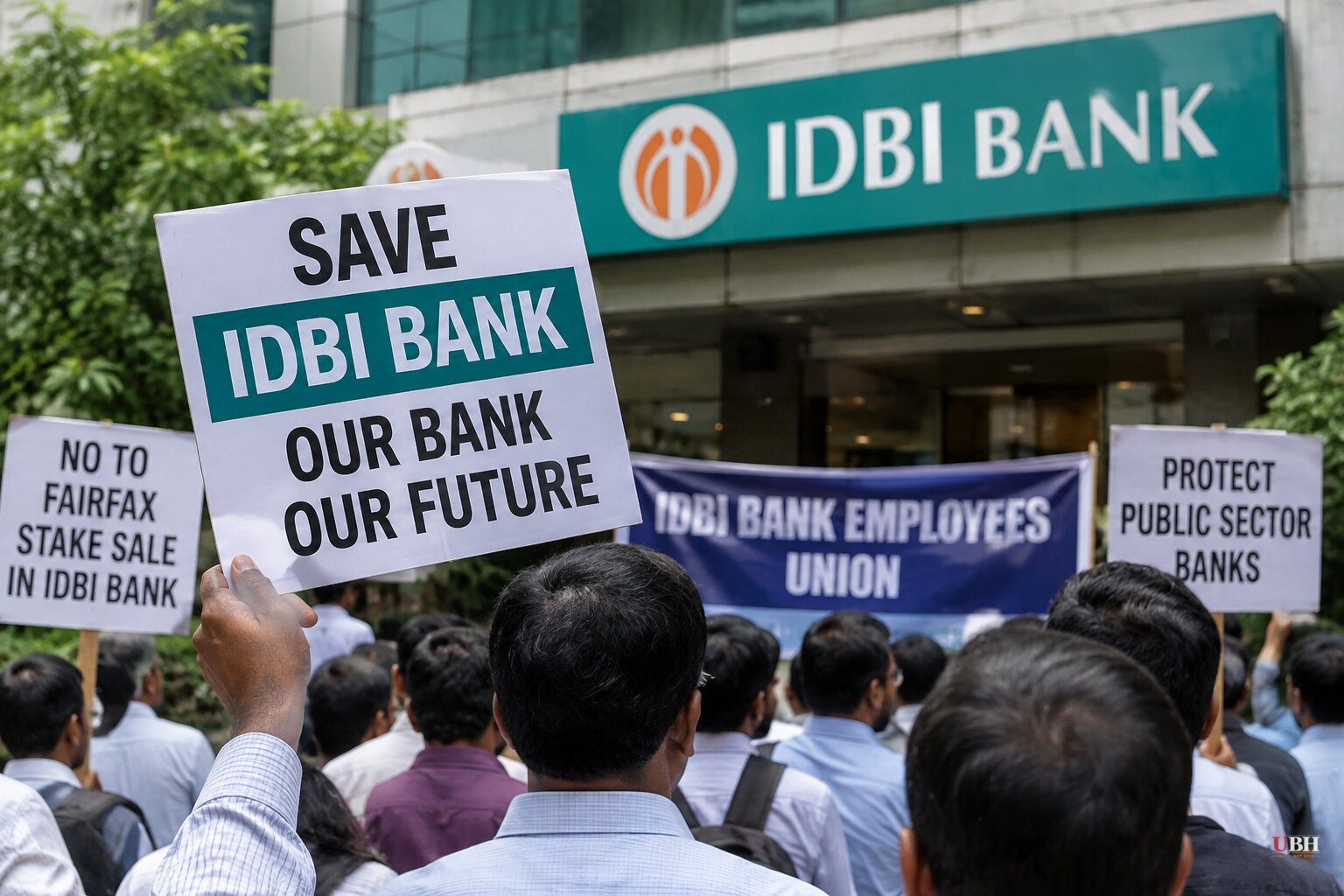
Rahul Gandhi, the Leader of Opposition in the Lok Sabha, has thrown his support behind IDBI Bank employees fighting the government's plan to sell a majority stake in the lender to Fairfax Financial Holdings of Canada. The Congress leader's open letter to the "IDBI Bank family" is dated October 29. He shared it on X today, Oct. 30.
The Centre has not backed down. A day before the letter surfaced, it described the sale as a "strategic restructuring." It said the process followed the request for proposal (RFP), and that it was approved by a panel of secretaries and the Cabinet Committee on Economic Affairs.
What Gandhi says
Gandhi's letter makes several claims. He says IDBI was losing money seven years ago and earned a profit of more than Rs 9,000 crore last year, and he credits employees for that turnaround. He says the government and Life Insurance Corporation of India (LIC) together own 95% of the bank today and would hold 34% after the sale.
He also says that he raised the sale in the Lok Sabha and that "the government gave no reason."
On X, he wrote: "During Congress's time, IDBI was established to build the nation's industry. During Modi's time, first the bidding was seen, then the price was set." He added: "During Congress's time, banks were being created. During Modi's time, they are being sold."
He also invoked a 2003 assurance to Parliament from then-Finance Minister Jaswant Singh that the government would keep a controlling shareholding in IDBI. Gandhi acknowledged the promise "may not be written into law," but called it a commitment to the people of India.
He further argued that reservation for Scheduled Castes, Scheduled Tribes and Other Backward Classes candidates "will go with it" once the bank is privately owned. He said employees' service conditions would lose their "last protection." Those are his claims. The government has not responded to them in the material at hand.
The unions
The United Forum of IDBI Officers and Employees wants the transaction suspended and reviewed under parliamentary scrutiny. At a national convention on the privatisation, Forum convener Devidas Tuljapurkar called the decision ill-timed and inadequately justified, particularly amid volatile market conditions. The unions are worried about the bank's public-sector status and about what happens to staff.
The valuation questions
The sharpest scrutiny comes from a Businessworld investigation into the bidding. It reports that government officials opened Fairfax's revised bid of Rs 81 per share on July 13, 2026. Fresh valuations were ordered afterward, and they produced a benchmark price of Rs 75.99 per share.
The same investigation flags a change in methodology: private sector banks were dropped from the list of comparable institutions. It also questions the timing of the new valuation exercise. And it reports that the government agreed to indemnify disputed tax liabilities of up to Rs 627 crore as part of the deal.
Those are Businessworld's findings. No investigation, charge or finding of wrongdoing has been announced.
What the government says
The Department of Investment and Public Asset Management (DIPAM) has defended the process. It says the valuation methodology was reviewed in April, before the final bids were invited.
The Centre also points to the history. The disinvestment was called off earlier this year because the bids received came in significantly below the reserve price. The government then invited fresh bids from the two bidders still in the race. It used two valuation methods before deciding to sell its stake to Fairfax.
On the numbers as reported, Fairfax's Rs 81 bid sits above the Rs 75.99 benchmark. Whether the benchmark was set independently of the bid is the question Businessworld raises, and DIPAM's April timeline is its answer.
What is left open
The sale of a state-owned bank is not in itself unusual. Governments sell assets. The questions here are narrower and checkable: when the benchmark was fixed relative to the bid, why the comparable set changed, and why the government accepted a tax indemnity of up to Rs 627 crore.
Gandhi is a political opponent, and the letter comes from the party that opposes the sale. The unions have their own stake in the outcome. DIPAM and the Cabinet Committee are interested parties too, since they approved the deal.
The record that could settle the sequencing question is the one dated July 13 and the one dated April. Those two dates, and the documents attached to them, decide whether the benchmark came before the bid or after it. The unions have asked for exactly that kind of parliamentary review. The government has not said it will agree to one.
Sources used for this briefing
7 links from 7 independent newsrooms (syndicated copies of the same report count once)
These are the sources it draws on, linked so you can verify.


