
Unbiased headlines. Facts, not spin.
Unbiased Headlines is an independently owned news organization. We bring you the facts, not opinions, written fresh from 110+ named sources. Sources linked so you can verify it yourself.
 economy
Notable (6/10)
Carney Calls Canada an EU 'Associate Member' at Montréal Summit After the Term Was Cut From the Joint Declaration
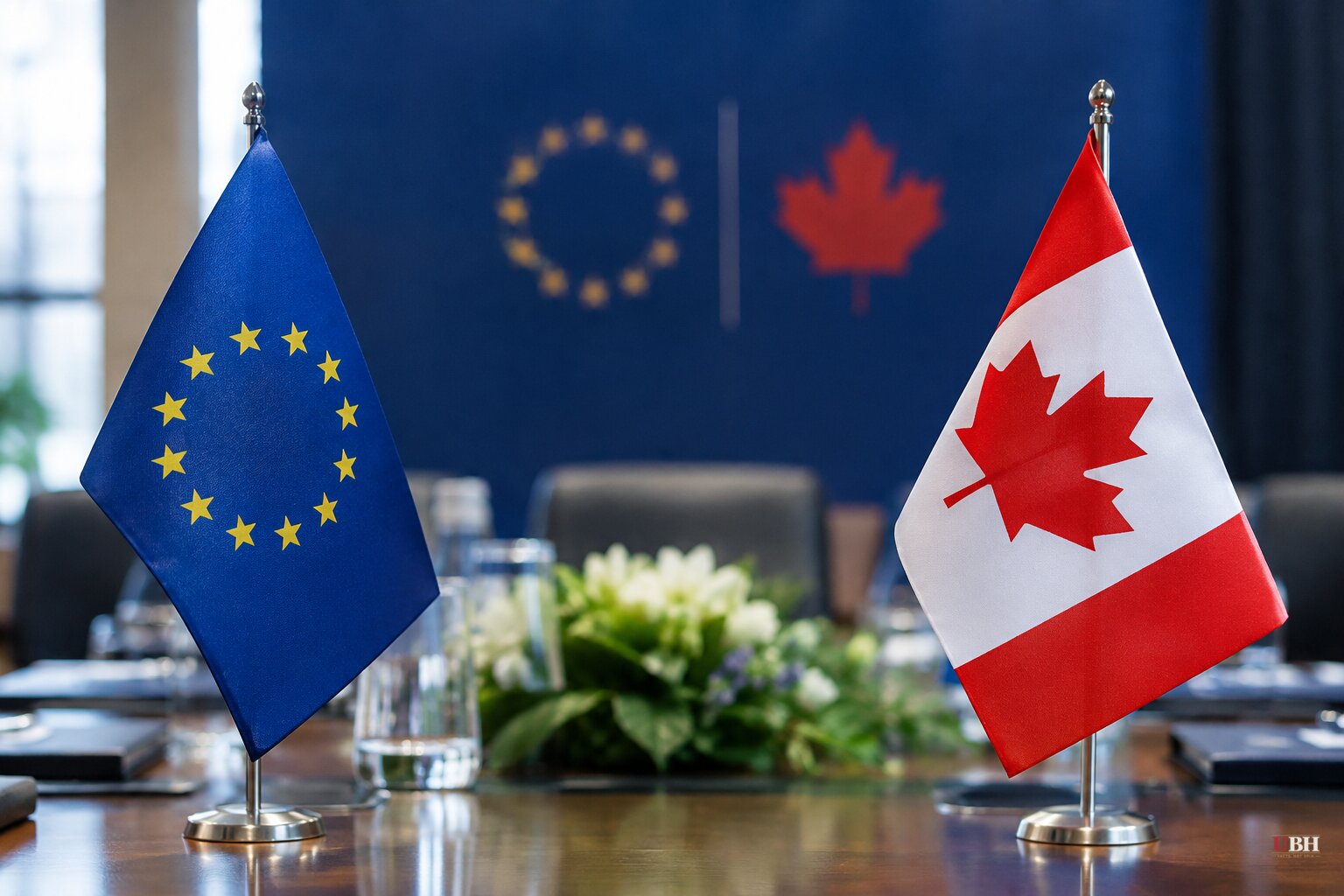
The "associate member" label for Canada was dropped from the draft joint declaration for the EU-Canada summit in Montréal. Then the two leaders who are hosting it kept using it anyway.
Carney said on Thursday, Oct. 29, ahead of a business roundtable: "We're in the process of forging a new alliance — alliance for the future — with Canada as an associate member." Until then he had mostly avoided the phrase and argued that names don't matter. His office has not yet explained the shift.
European Commission President Ursula von der Leyen said the same day that the EU and Canada continue to explore the idea, according to Reuters. She described a partnership "that comes closer to membership than anything we've done before." The summit runs through today, Oct. 30.
A title that does not exist
Von der Leyen floated the idea in her State of the Union speech in Strasbourg on Sept. 16, proposing Canada as the bloc's first associate member. Carney, seated in the front row, welcomed it before the European Parliament the next day.
There is a problem. No such status exists in EU law. Reuters has reported the term has no legal meaning, and diplomats told it that Germany led a group arguing it could not sign onto a concept with no legal status that had not been fleshed out.
A leaked earlier draft of the declaration had committed to defining the parameters of an associate membership by 2027, according to the Epoch Times. That draft drew objections from Germany, Italy, France and Greece. The latest draft, as reported by Reuters and CBC News, drops the term in favor of softer language about "ever closer association" and says work on the relationship will continue until next year's summit.
Berlin's objection
German Ambassador to Canada Mathias Luttenberg laid out his government's reasoning on CTV's "Power Play." He said the concern is not about Canada. It is about the terminology.
"Germany has been using the term of associated membership for something completely different, which is the relationship of the European Union to Ukraine and potentially Moldova," Luttenberg said. Those are countries "striving for full EU membership," and associate status is the precursor to joining.
Canada is not seeking to join the EU. Von der Leyen's own phrase for what she wants is "association without accession."
Carney's position is that the label is secondary. "The good news is it doesn't matter about specific names or nomenclature," he told reporters before an Oct. 27 cabinet meeting. He pointed to study, work and travel opportunities for young Canadians, new openings for businesses and researchers, and a "more independent, more sovereign" Canada.
What is actually on the table
The summit is expected to expand cooperation on trade, investment, supply chains, AI, climate, security and the Arctic, and to bring Canada deeper into EU programs such as Horizon and Erasmus, according to Euronews. Carney has also named critical minerals, defence industrial capacity and energy security as priorities.
The existing framework dates to 2016, when the sides signed a Strategic Partnership Agreement and the trade deal known as CETA. CETA has been provisionally in force since September 2017. Full ratification remains incomplete because some provisions need approval from national and regional parliaments.
Washington is the backdrop. President Donald Trump has called the associate-member proposal "laughable." He said that if he read it as a "hostile act," the U.S. might stop trading with Europe "on many things," Reuters reported. Carney has said the alliance should be "strong enough so that no one can dictate our choices."
A fight at home
The summit also opened with a domestic row. Quebec Premier Paul St-Pierre Plamondon stayed away. He said he would not accept being reduced to the role of "spectator" without a chance to speak or negotiate for Quebec.
He had been invited to the head-table dinner with von der Leyen and European Council President António Costa. He wanted an official speaking slot. In a letter to European representatives, he argued Ottawa had excluded Quebec and questioned whether Quebec would apply any new agreements signed.
Carney rejected the claim of exclusion, saying there were four meetings with Quebec officials about the summit. Industry Minister Mélanie Joly said the premier would be welcomed "with open arms" if he changed his mind. Quebec sent its chief diplomat, Pascal Paradis, who called the request to speak normal and legitimate.
Louis Hamann, a former federal foreign affairs adviser, said the Europeans were "walking into a family fight." Of the premier's letter he said: "These words are not going to be forgotten easily."
What comes next
The final text of the declaration is due at the close of the summit today, Oct. 30. The draft points to continued work and next year's summit as the checkpoint.
What "associate member" would mean in practice, and whether Germany, Italy, France and Greece would ever accept the term, remains undefined. So does whether Quebec would apply what is signed.
Sources used for this briefing
7 links from 7 independent newsrooms (syndicated copies of the same report count once)
These are the sources it draws on, linked so you can verify.


