
Unbiased headlines. Facts, not spin.
Unbiased Headlines is an independently owned news organization. We bring you the facts, not opinions, written fresh from 110+ named sources. Sources linked so you can verify it yourself.
 economy
Major Story (7/10)
Bhutan Glacial Lake Flood Wrecks Gasa Hot Springs Area; More Than 10,000 Moved to Shelters in West Bengal
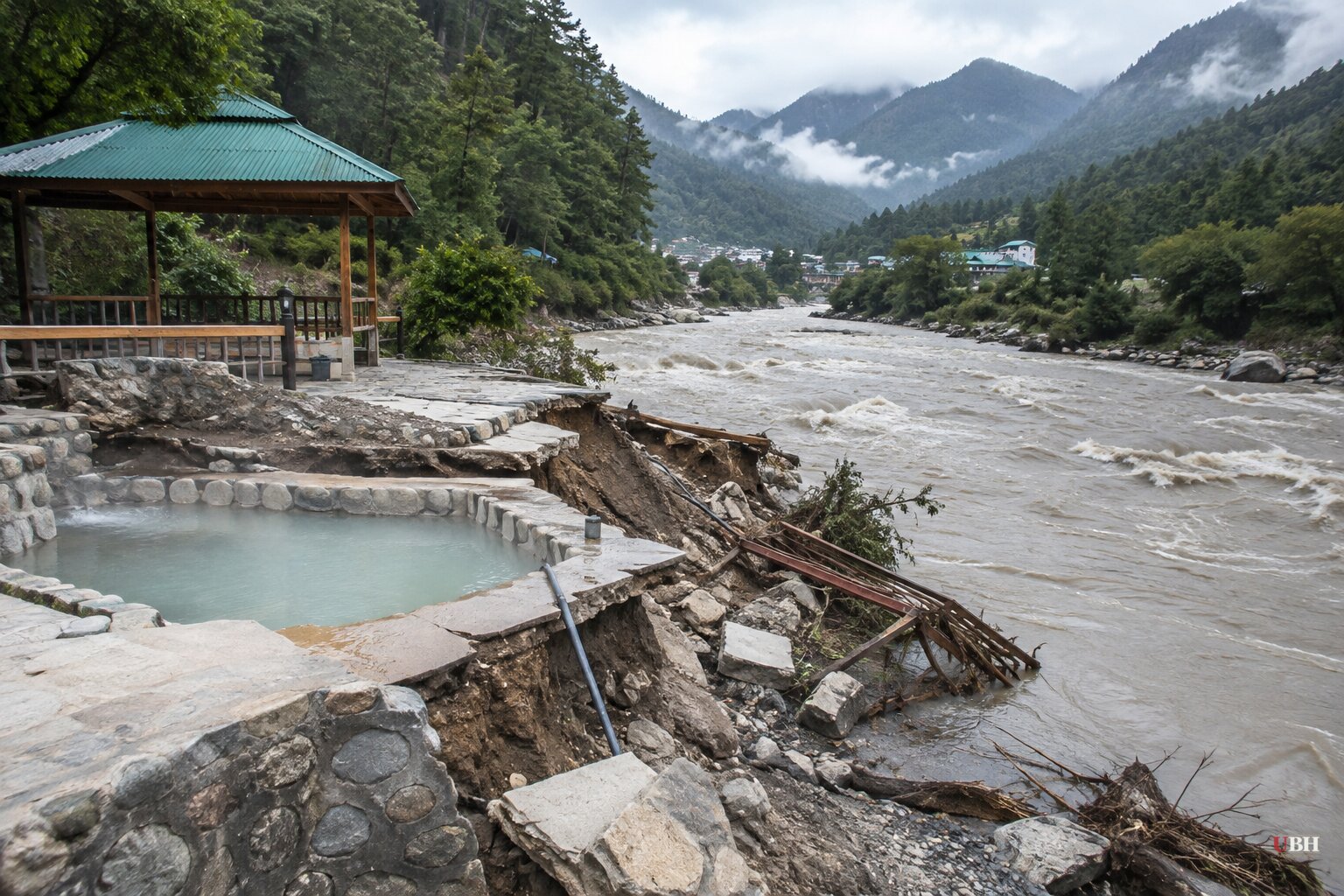
A glacial lake in northern Bhutan burst its banks on Thursday evening, Oct. 29, and the resulting flash flood has damaged roads and tourist infrastructure in Gasa district, and two bridges may have been swept away. Indian authorities downstream have spent the hours since moving people out of the way.
No injuries or deaths have been reported in Bhutan, the state broadcaster Bhutan Broadcasting Service (BBS) said on Friday, Oct. 30.
What happened in Bhutan
The outburst was reported at Shintaphu Lake, also called Shintaphu Tsho, below Wakila Mountain in Gasa district. The lake sits in the upper Mo Chhu basin. When it overflows, water drains south into the Mo Chhu and surges downstream.
The late-night flood washed away infrastructure at the Gasa Tshachu natural hot springs, a major tourist draw in northern Bhutan. BBS said the extent of the damage was unknown because of "darkness and the strong flow" of the water. Two Bailey bridges, the portable prefabricated kind, may also have been swept away.
Kuensel, Bhutan's national newspaper, reported that part of the road to Laya village, where the springs are located, was washed out. The road is closed to traffic indefinitely. The area was evacuated before the water arrived, Kuensel said.
Farther downstream in Punakha, debris from the flood landed on a section of the Punakha-Gasa Highway in the Dzomlingthang area, according to the local Tshogpa, the government representative for the village. A solar irrigation lifting system in Guma Gewog, installed earlier this year to ease water shortages, was partially damaged and has stopped working. The full damage there has not been assessed.
This is not the first time Gasa Tshachu has been hit. A flash flood in 2021 saw the Mochhu River change course and sweep through the area.
A known risk, and a monitoring question
Shintaphu is one of Bhutan's 17 potentially dangerous glacial lakes. An official from Bhutan's National Centre for Hydrology and Meteorology said a water-level monitoring station sits at Taktsimakhang. No alert had been triggered there at the time of the initial reports, the official said.
Why the station did not trip, or whether it was positioned to catch an event like this, has not been explained. Bhutanese authorities have not published an account of the lake's failure or the flood's peak flow.
India braces along the Sankosh
The Mo Chhu and its parent system, the Punatsangchhu, become the Sankosh river after crossing into India. On Thursday, the Ministry of Jal Shakti issued a special advisory for Assam and West Bengal. It said the Indian Embassy had reported a glacial lake outburst at Shintaphu Lake.
The advisory warned of a possible sharp rise in water levels in West Bengal's Alipurduar district and Assam's Dhubri district. It said floodwater was expected to reach the India-Bhutan border within six to eight hours.
West Bengal's State Minister Nisith Pramanik said the water was expected to reach the plains within five to six hours. He said the State Disaster Management Team had been activated and the National Disaster Response Force notified. Disaster management volunteers were told to be on site.
NDRF and State Disaster Response Force teams were deployed at Tufanganj and Boxirhat in Cooch Behar district, both on the Sankosh near the Assam border. Alerts also went out across the Darjeeling hills, Jalpaiguri and Cooch Behar.
More than 10,000 people in West Bengal have been moved to relief shelters and safer locations, according to PTI's account of state authorities' figures.
Raju Bista, the BJP MP from Darjeeling, posted an alert on X on Thursday urging everyone in the Sankosh catchment to "move to a safe distance immediately." His post located the outburst at Lemthang, while the central government advisory names Shintaphu Lake. Both are in Bhutan's Gasa district area and feed the same Mo Chhu route, but the discrepancy has not been resolved publicly.
West Bengal Forest Minister Manoj Kumar Oraon, who is also the Kumargram MLA, urged people along the Sankosh in Alipurduar to evacuate.
Alipurduar Superintendent of Police Amit Kumar Shaw urged calm. "There is absolutely no need to panic. The situation is currently under control," he said, adding that police were in constant touch with Bhutanese authorities.
Assam on watch
Assam Chief Minister Himanta Biswa Sarma's office said he was closely monitoring the situation and that the Dhubri district team was on the ground. An Assam State Disaster Management Authority spokesperson said the Sankosh water level was steady as of 6:30 a.m. Friday. District administration and response forces remain on alert, he said.
Regional context
Reuters noted that a flash flood in August on Nepal's border with China, about 600 km (370 miles) west, killed more than 1,500 people and left more than 5,000 missing. A separate report cited by Outlook India says an ice-rock avalanche, not a glacial lake outburst, triggered the Nepal floods. The cause of that disaster is a different question from what failed at Shintaphu.
What comes next
The immediate test is whether the surge that devastated the Gasa hot springs area arrives in the Indian plains with enough volume to flood Alipurduar, Cooch Behar or Dhubri. The Sankosh was steady at 6:30 a.m. Friday. Bhutanese teams still have to survey Gasa Tshachu, the Laya road and the two Bailey bridges once daylight allows. How the Taktsimakhang station missed the outburst remains an open question for Bhutan's hydrology centre.
Sources used for this briefing
7 links from 7 independent newsrooms (syndicated copies of the same report count once)
These are the sources it draws on, linked so you can verify.


