
Unbiased headlines. Facts, not spin.
Unbiased Headlines is an independently owned news organization. We bring you the facts, not opinions, written fresh from 110+ named sources. Sources linked so you can verify it yourself.
 economy
Major Story (7/10)
Bank of Japan Holds Rate at 1.25% and Says Underlying Inflation Is Consistent With 2% Target for First Time Since 2013
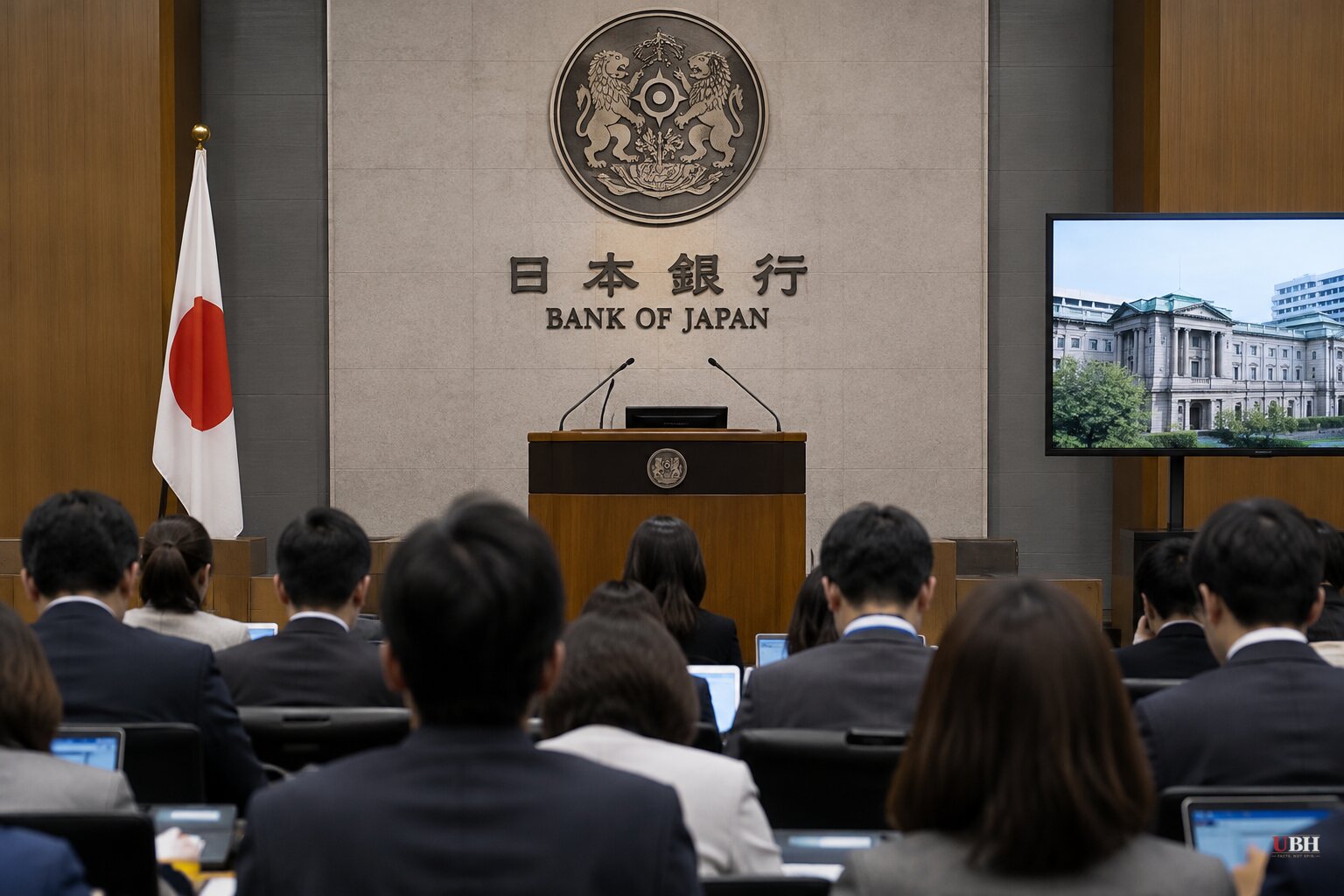
The Bank of Japan left its benchmark rate at 1.25% today, Oct. 30, after a two-day meeting. The vote was 8-1. The rate is still the highest in Japan since 1995.
The decision was expected. The wording was not routine.
For the first time since the bank adopted its 2% target in 2013, the BOJ said underlying inflation is "generally consistent" with that goal. It used to say underlying inflation was "approaching 2 percent."
The dissent
Board member Hajime Takata voted against the hold. He argued that underlying inflation has already reached 2% and that the bank should move faster toward a neutral policy stance. He proposed raising the rate by 25 basis points to 1.5%.
Governor Kazuo Ueda and the seven other members voted to hold. Last month's vote was 7-2, when the bank raised rates to 1.25%.
That September increase followed a June hike. It was the second in three months, the fastest pace of tightening in 36 years, according to a Bloomberg survey of BOJ watchers.
What the bank changed in its forecasts
The BOJ raised its inflation forecast for fiscal 2027 to 2.6% from 2.4%. Its "core-core" forecast, which strips out fresh food and energy, rose to 2.7% from 2.6%.
It held its fiscal 2026 inflation forecast at 2.5%. It raised fiscal 2026 growth to 0.7% from 0.6% and trimmed fiscal 2027 growth to 0.7% from 0.8%.
The bank also warned that underlying inflation could overshoot 2%. In its words, "firms' behavior has been shifting more toward raising wages and prices and there are various factors that could drive up prices."
BigGo Finance reported that the bank also doubled the pace of its ETF sales to about ¥860 billion ($5.5 billion) a year on a book-value basis, effective January.
The data behind it
Core inflation hit 2.1% in September, the highest reading of 2026 and above expectations. Inflation-adjusted wages rose 1.5% from a year earlier in August, the eighth straight monthly gain, according to government data.
Finance Minister Satsuki Katayama told parliament earlier this month that Japan was "on the cusp of shifting to a period of sustained inflation driven by rising wages," according to reports of her remarks.
Trading Economics noted that persistent labor shortages sustain a moderate wage-price cycle, with inflation expectations around 2%. Japan is also dealing with a weak yen and high energy prices. The yen was around 157.84 per dollar on Thursday morning in Tokyo.
The counterargument on speed
Not everyone wants the bank to hurry. Krishna Bhimavarapu, APAC economist at State Street Investment Management, called the decision a "hawkish hold." He said the BOJ is increasingly confident the target is being met through a "self-sustaining wage-price-consumption cycle," but that growth does not justify rushing the next move.
He expects third-quarter GDP growth to lose momentum, with consumption the weakest link.
Masahiko Loo, chief fixed income strategist at State Street in Tokyo, called it "a boring hold, but an important shift in the Outlook Report."
There is also a question about what the headline CPI numbers show. Economists told CNBC that consumer prices are being held down by energy subsidies from the Takaichi administration. Those subsidies are paid by taxpayers. They push the measured number below where it would otherwise sit.
Japan and the US
The BOJ's pause came two days after the Federal Reserve held its own rate at 3.75% to 4.0%. The two central banks are working from very different starting points.
U.S. consumer prices rose 3.7% in September from a year earlier, up from 3.4% in August, according to the Bureau of Labor Statistics. Energy prices rose 5.2% over the month as oil surged amid tensions with Iran.
Two Fed officials, Governor Lisa Cook and Cleveland Fed President Beth Hammack, dissented. They wanted to raise the range by a quarter point. The Fed's preferred inflation gauge, the PCE price index, was up 3.4% in August, and the September reading was due Thursday.
Treasury Secretary Scott Bessent said last week that inflation should move toward the Fed's 2% target once the Iran conflict ends. "Once we get on the side of this Iran conflict, energy markets are going to be well supplied," he said.
Fed Chair Kevin Warsh also announced that starting next year, one of the Fed's eight meetings will focus on broader economic questions and monetary strategy rather than rate decisions. The Fed will issue no post-meeting statement after that meeting, he said.
What comes next
Governor Ueda is scheduled to explain the decision at a news conference at 3:30 p.m. Tokyo time (0630 GMT).
A CNBC survey of 16 economists found all expect the BOJ to set the stage for a hike in December or January. Thirteen of them see a terminal rate of 1.75% to 2% by around mid-2027. A Bloomberg survey cited before the meeting found more than 80% of economists expecting a December hike.
In the US, the CME Group's FedWatch tool implies about an 88% chance of a Fed hike at its December meeting.
That sets up two possible rate increases from the world's largest and third-largest economies in the same month.
Sources used for this briefing
7 links from 6 independent newsrooms (syndicated copies of the same report count once)
These are the sources it draws on, linked so you can verify.


