
Unbiased headlines. Facts, not spin.
Unbiased Headlines is an independently owned news organization. We bring you the facts, not opinions, written fresh from 110+ named sources. Sources linked so you can verify it yourself.
 economy
Notable (6/10)
30-Year Mortgage Rate Falls to 7.24%, Second Weekly Drop, Still 1.07 Points Above Last Year
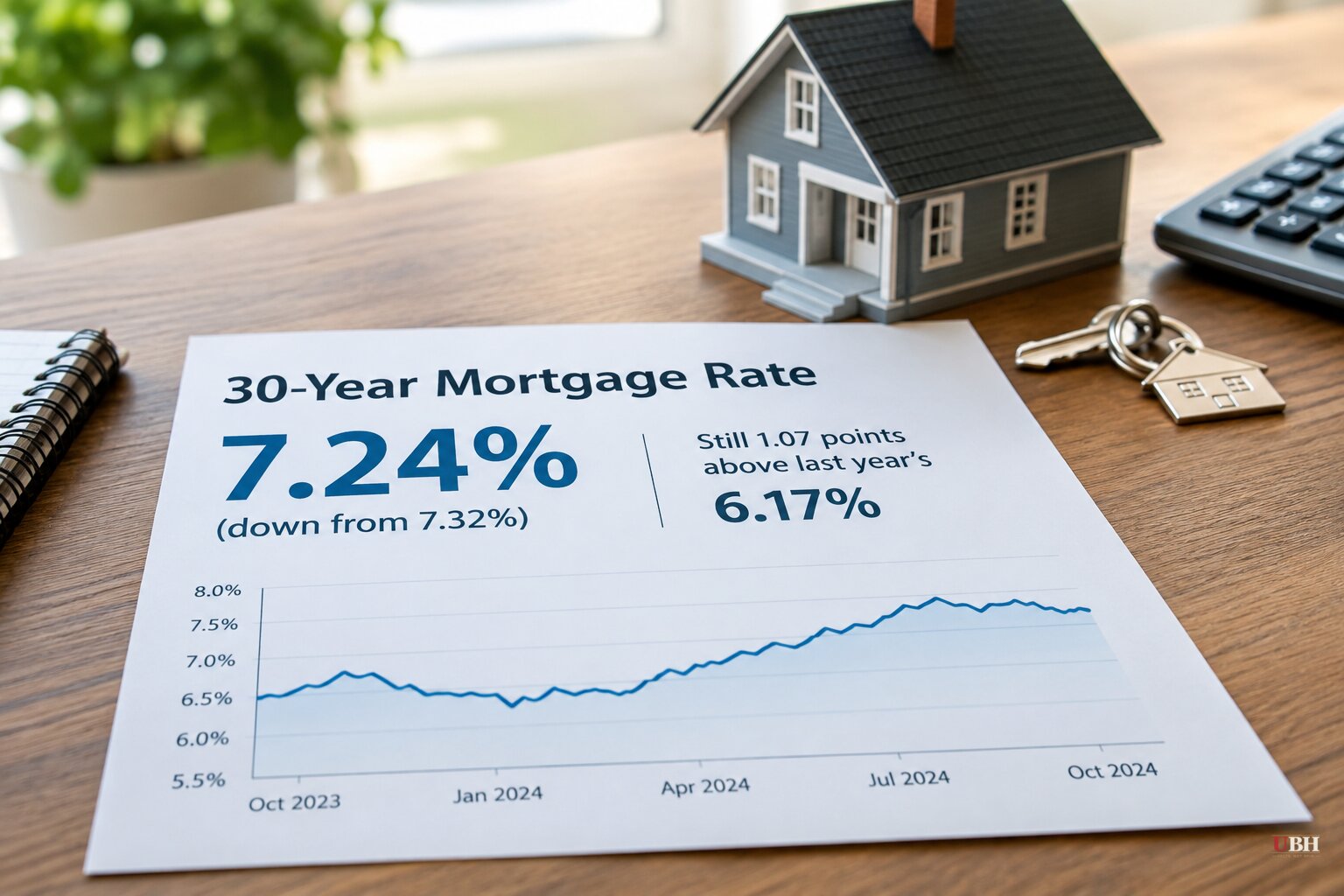
The average 30-year fixed-rate mortgage fell to 7.24% this week from 7.32% the week before, Freddie Mac said Thursday, Oct. 29. It is the second straight weekly decline and the lowest reading in more than a month.
A year ago the average was 6.17%.
The 15-year fixed rate, the loan many refinancing borrowers choose, dropped to 6.60% from 6.68%. A year ago it was 5.41%.
How far rates have climbed
The weekly dip is small against the run-up. In late February the 30-year average briefly touched 5.98%, its lowest since late 2022. It peaked at 7.4% earlier this month, its highest in nearly three years.
The Associated Press ties the climb to the start of the U.S. war with Iran in late February, which it says pushed up oil prices and inflation and rattled the bond market. The 10-year Treasury yield, the benchmark lenders use to price home loans, was 3.97% before the war. It surged past 5.30% earlier this month, its highest level since 2002. It stood near 4.98% at midday Thursday.
Freddie Mac's average assumes a typical borrower. The Mortgage Reports, which tracks quotes from its lender network, listed a conventional 30-year fixed at 7.314% on Oct. 29. It listed the 15-year at 6.717%. Individual offers vary with credit, income, down payment and loan terms.
What it costs a buyer
From the February low to today's average, a borrower financing $400,000 now pays roughly $350 more per month, according to the AP's calculation.
The housing market shows it. Sales of previously owned homes were essentially flat last year, stuck at a 30-year low, and sales remain stalled this year in large part because of higher borrowing costs. Many would-be buyers are putting off purchases.
Lawrence Yun, chief economist for the National Association of Realtors, told borrowers this month to "expect 7 percent as the new normal." That is a long way from the sub-6% rates of February.
The Fed and the bond market
The Federal Open Market Committee voted 10-2 on Wednesday, Oct. 28, to hold the federal funds rate at 3.75% to 4%. Odds of a hike at the Dec. 8-9 meeting stand at roughly 80%, according to CME FedWatch.
Third-quarter GDP came in ahead of forecasts as business spending on data centers and AI infrastructure accelerated. Mike Fratantoni of the Mortgage Bankers Association said inflation remains well above the Fed's target, keeping future hikes firmly in focus.
The 10-year yield also moved on Thursday. The Mortgage Reports cited a CNBC reading of 5.011%, up from 4.993% in its previous report, and said that implies modest upward pressure on mortgage pricing. The AP put the yield at 4.98% at midday. Either way, the yield sits around the 5% mark that has kept rates elevated for weeks.
Relief or a pause?
Sam Khater, Freddie Mac's chief economist, said this week's decline restored some buyer confidence heading into the traditionally quiet winter months.
Others expect little lasting relief. Odeta Kushi, deputy chief economist at First American Financial Corporation, told Mortgage Professional America ahead of the October Fed meeting that a rate hike is no longer unthinkable. "The more likely story for the second half of the year is volatility around a higher-for-longer range, rather than a meaningful decline in mortgage rates," she said. "If inflation remains sticky and investors continue to demand compensation for inflation risk, mortgage rates may stay elevated."
Lisa Sturtevant, chief economist at Bright MLS, said: "I expect mortgage rates to increase from where they are now."
That is a different bet from Khater's. Mortgage rates track the 10-year yield and not the Fed's rate directly.
What comes next
Whether a third straight decline follows depends on where the 10-year yield settles around 5% and on the inflation data heading into the Dec. 8-9 Fed meeting.
Sources used for this briefing
6 links from 6 independent newsrooms (syndicated copies of the same report count once)
These are the sources it draws on, linked so you can verify.


