
Unbiased headlines. Facts, not spin.
Every story is an unbiased news briefing written from 110+ sources across the spectrum — sources linked so you can verify it yourself.
 tech
Notable (6/10)
September 15, 2026 at 07:26 PM
tech
Notable (6/10)
September 15, 2026 at 07:26 PM
Radical Ventures Raises Over $1 Billion for Canada's Largest-Ever Venture Capital Fund
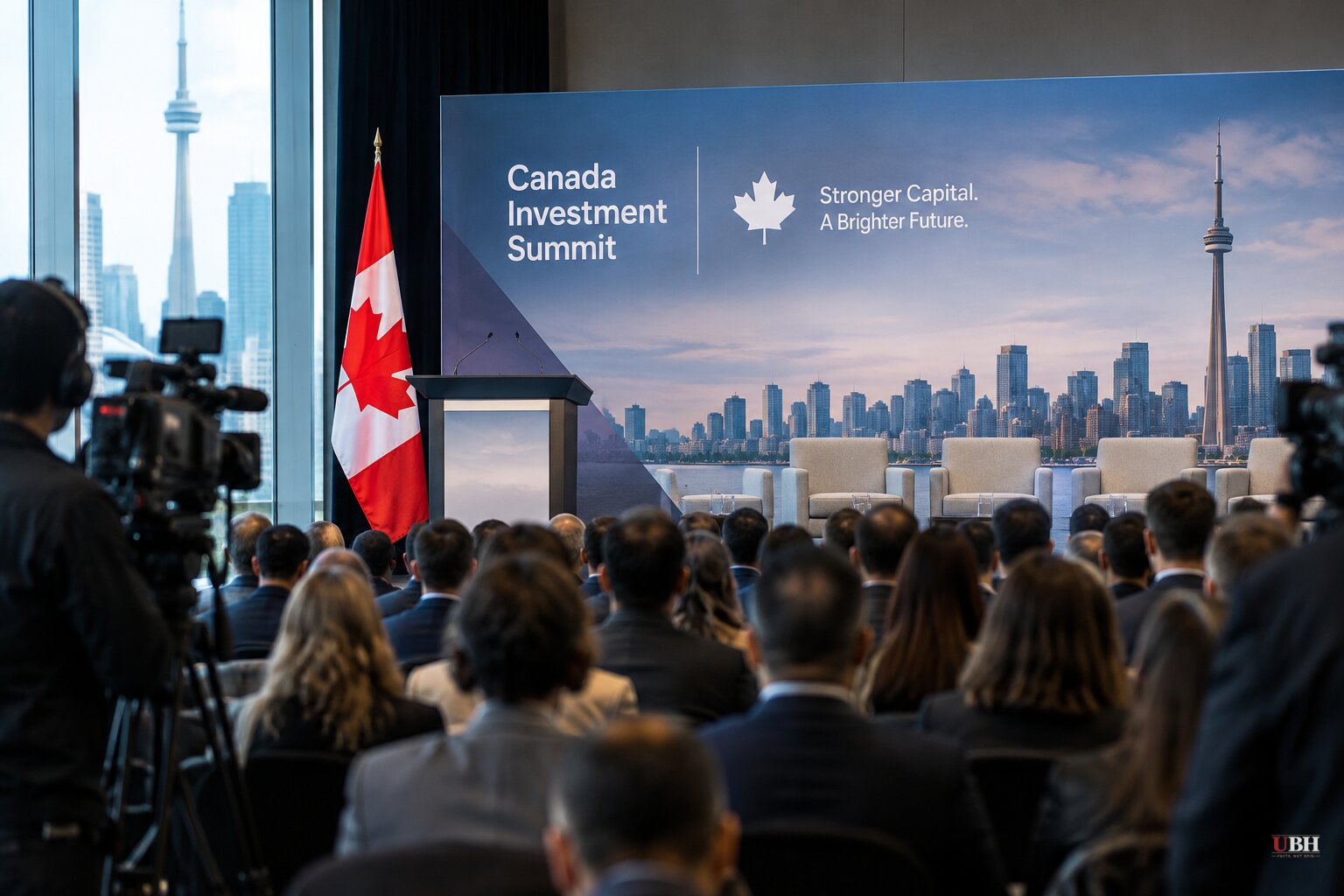
Radical Ventures announced Tuesday it has closed over $1 billion USD, roughly $1.4 billion CAD, in first commitments for a new fund called Radical Breakouts. According to the firm, it's the largest venture capital fund ever raised in Canada.
The money came from seven named institutions: PSP Investments, CPP Investments, the Healthcare of Ontario Pension Plan (HOOPP), OPTrust, TD Bank Group, BMO Financial Group, and CI Global Asset Management, plus unnamed "other leading global investors," according to the announcement distributed via PRNewswire and confirmed by BetaKit, Unite.ai, and The Logic. Radical says it's still raising toward a "multi-billion-dollar" final target.
The announcement landed at Prime Minister Mark Carney's inaugural Canada Investment Summit in Toronto, described by Unite.ai as the first gathering of global investors and CEOs hosted by the federal government alongside CPP Investments and PSP Investments to pull capital into the Canadian economy. Timing a private fund launch to a government-branded investment summit serves both sides: Radical gets a stage, Carney gets a headline number for his economic agenda.
The Pitch: Stop Losing AI Companies to America
Radical co-founder and managing partner Jordan Jacobs framed the fund as a fix for a decades-old problem. "Canada has never had a shortage of world-class AI companies," Jacobs said in the announcement. "What we have lacked is capital at the scale required to keep them here as they grow. For decades, that meant our best companies looked to the United States to fund their most important years, and much of the value they created went with them."
The underlying math, laid out by Tech Times, is that AI companies now stay private far longer than they used to, and raise round after round at valuations that used to only exist post-IPO. Tech Times cited Cohere near $7 billion, Anthropic around $60 billion, and OpenAI around $300 billion as examples of that shift. Radical wants Breakouts to write the big late-stage checks that keep Canadian founders from having to chase that money in Silicon Valley.
The fund isn't starting from zero. The Logic reported Breakouts will back 12 companies at launch, including three deals reassigned from Radical's existing portfolio: Discovery Loop, co-founded by Alphabet chief scientist Jeff Dean, Nvidia rival Etched, and Cohere, into which Radical put the first check and co-led a $600 million round. Other portfolio names cited across the announcement and BetaKit's reporting include Waabi, Xanadu, Veeda AI, World Labs, Periodic Labs, Crusoe, Generalist, Prime Intellect, Decart, Latent Labs, Muon Space, and Aspect Biosystems.
How It Stacks Up
BetaKit put the raise in context: Radical's first close is roughly on par with Georgian's 2021 alignment fund, which also topped $1 billion USD. If Radical hits its multi-billion-dollar target, BetaKit reported, citing Canadian Venture Capital & Private Equity Association and PitchBook data, it would be Canada's largest VC fund by a wide margin.
It's also not an isolated move. BetaKit noted the Royal Bank of Canada has a planned $1 billion USD fund aimed at scaling Canadian tech companies, and newcomer Intrepid Growth Partners has raised $525 million USD for AI growth funding. Several of Breakouts' own backers, PSP, CPP, TD, and BMO, have made other Canada-focused commitments ahead of Carney's summit, according to BetaKit's ongoing tracking.
The Fair Question: Whose Money Is This
CPP Investments manages the Canada Pension Plan, funded by mandatory contributions from Canadian workers and employers. PSP Investments manages pensions for federal public servants, the military, and the RCMP. HOOPP and OPTrust cover Ontario healthcare and public-sector workers. That's not general tax revenue, but it is other people's retirement security, being deployed into unprofitable, pre-IPO AI startups at valuations set by private negotiation, not public markets.
A reasonable skeptic would ask whether pension beneficiaries signed up for exposure to a sector where even Jacobs admits the payoff depends on companies reaching $100 billion-plus valuations that, as of today, exist mostly on paper. Pension funds routinely carve out a slice of their portfolios for alternatives and venture capital as a diversification strategy, and none of the sources here suggest CPP, PSP, HOOPP, or OPTrust are betting anything close to their full holdings on this fund. None of the six reports reviewed raise an allegation of impropriety, and no regulator or watchdog has flagged the fund. But the concentration of Canada's largest pension managers into a single AI-focused vehicle, at a moment when AI valuations are the subject of active debate among economists, is a bet whose scorecard won't be visible for years.
Radical has not disclosed the fund's exact target size or a closing date for the remaining capital. Whether the Breakouts Fund actually keeps a future trillion-dollar company headquartered in Canada, rather than just funding its last private round before an eventual move south, is a question only the next decade of AI valuations will answer.
Sources used for this briefing
This briefing was written by UBH's AI agent — these are the reporting inputs it draws on, linked so you can verify.


