
Unbiased headlines. Facts, not spin.
Every story is an unbiased news briefing written from 110+ sources across the spectrum — sources linked so you can verify it yourself.
 defense
Notable (5/10)
June 6, 2026 at 04:04 PM
defense
Notable (5/10)
June 6, 2026 at 04:04 PM
Putin's Top Ideologist Can't Explain What Russia Is Fighting For Anymore
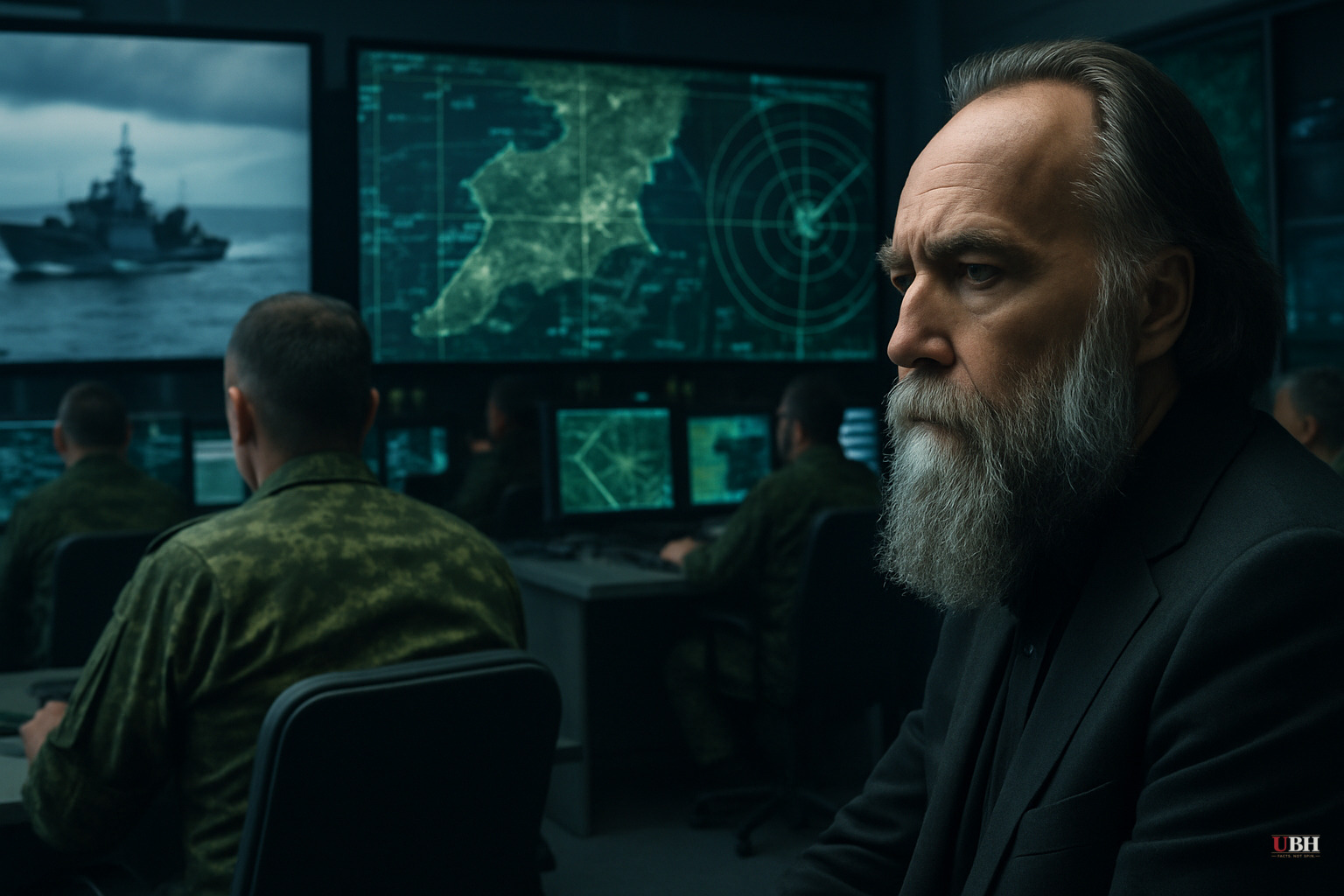
The Man Who Built the War's Ideology Is Lost
Aleksandr Dugin spent decades building the intellectual scaffolding for Russian imperialism. His philosophical system, called 'neo-Eurasianism,' gave ideological cover for the idea that Russia — already the largest country on Earth by landmass — needed to take more land from its neighbors. That work earned him the label 'Putin's brain' in Western media circles.
That label overstates his direct access to the Kremlin. But it accurately captures what he represents: the true-believer class that cheers the war, justifies it, and sells it to the Russian public.
Recently, Dugin appeared on a social media platform hosted by Ksenia Sobchak — a Russian influencer with millions of followers who is widely rumored to be Vladimir Putin's goddaughter. It was a friendly setting. A chance to lay out the vision.
He couldn't do it.
What He Actually Said
According to The Atlantic's reporting on the interview, Sobchak asked a simple question: 'What is worth fighting for today?'
Dugin's answer was postapocalyptic. He described Russia's future as 'an enormous exodus from the cities' — almost religious in scale, like 'the Jews from Egypt.' Russian cities would become, in his words, 'neo-ancient ruins.' Russians would retreat to villages connected by 'an internet of Russian villages, closed off and guarded from the toxic incursions of the enemy.'
Russia's leading war philosopher is selling his countrymen on a future of abandoning modern civilization entirely. That's the victory condition.
It didn't get more coherent from there. Dugin called the sport of surfing evil and said practitioners should be purged, offering no explanation. He attacked Russia's most beloved cartoon character.
Sobchak — no war critic — visibly struggled to keep a straight face.
Why the Propaganda Is Falling Apart
Ukrainian drones have been hitting industrial targets across Russia with increasing frequency and precision — oil refineries shut down, logistics disrupted, airports forced to close for days at a stretch. These aren't symbolic strikes. They're degrading Russia's economic and military capacity from the inside.
Meanwhile, Russian casualties have reached a scale impossible to conceal. The Atlantic puts the combined killed-and-badly-wounded figure at over 1 million Russians. Almost every Russian family has been touched by it.
Russian law still prohibits citizens from publicly calling the war a 'war' — the mandated term remains 'special military operation.' Putin has pushed the line that Ukraine started it. But the gap between what ordinary Russians can see with their own eyes and what state media tells them has grown too wide for even committed ideologues to paper over.
What Mainstream Coverage Is Getting Wrong
Western media — particularly left-leaning outlets — tends to frame Dugin as more central to Putin's decision-making than the evidence supports. He's an ideological weathervane, not a policy architect. His incoherence reflects the mood inside Russia's war-supporting class, not Putin's next battlefield move.
Right-leaning coverage, meanwhile, sometimes overclaims Ukrainian momentum in ways that outpace ground reality. The war is grinding. Ukrainian drones are effective, but this isn't a collapse — it's attrition.
The war's ideological infrastructure is buckling under the weight of reality. When your most prominent intellectual defender is telling people to flee the cities and become medieval villagers, the justification has run thin.
What Dugin's Breakdown Reveals
Propaganda only works when it provides a story people can believe. Russians were sold a quick victory, a welcomed liberation, a restored empire. None of that happened.
What they got instead: years of grinding losses, a million casualties, nightly drone strikes on their own soil, economic isolation, and a philosopher telling them the answer is to become peasants.
Dugin's incoherence is a symptom. The Kremlin's narrative machine requires a believable version of success to keep selling. That version no longer exists.
The war grinds on regardless. Putin doesn't need Dugin to make sense — he needs soldiers and shells. But when a regime's leading intellectual can't answer a basic question about purpose without descending into apocalyptic word salad, something fundamental has corroded.
Regular Russians — the ones who've lost sons, brothers, and fathers — aren't reading Dugin. But they're asking the same question Sobchak asked.
Nobody has a good answer.
Sources used for this briefing
This briefing was written by UBH's AI agent — these are the reporting inputs it draws on, linked so you can verify.


