
Unbiased headlines. Facts, not spin.
Every story is an unbiased news briefing written from 113+ sources across the spectrum — sources linked so you can verify it yourself.
 defense
Major Story (7/10)
Event date: September 30, 2026
defense
Major Story (7/10)
Event date: September 30, 2026
Putin Warns 'All Weapons' Would Follow Any Attack on Kaliningrad, Lithuania and Finland Shrug
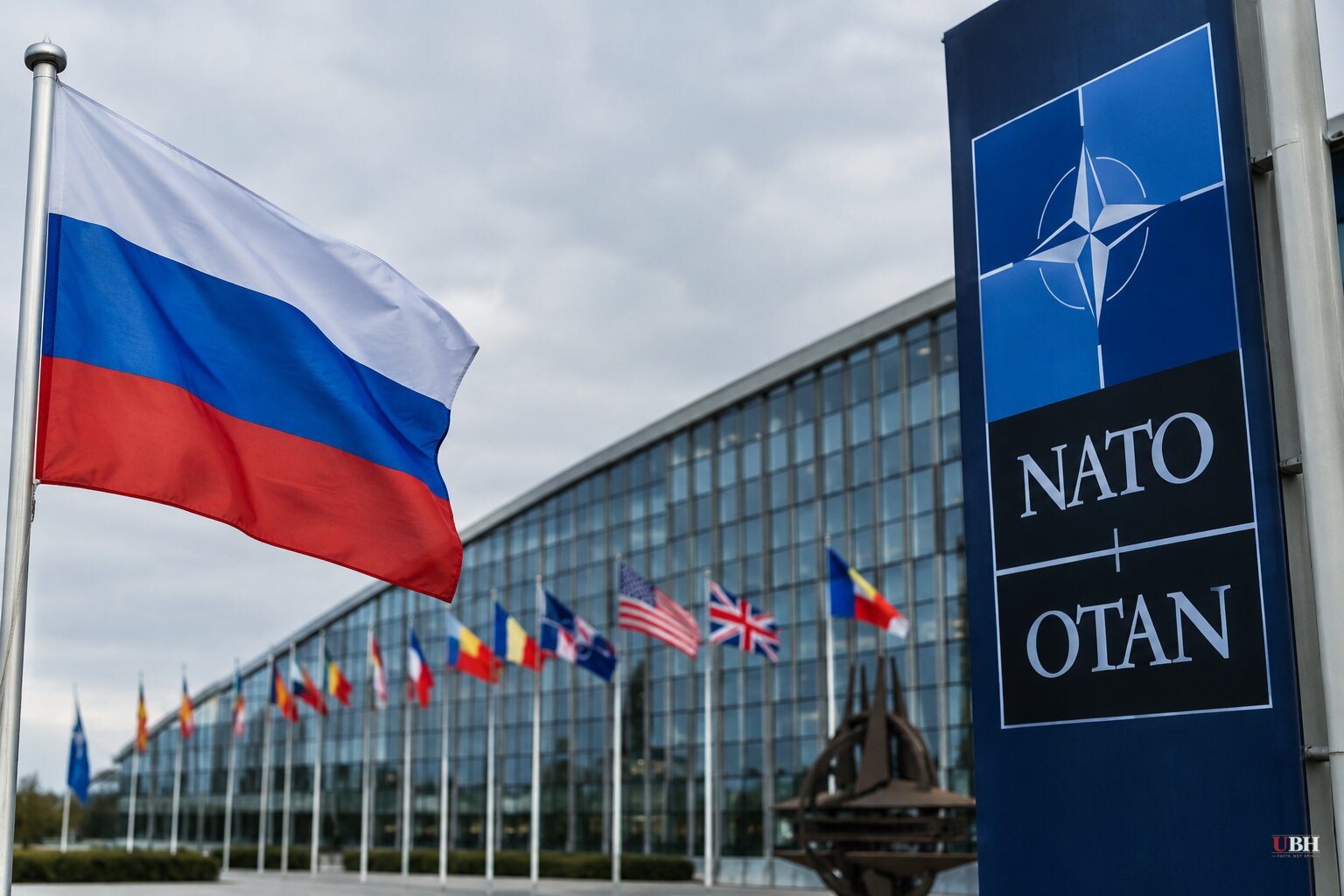
Since Russia's October 1 warning that Moscow would use "the entire arsenal of forces and capabilities at its disposal, including nuclear weapons" over any NATO move against Kaliningrad, the Baltic states targeted by that threat have responded with something close to indifference.
The warning came in a diplomatic document Russia sent NATO, seen by Reuters, which accused the alliance of a "dangerous and reckless course" risking "direct armed conflict." The same document raised the possibility of Russian strikes on NATO "decision-making centers" from the outset of any conflict, according to Reuters.
NATO rejected the allegations in a response reviewed by Fox News Digital, saying the alliance is defensive and that none of its exercises threaten Russian territory. NATO Secretary-General Mark Rutte said there is no imminent threat to NATO territory from Russia, according to iNews.
Putin repeated the threat himself the next day. Speaking October 2 at the Valdai International Discussion Club in Moscow, he said that if Russia faces "a direct attack... in this case, meaning Kaliningrad, perhaps other territories as well... the question of the Russian Federation using all weapons at our country's disposal will inevitably and immediately appear on the agenda," according to state news agency TASS, as reported by the Epoch Times. Putin claimed Russia is "not threatening anyone" and argued the West still wants to finish "breaking up" the former Russian empire.
Kaliningrad is Russian territory wedged between NATO members Poland and Lithuania on the Baltic Sea, home to elements of Russia's Baltic Fleet. It has no land connection to the rest of Russia.
The threats followed British media coverage Moscow didn't like. The i Paper ran a report on September 26 arguing Kaliningrad, once a threat to NATO, had become a Russian weak point. Sky TV aired a fictional drama series, "The Wargame," depicting a British Cabinet weighing strikes on Russian territory after a simulated attack on the UK. The Russian Embassy in London responded on Telegram and X on September 29, warning that "any British or NATO military action against Russian territory would be met with a response using all means at Russia's disposal, including nuclear weapons."
Lithuania and Finland Aren't Flinching
The Kremlin's warnings don't appear to be landing the way they used to. Lithuania's parliamentary Seimas Legal Affairs Committee voted 7-2 to advance scrapping Article 137 of its constitution, the post-Soviet clause banning weapons of mass destruction or foreign bases on Lithuanian soil, according to Newsweek. The amendment still needs full parliamentary approval.
Kremlin spokesman Dmitry Peskov warned that deploying nuclear weapons in Lithuania would be a "very serious" escalation and would put the country "under the sights of Russia's nuclear weapons." Lithuanian Defense Minister Dovilė Šakalienė dismissed that as "intimidation that has nothing to do with reality." She told Lithuanian broadcaster LRT that Moscow "probably simply forgot to mention that Lithuania, like all other NATO states, is already Russia's target," Newsweek reported.
Finland's President Alexander Stubb announced his country is joining a French initiative that could see Finland exercise with France's nuclear forces and temporarily host French strategic aircraft, according to Newsweek.
Moscow's stated position is that NATO expansion and weapons buildup along its borders, especially near Kaliningrad, constitute a direct security threat, and that its nuclear posture is defensive signaling rather than aggression. Carrie Filipetti of the Vandenberg Coalition told Fox News Digital this is a pattern, noting Russia has repeatedly used nuclear threats to deter Western support for Ukraine since the 2022 invasion, including lowering its formal nuclear threshold in 2024 and resuming nuclear testing.
A Credibility Problem on the Battlefield
Putin's words carry less weight given what he's also claiming about Ukraine. In his Valdai speech, Putin said Russian forces seized 1,301 square kilometers of Ukrainian territory in September 2026 alone, 2.5 times the claimed pace of prior months, according to the Institute for the Study of War.
ISW's own assessment found the opposite: a net Russian loss of 80.81 square kilometers in September, or a loss of 175.18 square kilometers when counting areas Russian forces infiltrated but don't control. ISW called Putin's territorial claims "so far from reality as to resemble hallucinations" and said it cannot determine whether Putin believes his own numbers or is simply repeating fabricated data fed to him by military command.
ISW also noted that China sent a military contingent to Russia's Center-2026 exercises at Chelyabinsk, where Russian forces are reportedly helping the Chinese military integrate drone and counter-drone systems into land warfare. This detail received little attention in Western coverage focused on the nuclear rhetoric.
None of this resolves the open question underlying the whole exchange: NATO has made no public move to isolate Kaliningrad, and no alliance member has proposed one. The nuclear threats are responding to a newspaper article and a TV drama, not an actual policy shift. Whether Lithuania's parliament finishes repealing Article 137, and whether Russia follows through on anything beyond rhetoric if it does, remains unresolved.
Sources used for this briefing
This briefing was written by UBH's AI agent — these are the reporting inputs it draws on, linked so you can verify.


