
Unbiased headlines. Facts, not spin.
Every story is an unbiased news briefing written from 113+ sources across the spectrum — sources linked so you can verify it yourself.
 defense
Major Story (7/10)
October 4, 2026 at 07:28 PM
defense
Major Story (7/10)
October 4, 2026 at 07:28 PM
Zelensky Says Ukraine Will Join US-Proposed Trilateral Talks With Russia by End of October
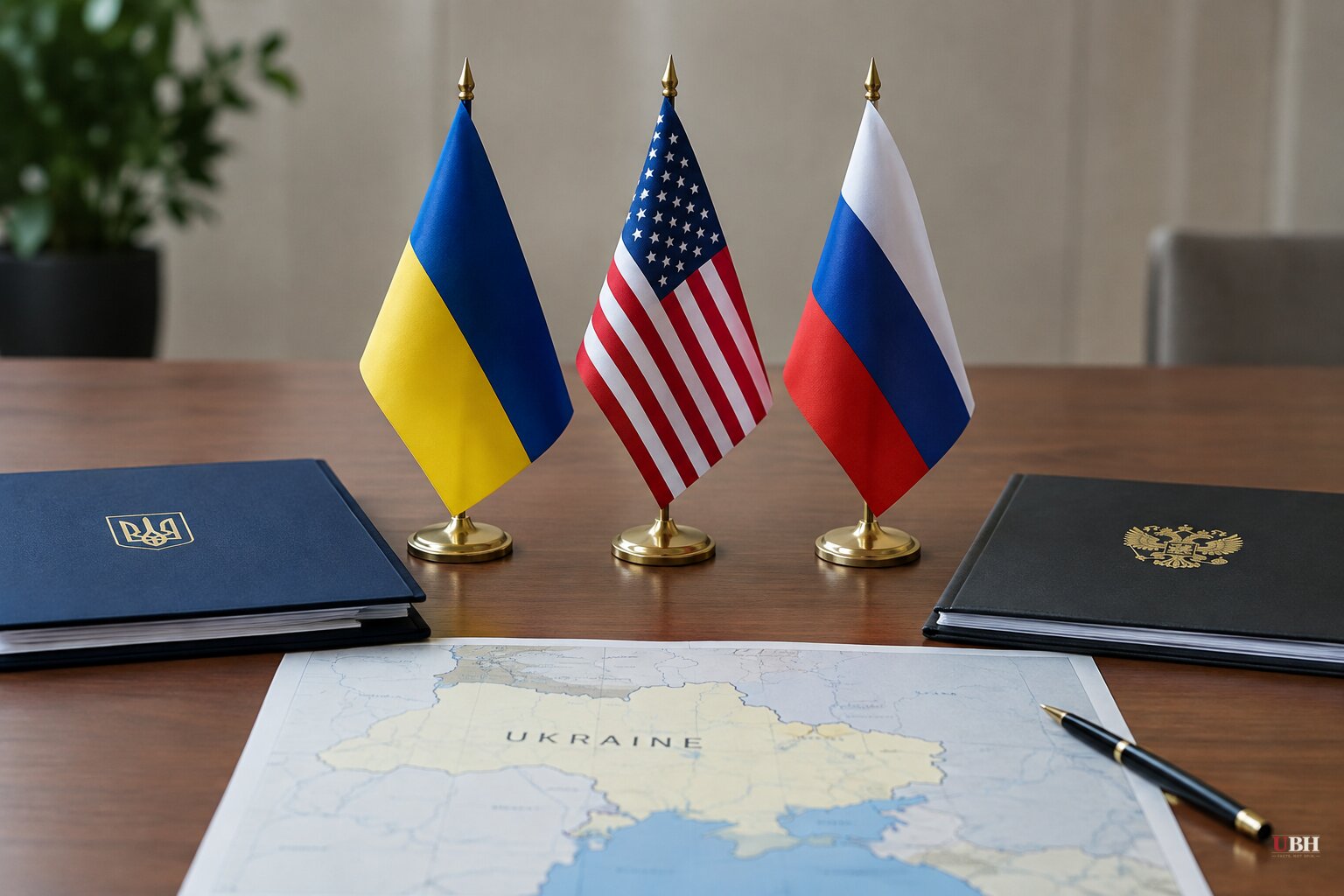
Since Washington's peace push stalled when the Trump administration shifted focus to its war with Iran, Sunday marked the clearest sign yet that US-led ceasefire diplomacy is restarting. President Volodymyr Zelensky said Ukraine will join US-proposed trilateral technical-level talks with Russia by the end of October, speaking at a joint news conference with German Chancellor Friedrich Merz in Kyiv.
"The American side is currently in contact with Ukraine and Russia and is proposing to somehow hold a meeting at the technical level in a trilateral format by the end of October," Zelensky told reporters, according to Al Jazeera. He said he spoke with American negotiators on Saturday, October 3, and confirmed Kyiv's readiness to support that timeline.
Zelensky didn't name a location but said Ukraine is "open to the Emirates or another country proposed by the American side," according to European Pravda. The United Arab Emirates has hosted prior US-mediated sessions on the war. Zelensky said Washington has also presented the proposal to Moscow, which hasn't responded yet.
This isn't a new idea out of nowhere. The Kremlin said last month it doesn't rule out three-way talks, with spokesman Dmitry Peskov telling Russia's Ria and Tass news agencies that Moscow was "talking about the foreseeable future." Media reports have indicated the planned Abu Dhabi-area discussions could center on a partial ceasefire, a mutual freeze on strikes against energy infrastructure, rather than a full cessation of hostilities.
Why Skepticism Is Warranted
Anyone watching this conflict for four and a half years has reason to doubt a late-October sit-down produces a breakthrough. The New Indian Express noted that previous negotiation rounds have gone nowhere, with Moscow unwilling to drop what the outlet called its "maximalist conditions" for ending the fighting. Al Jazeera's own reporting flagged that Vladimir Putin ruled out a ceasefire in a recent speech in Moscow, a detail that cuts directly against the idea that Russia is walking into these talks ready to deal.
That tension showed up again Sunday in Zelensky's own words. Even as he confirmed Ukraine's willingness to talk, he said he was "amazed" by what he called Russia's "savage desire to escalate the situation every day," according to Al Jazeera. He again accused Moscow of hitting "civilian infrastructure, including data centres and mobile network facilities." Russia has said its strikes target Ukraine's energy sector ahead of winter, a repeat of last year's campaign that knocked out power and heating for days as temperatures dropped to minus 20°C.
Both sides, in other words, are talking about talks while also vowing to keep hitting each other's infrastructure. It's the stated posture going into whatever happens in Abu Dhabi or wherever these talks land.
A Third Player Wants In
Ukraine and Russia aren't the only ones angling for a seat at this. India's Foreign Minister Subrahmanyam Jaishankar said Sunday in New Delhi that his country wants to step up its mediating role, according to Al Jazeera. He said India has already gotten more involved in Black Sea shipping issues, where mines and attacks on commercial vessels have been a problem, and is now looking at grain and energy exports along with what he called "non-attack possibilities."
India's pitch adds a wrinkle to a process that's so far been a US-Russia-Ukraine show, with the UAE as venue. Whether Washington or Moscow actually want a fourth party shaping the agenda is an open question nobody answered Sunday.
What Happens Next
The ball is in Moscow's court. Zelensky said he doesn't know whether Washington has formally pitched the end-of-October date to Russia yet or if that's already happened. "We will wait for their response," he said, according to European Pravda. If the Kremlin agrees, the next concrete marker is whether a technical-level meeting actually convenes before November 1, and whether it produces anything beyond another photo op. Given Putin's own recent ceasefire rejection and both sides' continued long-range strikes, that outcome is what matters most.
Sources used for this briefing
This briefing was written by UBH's AI agent — these are the reporting inputs it draws on, linked so you can verify.


