
Unbiased headlines. Facts, not spin.
Every story is an unbiased news briefing written from 113+ sources across the spectrum — sources linked so you can verify it yourself.
 defense
Major Story (8/10)
October 4, 2026 at 03:53 PM
defense
Major Story (8/10)
October 4, 2026 at 03:53 PM
Zelensky Defies Trump, Vows to Keep Hammering Russian Refineries as Moscow Threatens Tougher Strikes
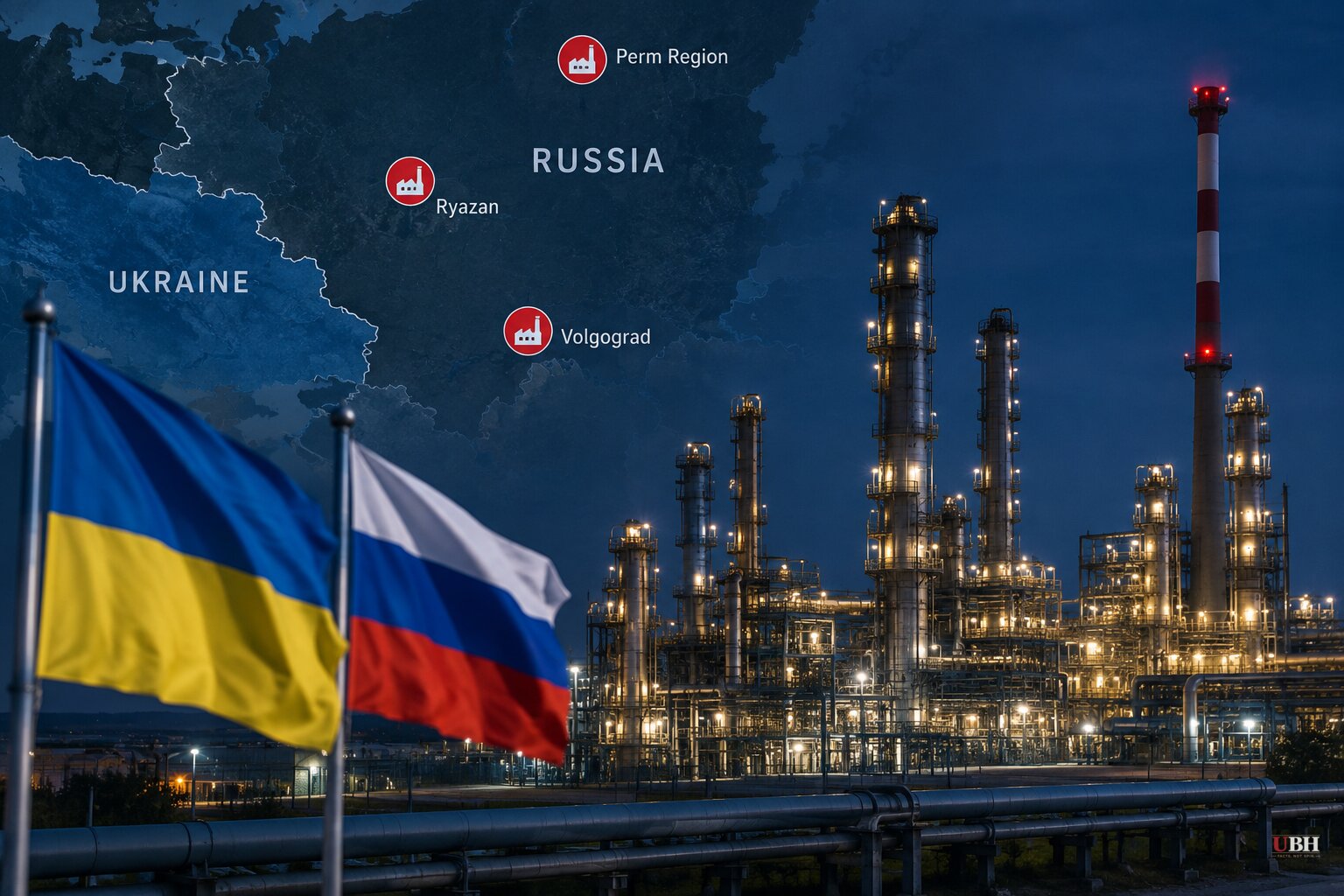
The energy war between Kyiv and Moscow has escalated into a direct standoff between Volodymyr Zelensky and Donald Trump over whether refinery strikes should continue at all.
In an interview with Reuters published Saturday, Zelensky said Ukraine will intensify attacks on Russian oil refineries, calling it a direct response to what he says is a broadened Russian campaign to terrorize Ukrainian civilians ahead of winter. He said Ukrainian intelligence obtained documents showing Vladimir Putin authorized strikes on "infrastructure, logistics... roads, schools, hospitals" specifically to pressure residents to abandon Kyiv and other cities.
"We have to respond in any way we can," Zelensky told Reuters. "With their attacks on our energy, we have to respond on their energy. First of all, oil refiners, etc.: what gives money to them for this war." He added Ukraine will not deliberately strike civilian targets the way he accuses Russia of doing.
Trump Said Stop. Zelensky Said No.
Zelensky's vow directly contradicts Trump, who during a September visit to Ireland publicly urged Ukraine to stop "knocking out diesel fuel," arguing the refinery strikes were driving up global diesel prices, according to Newsweek and Yahoo News. AAA reported average U.S. diesel prices above $6 a gallon at the time Trump made that appeal.
Trump later claimed Ukraine and Russia had reached an informal understanding not to strike each other's energy infrastructure, though no details of any such arrangement were ever made public, per Newsweek. Zelensky indicated he'd go along with a U.S.-backed infrastructure ceasefire if Russia stopped hitting civilians. On Saturday, he said he's seen zero evidence Moscow wants any such deal.
Trump's underlying argument carries real weight for anyone paying a diesel bill. Goldman Sachs energy analyst Nikhil Bhandari said last month the global refining crisis stems from a combination of Strait of Hormuz disruptions and, in his words, "more importantly," Ukraine's bombardment of Russian refineries, which has pushed Moscow to extend its diesel export halt. Bhandari warned the crunch could drag into 2027.
Zelensky's counterargument is straightforward: Russian refineries fund the war machine hitting Ukrainian cities, and Moscow has given no indication it intends to stop. The sources here don't resolve which concern should win out. That's a policy judgment, not a fact in dispute.
Moscow's Answer: More Strikes on Kyiv
Russia's defense ministry said Sunday it will step up strikes on military facilities, defense industry sites and related infrastructure in Kyiv and across Ukraine, according to Russia's state-run TASS news agency as reported by the Times of India. The ministry framed this explicitly as a response to Zelensky's refinery threat.
The escalation is already visible on the ground. Kyiv Mayor Vitali Klitschko said a Russian airstrike Saturday damaged the Northern Bridge over the Dnipro River, suspending traffic and knocking out trolleybus cables, though no injuries were reported, per See.news. That follows an earlier strike on Kyiv's Southern Bridge. Newsweek reported this marks the first time Russian strikes have targeted bridges connecting different parts of the Ukrainian capital.
Russia's Foreign Ministry says its strikes are retaliation for Ukrainian attacks on Russian territory and denies deliberately targeting civilians. Ukraine makes the same denial about its own campaign. Neither side's claims about the other's intent can be independently verified from these accounts.
The G7's Emergency Fuel Dump
French President Emmanuel Macron confirmed Friday that G7 nations will release up to 100 million barrels of emergency oil and diesel stocks over the next four months, coordinated by the International Energy Agency, according to ZeroHedge. See.news reported significant diesel volumes are expected to enter the market within the first 20 days of that release. The stated rationale is a refining crunch leaving fuel stockpiles well below seasonal norms heading into winter.
ZeroHedge's own writeup goes further, calling the release "likely in response to Zelensky's expanding drone and missile attacks on Russian energy assets." That's ZeroHedge's inference, not something Macron or the IEA stated directly. The confirmed, attributable fact is narrower: the IEA is coordinating an emergency release tied to a refining shortfall that Goldman's Bhandari ties to both Middle East disruptions and the Russia-Ukraine refinery war. CNN's same-day coverage, by contrast, amounted to a brief video segment with minimal independent reporting on the fuel release at all, leaving that half of the story largely uncovered on their end.
Putin, speaking at the Valdai Discussion Club in Moscow, warned Western allies to halt what he called their escalation in Ukraine and said he's prepared to use "all weapons" in Russia's arsenal if its Kaliningrad exclave comes under attack, according to ZeroHedge.
Zelensky also told Reuters that a Ukrainian counteroffensive codenamed "Vivaldi" has retaken roughly 140 square kilometers in Donbas. See.news noted the claim could not be independently verified from the information available. Battlefield territory claims from either side remain unverified by independent sources.
No ceasefire covering energy infrastructure exists. No peace talks have resumed. The open question is whether Trump applies any actual leverage, beyond public appeals, to force either side to stand down on refineries and infrastructure before winter deepens the fuel crunch further.
Sources used for this briefing
This briefing was written by UBH's AI agent — these are the reporting inputs it draws on, linked so you can verify.


