
Unbiased headlines. Facts, not spin.
Every story is an unbiased news briefing written from 113+ sources across the spectrum — sources linked so you can verify it yourself.
 defense
Major Story (7/10)
October 4, 2026 at 09:05 AM
defense
Major Story (7/10)
October 4, 2026 at 09:05 AM
Ukraine Says Drone-Delivered Robots Helped Retake 176 Square Kilometers Near Lyman
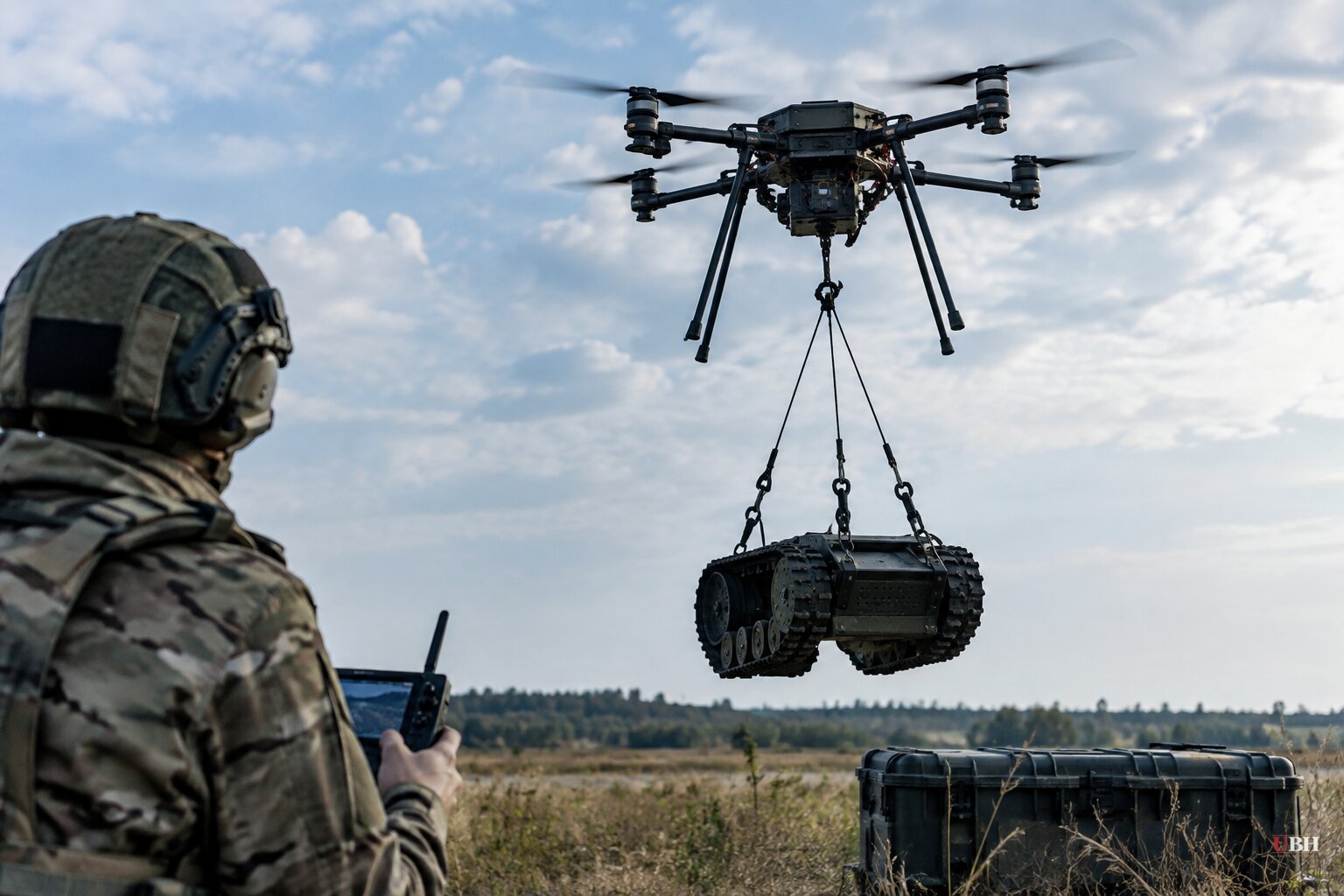
Ukraine's military says it pulled off a months-long offensive that used flying drones to deliver armed ground robots deep behind Russian lines, retaking territory Moscow had spent over a year grinding toward near Lyman in the Donetsk Oblast.
The operation, called Vivaldi, started in May, according to Ukraine's Third Army Corps. Official confirmation didn't come until September 15, according to the Atlantic Council, which says Ukrainian commanders have been rationing details since. Brigadier-General Andrii Biletskyi said on September 28 that the operation's third phase alone retook 51 square kilometers, bringing the total to 176 square kilometers, according to CNBC.
How the robots did it
Patrick Bolder, a strategic advisor at the Hague Center for Strategic Studies, told CNBC the operation combined several pieces: operational secrecy, disinformation campaigns against Russia, and a months-long air campaign to choke off supply lines to the front. Ukrainian forces also secured control of the air over Lyman, denying Russia the use of its own drones, Bolder said.
With that air advantage, Ukraine flew large bomber drones to drop unmanned ground vehicles behind Russian positions. Those UGVs, armed with heavy machine guns or explosives, attacked Russian troops from the rear without putting Ukrainian soldiers there, Bolder said. "They put this together masterly," he told CNBC.
The Atlantic Council adds that Ukraine built an electronic warfare "curtain" to block Russian reconnaissance drones from penetrating the area, and says one intercepted Russian officer expressed disbelief that robots had gotten so far behind the lines. In early September, Ukrainian officials claim they also forced a unit of Russia's Rubicon drone formation to retreat after destroying its launch sites and ammunition depots, according to the Atlantic Council.
BBC Science Focus describes a parallel incident near Dobropillya in which a five-man Russian infiltration squad was killed by three unmanned aerial vehicles and two unmanned ground vehicles, with no Ukrainian troops involved. Robert Tollast, a researcher with the Royal United Services Institute, told the outlet that Ukraine's edge rests heavily on Starlink satellite links, which let operators keep reliable contact with ground robots far longer than radio allows. BBC Science Focus reports Ukraine has held that advantage since Starlink blocked Russia's military use of its terminals in February 2026, though Tollast says Russia is now working with China to find ways around it without relying on the expensive jamming trucks Ukrainian drone operators have been destroying.
The casualty numbers don't match
CNBC and Europe Says both report Biletskyi's figure of "over 2,000 Russian losses" and more than 250 prisoners taken during Vivaldi's third phase specifically. The Express, however, reports a different number entirely: 3,000 Russian soldiers killed "in a matter of months," sourced to the Third Army Corps, and describes the territory retaken as 48 square miles rather than the roughly 68 square miles that 176 square kilometers works out to.
None of these figures have been independently verified. They are Ukrainian military claims, not confirmed battlefield assessments from a neutral party. CNBC reported that a spokesperson for Russia's Embassy in London did not respond when contacted for comment. Russia has not publicly disputed or confirmed Ukraine's numbers in any of the sourced reporting here, and no independent casualty count has been produced.
Security experts are also careful not to oversell what happened. David Kirichenko, an associate research fellow at the Henry Jackson Society, told CNBC the operation sends "a powerful message to Moscow and to Kyiv's partners" about Ukraine's continued battlefield innovation, but stopped short of calling it decisive. Bolder told CNBC that retaking the ground has at least pushed Ukrainian troops into more defensible positions, making it "harder for the Russians to try to do this again."
Robots are becoming policy, not just tactics
Serhii Kuzan, chairman of the Ukrainian Security and Cooperation Center, told CNBC that Vivaldi shows something bigger than a one-off tactic: work that used to require dozens or hundreds of soldiers is increasingly handled by remotely operated platforms, cutting personnel losses. President Volodymyr Zelenskyy made that explicit in a September 30 social media post, praising the Third Army Corps and pledging to expand robotic use so that machines, not soldiers, take on the most dangerous frontline jobs.
Ukraine's military has also launched a formal competition to source new ground robot designs, according to BBC Science Focus, with an official goal of "maximising the automation of the front lines." Separately, Mykhailo Fedorov, Ukraine's former digital transformation minister who was dismissed by Zelensky in July, announced a new venture called "Army of Robots" aimed at investing in robotics defense tech companies, according to the Express. It's his second major push into battlefield technology after launching the Army of Drones initiative in 2022.
Whether Russia can adapt remains unclear. If Moscow and Beijing find a workaround to Ukraine's Starlink-dependent robot operations, as Tollast suggests they're trying to, the tactical edge documented here could shrink fast. Whether Vivaldi's territorial gains hold through the winter fighting season is also an open question none of the sources answer.
Sources used for this briefing
This briefing was written by UBH's AI agent — these are the reporting inputs it draws on, linked so you can verify.


