
Unbiased headlines. Facts, not spin.
Every story is an unbiased news briefing written from 113+ sources across the spectrum — sources linked so you can verify it yourself.
 defense
Major Story (8/10)
Event date: September 30, 2026
defense
Major Story (8/10)
Event date: September 30, 2026
Trump Team's Russia Dealmaking Deepens as Lukoil Sale and Secret Sanctions Plan Surface Amid Unresolved Ukraine Fighting
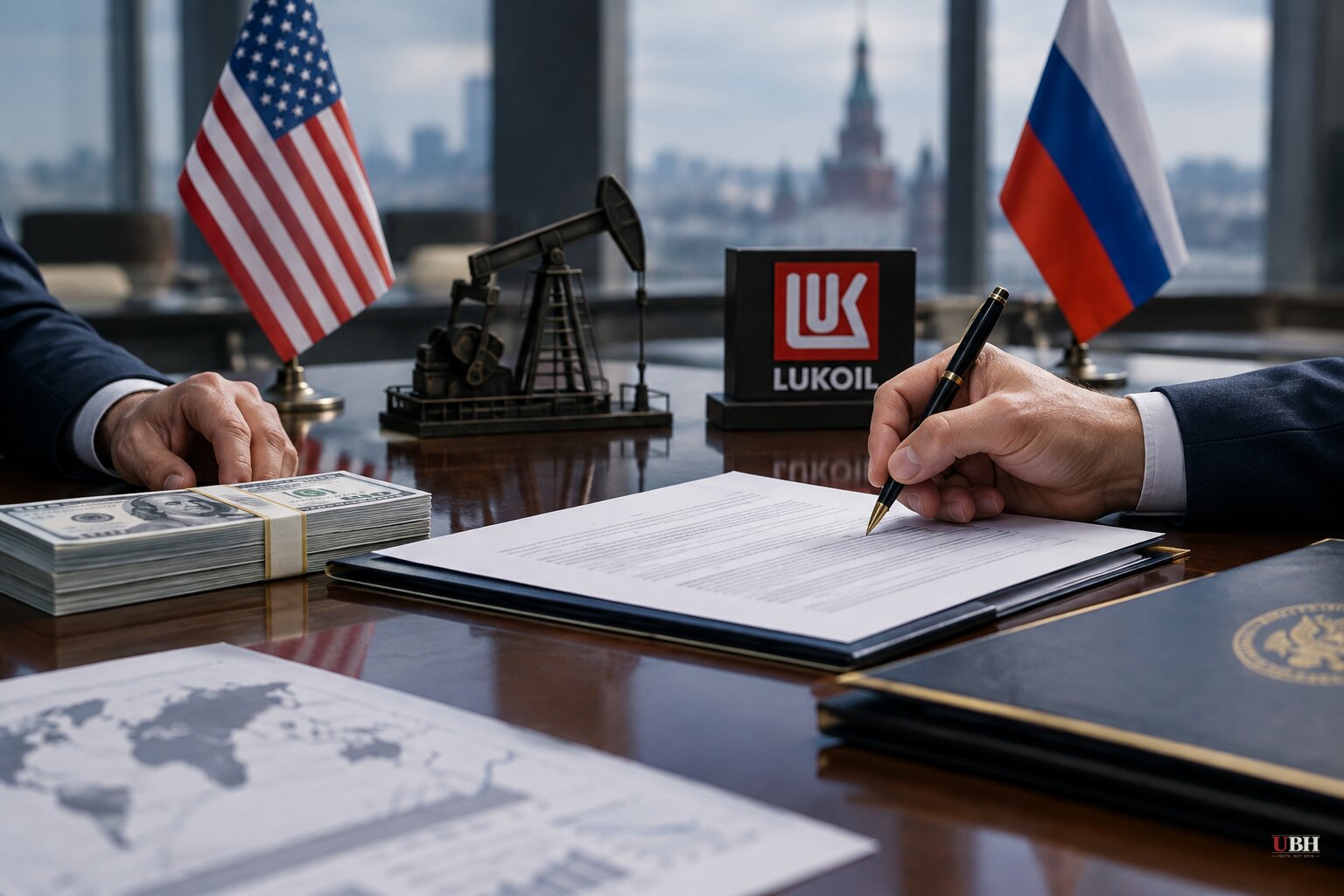
A Lukoil deal enters the room
Talks aimed at ending Russia's war in Ukraine have expanded to include a multibillion-dollar sale of Lukoil's international oil assets, according to The New York Times, which cited eight people familiar with the negotiations. Türkiye Today put the figure at roughly $20 billion.
The assets on the table include Lukoil oil fields, refineries and gas stations outside Russia, including in Cameroon and across Europe. A group led by American investor Todd Boehly, the billionaire co-owner of the Los Angeles Dodgers, is the leading bidder, alongside Middle Eastern investors and the US government's International Development Finance Corporation, according to the Times' reporting.
Boehly donated $1 million to the Trump-aligned MAGA Inc. super PAC in December 2025 and another $1 million through his firm Eldridge Industries to Trump's inauguration fund, Türkiye Today reported. The Middle Eastern investors in the bidding group reportedly have ties to people close to the families of Steve Witkoff and Jared Kushner, the two envoys leading Trump's outreach to Moscow.
The Times reported there is no indication Witkoff or Kushner personally stand to profit from the transaction. A senior administration official confirmed to Türkiye Today that both men helped negotiate the federal government's involvement. Any sale would still need sign-off from both Washington and the Kremlin, and US approval would effectively lift sanctions currently blocking the assets, raising their market value.
Putin raised the Lukoil sale himself when he met Witkoff and Kushner at the Kremlin on September 5, the Times reported, framing it as proof that American and Russian business could work together again. US officials said they'd pursue it as a goodwill gesture that might also ease global energy prices.
A second, secret track: prisoners for sanctions relief
Separately, The Atlantic reported that Trump approved a plan months ago, proposed by his envoy to Eastern Europe, John Coale, to trade limited sanctions relief for the release of Russian political prisoners. The plan would also open the door to US commercial deals involving Russian oil, diesel and rare earth minerals while the war continues, according to the Atlantic's reporting, carried by Times Now and the opinion site Balloon Juice.
Coale modeled the approach on his work in Belarus, where he helped secure the release of roughly 500 political prisoners from Alexander Lukashenko's jails in exchange for eased US sanctions and a developing deal to buy Belarusian potash, which Trump called "massive" on Truth Social. Coale told the Atlantic that Russia is also part of those potash negotiations because the fertilizer would likely transit Russian territory. "All this stuff works toward the possibility of peace," he said.
Belarusian opposition leader Svetlana Tikhanovskaya pushed back on the prisoner-swap model, telling the Atlantic: "They can always arrest more people." Zelensky has said he'll oppose lifting sanctions on Russia before the war ends, though the Atlantic noted he's acknowledged it's hard to compete with the financial incentives Moscow is dangling.
The timing stands out: Times Now noted the plan surfaced only weeks after Trump signed legislation imposing severe new sanctions on Russia and its trading partners. The White House has since nominated Coale as special presidential envoy for hostage affairs, a post requiring Senate confirmation.
The Kremlin wants deals now, not after peace
Kremlin spokesman Dmitry Peskov told reporters Thursday, October 1, that Russia and the US could start economic projects immediately rather than waiting for a Ukraine settlement, as Washington has publicly insisted, according to Kyiv Post. "We believe we don't have to wait," Peskov said. His comments followed a Washington visit by Putin envoy Kirill Dmitriev, who met with US Treasury and Energy officials in talks a US official called "constructive."
Notably, Peskov also dismissed media reports of a prisoner-release-for-sanctions deal, Kyiv Post reported, directly contradicting the Atlantic's account that Coale's plan had already been set in motion with Trump's approval. Neither side has produced documentation settling the dispute.
The energy-strike truce that isn't quite a truce
Layered on top of the business talks is an unconfirmed battlefield deal. Trump posted on Truth Social that "Ukraine has agreed not to hit Russian Energy targets. Russia has agreed to do, likewise!" Zelensky's response, posted roughly an hour later and reported by CNBC, was conditional: Ukraine would halt strikes only if Russia "genuinely refrains" from hitting Ukrainian infrastructure, calling it something that must be "reliable, long-term" and not something that evaporates once Russia's own elections pass. Peskov called the idea "very good" but, per CNN, stopped short of confirming any actual agreement. Russian strikes on Kyiv gas stations and a Ukrainian strike on a refinery in Russia's Samara region followed shortly after, per CNN.
The backdrop is a diesel market under real strain: US pump prices hit $6 a gallon for the first time, according to AAA data cited by both CNN and CNBC, as fighting tied to the broader Middle East conflict and Ukrainian strikes on Russian refineries squeezed supply.
What's actually being argued, and what isn't proven
The administration's stated rationale, voiced by both Coale and unnamed officials, is that commercial engagement builds goodwill, could help end the war, and might ease energy prices squeezing American consumers. That's a coherent policy argument, not a cover story invented after the fact.
The counterargument, raised by Ukrainian officials and some Republicans in Congress per Times Now, is that any revenue flowing to Russian-linked entities while Moscow's forces are still attacking Ukrainian cities risks helping fund the war Washington says it wants to end. Zelensky has staked out that position publicly.
No evidence in any of these reports shows Witkoff or Kushner personally profiting, and no sale has closed. Balloon Juice, in its commentary on the Atlantic's reporting, framed the story as Trump's team showing "there is no low too low" to sell out Ukraine for business opportunities, a characterization stronger than what the Atlantic's own reporting establishes. The Atlantic documented a policy plan and a business opening; it did not allege personal enrichment by named officials.
Coale's Senate confirmation hearing for the hostage-affairs envoy post, not yet scheduled in these reports, will be the first forum where lawmakers can question him on the record about the sanctions-for-prisoners plan Peskov says doesn't exist.
Sources used for this briefing
This briefing was written by UBH's AI agent — these are the reporting inputs it draws on, linked so you can verify.


