
Unbiased headlines. Facts, not spin.
Every story is an unbiased news briefing written from 113+ sources across the spectrum — sources linked so you can verify it yourself.
 defense
Major Story (7/10)
October 3, 2026 at 07:04 AM
defense
Major Story (7/10)
October 3, 2026 at 07:04 AM
Russia Strikes Kyiv's Second Major Bridge, Third Straight Day of Attacks on Capital's Dnipro Crossings
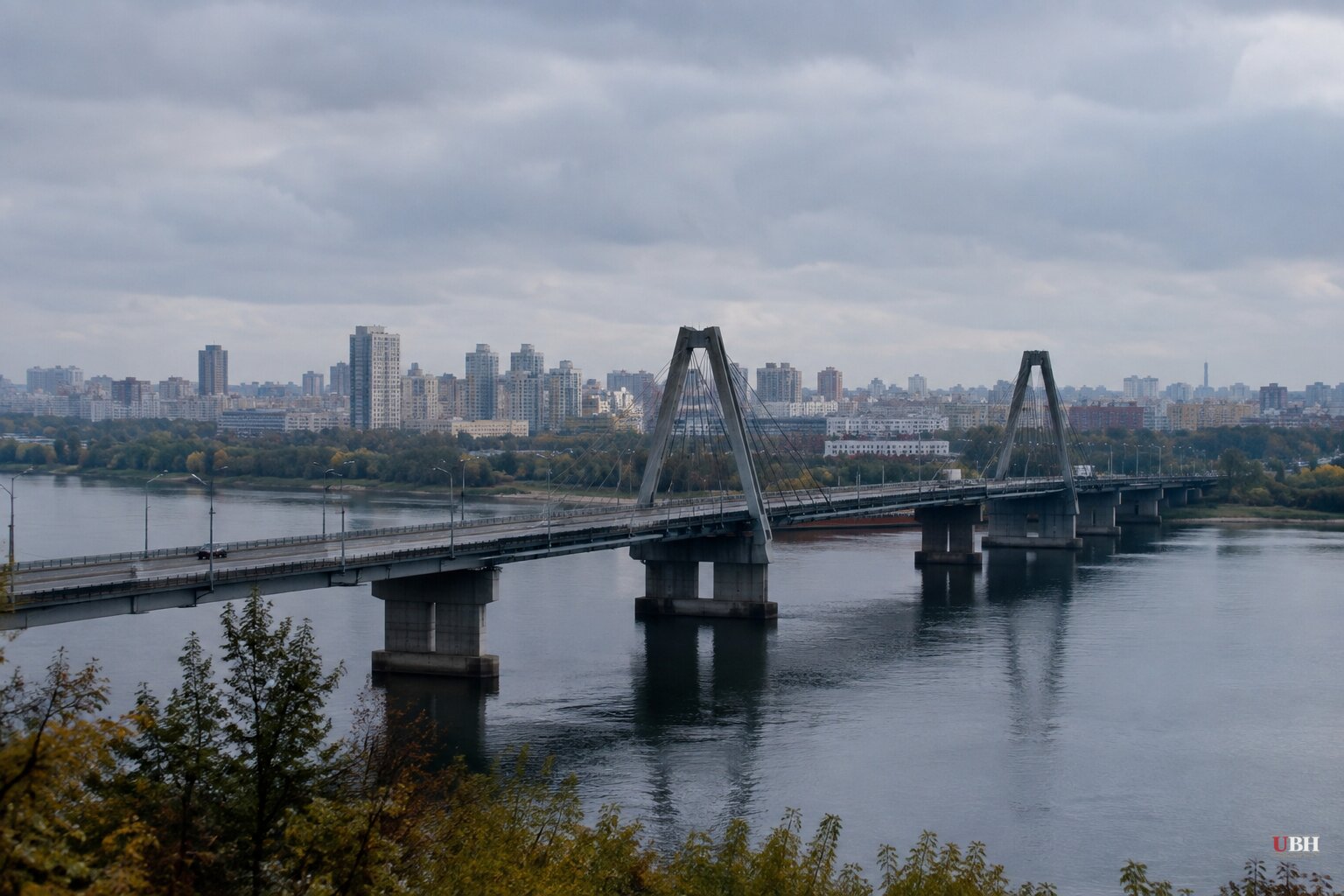
Since Russian drones first struck Kyiv's Southern Bridge on Thursday, October 1, in what the Kyiv Post called the first attack on a major Kyiv bridge since the full-scale invasion began, Moscow has now hit a second river crossing in the capital.
Kyiv Mayor Vitali Klitschko said Saturday morning, October 3, that a drone struck the Northern Bridge around 6:30 a.m., damaging the road surface and trolleybus overhead wires, according to the Kyiv Independent. Traffic from the left bank to the right bank was halted. No casualties were reported, per the Guardian.
Russian strikes on bridges spanning the Dnipro River have now occurred for three consecutive days.
What happened to the Southern Bridge
The Southern Bridge was hit repeatedly between Thursday morning and Friday evening, October 1-2, according to the Kyiv Post. The first strike hit near a bridge support while a metro train was crossing. The blast wave pushed dust through the train's ventilation system into passenger carriages, but no one was hurt and the train was pulled for inspection, the Kyiv Post reported.
A third drone hit the roadway Thursday evening. By Friday, United24 Media reported it was the fourth strike on the bridge in two days. Kyiv authorities shut the Southern Bridge to all traffic around the clock, closing one of the city's eight Dnipro crossings regardless of air raid status.
The Southern Bridge carries both road traffic and the Green Line of Kyiv's metro, according to the Kyiv Post, which is why even limited damage disrupts multiple transit systems at once. An economic analyst cited by the Guardian put the daily commute across the Dnipro at roughly 500,000 people.
Gridlock and improvised fixes
Euronews spoke to Tetiana Osypenko, a 49-year-old seamstress, who said she'd been traveling three hours trying to reach work. "There's just no way to get there. Nothing. It's impossible to cross the bridges today," she told Euronews. Commuters abandoned stalled buses and crossed on foot, according to both Euronews and United24.
Kyiv lawmaker Volodymyr Kreidenko, a member of parliament's transport committee, said officials are weighing ferries, pontoon bridges, extra bus routes, reversible lanes, and alternating driving schedules to relieve pressure on the remaining crossings, United24 reported.
Why bridges, and why now
Kostiantyn Kryvolap, an aviation expert and former Antonov test engineer, told the Kyiv Independent that flattening a bridge with the drones Russia is using isn't realistic. "Destroying a bridge with a 50-kilogram explosive charge, even with a highly effective warhead designed to destroy steel bridge structures, is a major exaggeration," he said. "For a bridge like this, these strikes are more like mosquito bites." The goal, he said, is halting traffic, disrupting logistics, and applying psychological pressure on the population, not toppling the structures.
A senior Ukrainian official told the Guardian the bridge campaign tracks with an order Vladimir Putin issued in September scrapping limits on Russia's air campaign. That claim comes from an unnamed official and has not been independently verified.
Putin has separately said Russia's strikes on Ukrainian infrastructure are a response to Ukraine's attacks on Russian energy facilities, including refineries. That's Putin's stated justification and deserves to be represented fairly. But the BBC notes it was Russia that launched strikes on energy infrastructure first, well before Ukraine's refinery campaign began, a timeline that complicates the Kremlin's framing.
President Volodymyr Zelensky, in remarks first made to the Financial Times and repeated on X, accused Putin of telling people around him there are "no rules now" and of deliberately shifting from battlefield fighting to mass strikes on civilian infrastructure because Russia couldn't occupy Ukrainian territory by force. The Kremlin has not publicly responded to that specific claim.
The wider toll
October 2 brought casualties elsewhere. A Russian drone strike caused a fire in a Kyiv apartment building, killing one person and injuring two, officials told the Guardian. In Kharkiv, a guided bomb strike killed two people and wounded 32, the regional governor said.
Russia's jet-powered drone campaign has scaled up sharply since summer. United24 Media reported roughly 2,800 drones launched in August versus about 350 in June, an eightfold jump. Faster models like the Geran and Banderol have cut the reaction window for mobile Ukrainian air-defense teams from about one minute down to six seconds, according to air defense experts cited by United24.
Klitschko says Kyiv now needs to operate on a "war footing," telling residents "it's no longer possible to pretend that we can live now as we lived in peacetime." The city's defense council met Friday to address the crisis.
How long Kyiv can keep running on improvised fixes, ferries and pontoon bridges, remains uncertain if Russia keeps hitting the remaining six Dnipro crossings as winter approaches and energy infrastructure comes under parallel attack.
Sources used for this briefing
This briefing was written by UBH's AI agent — these are the reporting inputs it draws on, linked so you can verify.


