
Unbiased headlines. Facts, not spin.
Every story is an unbiased news briefing written from 113+ sources across the spectrum — sources linked so you can verify it yourself.
 defense
Major Story (8/10)
October 2, 2026 at 02:32 AM
defense
Major Story (8/10)
October 2, 2026 at 02:32 AM
Putin Tells Valdai Forum Russia Would Use 'All Weapons' Including Nuclear Arms If Kaliningrad Is Attacked
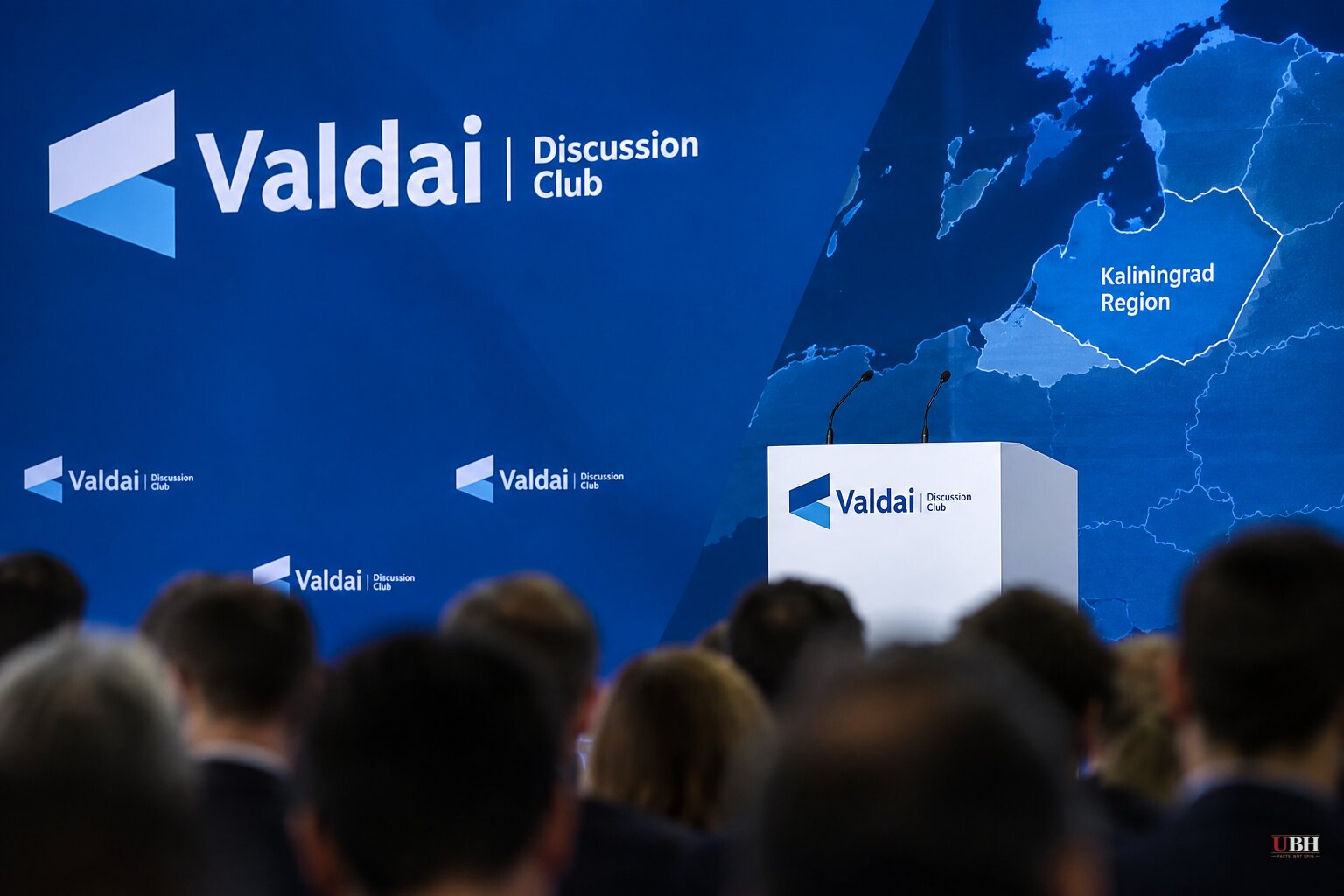
Since Russian embassies across Europe sent formal warnings this week accusing NATO of preparing an air and naval blockade of Kaliningrad, Vladimir Putin has put his own name on the threat. Speaking Thursday at the Valdai Discussion Club forum in Moscow, Putin said any direct attack on Russian territory, including Kaliningrad, would put "the use of all weapons at the disposal of our country" on the table.
Putin did not specify nuclear weapons by name in that line, but he said Russia has arms "no one else has" and would decide which to use if attacked, according to Fortune and Breitbart, which both carried matching accounts of the forum remarks. Asked directly whether Russia and NATO were on the brink of war or just trying to intimidate each other, Putin said: "It's not intimidation, it's a response to an attempt to intimidate us."
The Kaliningrad warning that started it
The Baltic exclave of Kaliningrad, wedged between Poland and Lithuania and cut off from the Russian mainland, has been the flashpoint. Several Russian embassies, including in Ireland, issued near-identical statements this week claiming Moscow has "information that NATO is preparing (an) air and naval blockade of Kaliningrad and (the) Kaliningrad region."
"There should be no mistake — Russia would be ready to use all its arsenal, including nuclear weapons, to defend its territory if NATO countries try to isolate (the) Kaliningrad region from the rest of the country," the Russian Embassy in Ireland said Tuesday, as reported by Fortune, Breitbart and WFTV. Moscow has called NATO's alleged blockade plans absurd, and no NATO statement reviewed confirms any blockade is actually planned.
At Valdai, Putin confirmed the embassy letters were real and said "everything is written correctly" in them, according to the Guardian's live coverage of the event.
Putin's case: the West is manufacturing the threat
Putin's strongest argument, laid out at length in the Guardian's transcript, is that European leaders are talking openly about preparing for war with Russia "in 2029 and 2030," running military drills in the Baltic Sea, and seizing Russian vessels. He argued that's provocation, not the other way around, and said European governments are using the Russia threat to distract from their own economic and social problems at home. "We're not threatening anyone," he said. "We do not intend to attack anyone in 2029, in 2030, in 2050, but if we come across an aggression, we will have to respond."
That's a position Moscow has held consistently since the war in Ukraine began, and European officials have in fact discussed timelines for a possible future Russian threat to NATO territory after Ukraine, so the underlying claim that such talk exists is not fabricated. Whether that talk amounts to NATO preparing aggression against Russia, versus NATO preparing its own defenses, is the actual dispute, and it's not resolved by either side's public statements.
Putin also appeared to soften one line of rhetoric in the same appearance. "I do not think we are going to conduct strikes on the territory of countries procuring weapons for Ukraine," he said, while adding Russia is "monitoring it closely." That's a walk-back from some of Moscow's earlier threats against Western arms shipments, and it got far less attention in Thursday's coverage than the nuclear line.
NATO's response
NATO spokesperson Allison Hart confirmed Wednesday that Russia had sent NATO a written message on Kaliningrad. "We strongly denounce the threat of force, including any irresponsible nuclear rhetoric," Hart said, insisting NATO is not targeting Kaliningrad and that "none of our activities or exercises pose a risk to any part of Russia."
NATO Secretary-General Mark Rutte told Euronews the alliance's written reply was "short and concise": "Basically what we said is, 'Hey, listen, we are defensive alliance, and stop the nuclear threat. This is absolutely not called for and not helpful.'" NATO's reply also demanded Russia end its war against Ukraine, now in its fifth year.
Neither side has produced public evidence settling the underlying factual dispute, whether NATO is actually planning any blockade or isolation of Kaliningrad. No NATO exercise or deployment cited by either side in this week's statements has been independently verified as targeting the exclave. What's confirmed is that Russia escalated its rhetoric through diplomatic channels this week, and NATO's leadership escalated its public pushback in response, with Putin now personally attaching his name to the threat at a public forum rather than leaving it to embassy cables.
Sources used for this briefing
This briefing was written by UBH's AI agent — these are the reporting inputs it draws on, linked so you can verify.


