
Unbiased headlines. Facts, not spin.
Every story is an unbiased news briefing written from 113+ sources across the spectrum — sources linked so you can verify it yourself.
 defense
Major Story (7/10)
October 2, 2026 at 06:02 AM
defense
Major Story (7/10)
October 2, 2026 at 06:02 AM
Ukraine Says It Fired New Homemade FP-7 Ballistic Missile at Russia, Won't Say Where or What It Hit
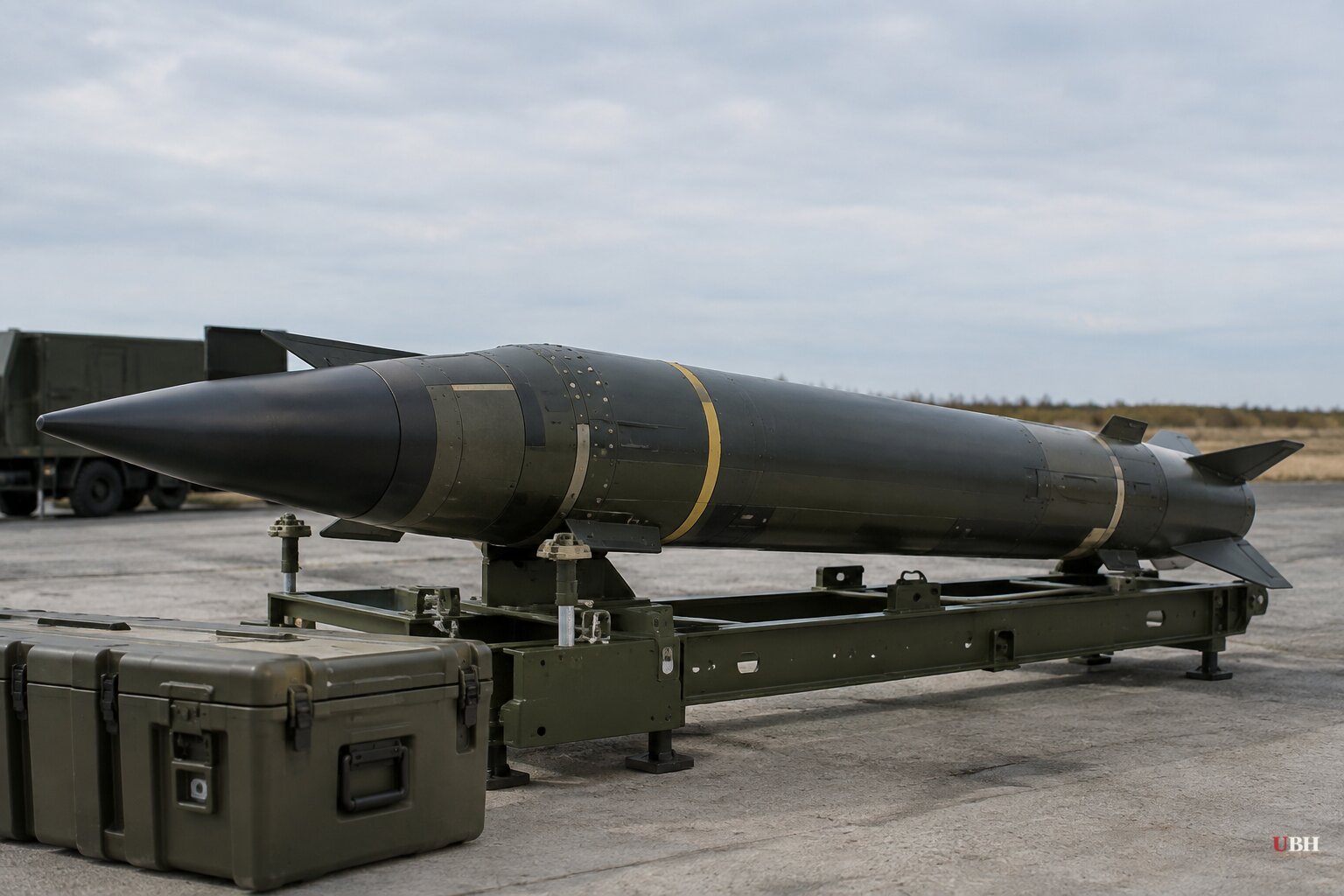
Since President Volodymyr Zelensky announced the FP-7's battlefield debut on October 1 via Telegram, Ukrainian officials have released no further details: no target, no location, no damage assessment, no missile count.
Zelensky's message was short. "Ukrainian tactical ballistic missile. FP-7. First combat use. Thank you for the result. Next up: production. Glory to Ukraine!" he wrote, according to the Kyiv Independent. He posted a video purporting to show a nighttime launch. Asked directly what the missile hit, Zelensky's own communications adviser told the Kyiv Independent: "We're not telling."
The claim itself hasn't been independently verified. Both The War Zone and Defence Blog explicitly flagged this in their reporting, noting Ukrainian authorities haven't disclosed the target, location, number of missiles fired, or which unit launched it. Ukraine has strong incentive to announce milestones for morale and to signal progress to Western backers, which doesn't make the claim false, but it does mean the public is taking Kyiv's word for it, for now.
Even the missile's basic specs don't line up across sources. The Times of India and The War Zone cite a 250-kilometer range with a roughly 150-kilogram warhead. The Guardian and Times Now put the range at 200 kilometers. The Kyiv Post also lists 200 kilometers but a 150-kilogram payload, while the Kyiv Independent cites 250 kilometers with a 200-kilogram warhead. Defence Blog's figures, sourced to the manufacturer, claim 250 kilometers, 200 kilograms, and a 14-meter accuracy rating, while cautioning that "none of the specifications can be independently verified."
The missile is built by Fire Point, the Ukrainian defense firm that also makes the FP-1 and FP-2 long-range attack drones and the FP-5 "Flamingo" cruise missile. Fire Point co-founder Denys Shtilerman described the FP-7 in a March interview as "an analog of ATACMS, probably even with a larger warhead," but "at least twice as little" in cost. Fire Point CEO Iryna Terekh told a defense conference in Poland on September 10 the missile was due to enter service "within weeks," a timeline the October 1 announcement appears to confirm.
The FP-7 was first test-launched in February 2026, following its official announcement in September 2025, according to the Kyiv Post. Zelensky had previewed the weapon's combat readiness in August, telling reporters Ukraine has "no one closer to ballistics than" Fire Point.
One detail largely missing from the celebratory coverage: the Kyiv Independent is the only outlet in this round of reporting to note that Fire Point's rapid rise since its 2022 founding has been accompanied by corruption allegations and unresolved questions about who actually owns the company. No charges or formal investigation findings were cited, and the claims remain allegations rather than proven wrongdoing, but the detail is relevant to a company now supplying Ukraine's flagship ballistic missile program and a European-wide missile defense initiative.
That initiative, called Freyja, launched in July with nine European partners and centers on an FP-7 variant, the FP-7.X, designed as an interceptor rather than a strike weapon. Fire Point has signed agreements with 13 European defense companies for radar and guidance components, according to the Kyiv Post, and is targeting a per-unit interceptor cost under €1 million, a fraction of a Patriot interceptor's price. The company's stated goal is a first successful interception by mid-2027.
Fire Point is also developing a longer-range FP-9 ballistic missile, with company officials saying a roughly 850-kilometer range version could be ready before the end of 2026, per the Times of India.
The announcement landed amid continued Russian strikes on Kyiv, including drone hits on a school and the capital's Southern Bridge reported by The Guardian, and as Ukraine keeps targeting Russian oil refineries over Trump administration objections tied to global diesel prices, a separate and still-unresolved dispute.
Shtilerman was blunt in March about what actually determines whether the FP-7 changes anything on the battlefield: output. "If you produce two or three ballistic missiles a month, it makes no sense. It will not affect the front," he said. Zelensky's own message pointed to the same bottleneck, closing not with a damage claim but with one word: production. Whether Fire Point can scale manufacturing fast enough to matter, and whether independent observers ever confirm what the FP-7 actually hit, remain open questions.
Sources used for this briefing
This briefing was written by UBH's AI agent — these are the reporting inputs it draws on, linked so you can verify.


