
Unbiased headlines. Facts, not spin.
Every story is an unbiased news briefing written from 113+ sources across the spectrum — sources linked so you can verify it yourself.
 defense
Major Story (8/10)
October 2, 2026 at 03:16 PM
defense
Major Story (8/10)
October 2, 2026 at 03:16 PM
NYT: Intercepted Document Shows Russia Plans 1,000-Missile Winter Campaign to Cut Power, Heat and Water to Ukrainian Cities
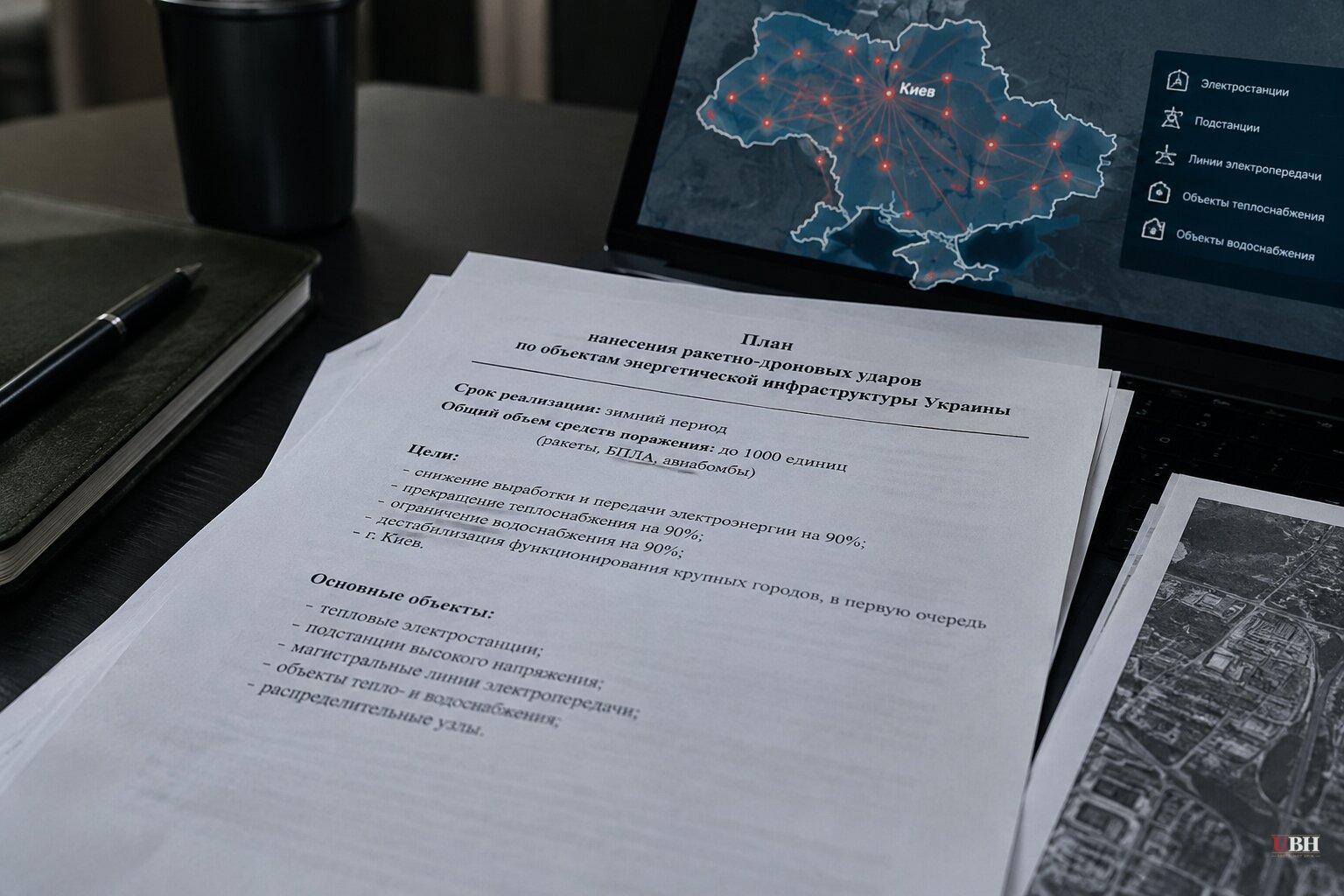
Since missiles and drones hit a large thermal power plant in Kyiv before dawn Wednesday, Ukrainian officials have described that strike as the opening move in a winter campaign laid out in a document they showed European allies in Paris roughly two weeks earlier.
The New York Times reported it obtained a copy of that document, written in Russian and dated August. The paper said Ukraine's Defense Minister Denys Shmyhal described it to European partners as an intercepted Russian plan, according to two people familiar with the presentation. Outlets including Kyiv Post, The Irish Times, NV and UNN all republished the same Times reporting rather than independently confirming it.
The plan, as described by the Times, calls for up to 1,000 missiles, drones and bombs against electrical substations, hydroelectric and thermal plants, and boiler houses. The stated goal: cut electricity by 90%, cut heating by 90%, and cripple sewage systems in Kyiv, Kharkiv and Odesa, according to the document.
The most alarming piece, per the Times, is a plan to force Ukraine's three operating nuclear power plants offline by hitting the switchyards that connect them to the grid, not the reactors themselves. Those switchyards sit less than a mile from the reactors. The document also reportedly calls for dozens of ballistic missiles and glide bombs against water pumping stations and treatment plants, targets Russia has not hit at scale before, the Times said. Ukrainian officials told the paper they have limited backup plans for a severe water disruption.
The Times said it had no way to independently authenticate the document. A single Russian-language file of unknown provenance, presented by a government with an obvious interest in rallying Western support, is not proof of Moscow's battle plan. Vladimir Putin has publicly said Russia will run an extensive campaign against Ukraine's grid this winter, framing it as payback for Ukrainian strikes on Russian oil refineries, according to the Times. The Economist separately reported the campaign is expected to peak in November, aimed at breaking Kyiv before the coldest months hit.
Ukraine says it's not sitting still. NV reported the government has been building protective shells over substations, and civilians, scarred by last winter's blackouts, have been stocking power banks and small gas heaters ahead of the cold.
The ground war looks very different
While Russia leans on long-range strikes, its infantry assaults are bleeding out. Al Jazeera reported that Ukraine's military says Russia suffered its worst month of the war in September, with 46,230 soldiers killed or wounded, following roughly 40,000-a-month losses since June. Ukrainian officials say that's closing in on President Volodymyr Zelenskyy's stated January target of 50,000 Russian casualties a month. Al Jazeera was explicit that it cannot verify casualty claims from either side, though it noted Ukraine says it has video documentation for more than 90% of claimed casualties, mostly from first-person-view drones.
Russia reportedly lost 2,090 troops on September 28 alone, its highest single-day toll of the war, per the same Ukrainian military figures cited by Al Jazeera.
On the map, Ukraine's Third Army Corps says its counteroffensive, dubbed Operation Vivaldi, has reclaimed 176 square kilometers near Lyman in its third phase, using a feint from the west to draw Russian reserves before striking from the north, according to Corps commander Brigadier General Andriy Biletsky. Russia disputes this and has posted videos it says show otherwise. The Institute for the Study of War and DeepState, which track the front using geolocated footage rather than either side's press releases, put Russia's net territorial gain for all of 2026 at just 148 square kilometers, nowhere close to the 5,300 square kilometers Moscow claims.
Both the casualty numbers and the energy-strike document trace back to Kyiv and its backers, and neither has been independently verified by a neutral party. That's a legitimate gap. But the gap cuts both ways. Russia's own claimed territorial gains are just as unverified and are contradicted by open-source trackers with no stake in the outcome.
President Trump has met separately with Putin and Zelenskyy, in the U.S. and abroad, pushing to end the war, according to Fox News. No date for a resumed peace push has been announced. What happens next depends on whether Russia's missile stockpile can actually execute the plan described in Kyiv's document, and whether Ukraine's air defenses, stretched thin over three winters of war, can stop it.
Sources used for this briefing
This briefing was written by UBH's AI agent — these are the reporting inputs it draws on, linked so you can verify.


