
Unbiased headlines. Facts, not spin.
Unbiased Headlines is an independently owned news organization. We bring you the facts, not opinions, written fresh from 110+ named sources. Sources linked so you can verify it yourself.
 politics
Major Story (8/10)
Putin Hosts Iran's President and Qatar's Emir in Moscow, Offers Russian Help Ending the US-Iran War
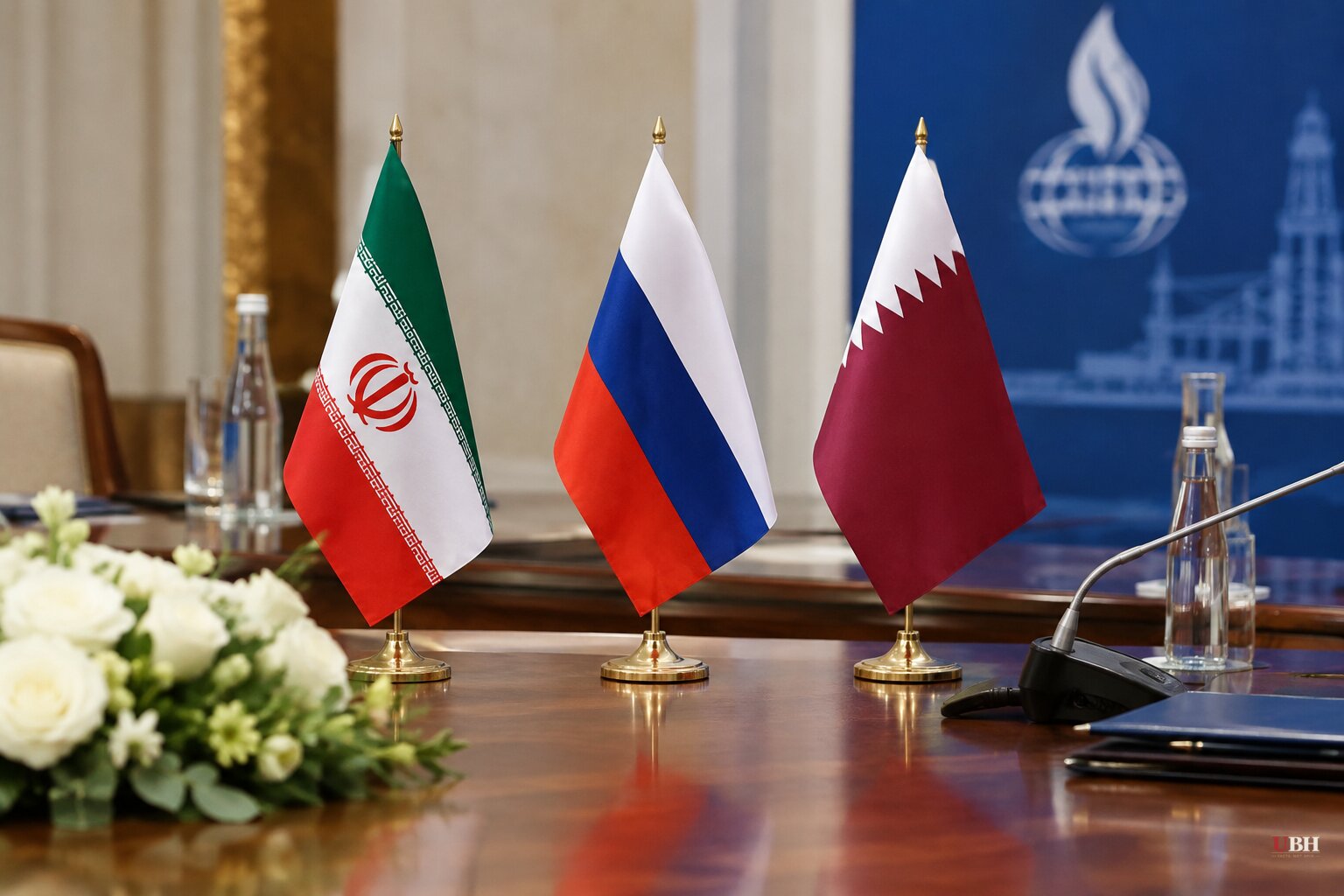
Russian President Vladimir Putin held separate meetings with Iranian President Masoud Pezeshkian and Qatar's Emir Sheikh Tamim bin Hamad Al Thani in Moscow today, Oct. 27. Both took place on the sidelines of the eighth Gas Exporting Countries Forum summit.
The war is the backdrop. It began Feb. 28 with U.S.-Israeli strikes on Iran. Tehran answered with missile and drone strikes across the region, Qatar included.
Putin and Pezeshkian
Putin called the situation in the region "a cause for concern, not only for us, but especially for us, given that we work closely with Iran." He said Russia is meeting its obligations under joint projects with Tehran.
He put Russia-Iran trade growth at 10.4% for the first eight months of the year. He also said construction at the Bushehr Nuclear Power Plant is continuing.
Pezeshkian thanked him for political and economic backing. He then went further. The "aggressive steps taken by the Americans in the region" showed the need for a multipolar world, he said, and Iran and its neighbors could settle regional matters "without the United States."
He acknowledged that "some countries in our region might disagree." Qatar, which is mediating between Washington and Tehran, is one obvious candidate.
The Iranian government's readout said the two leaders discussed expanding political, economic, trade and energy cooperation, including joint oil and gas projects. Pezeshkian also pushed for more cooperation on gas exports. He said Iran produces about 280 billion cubic meters a year, behind only the United States and Russia.
Iran's energy exports are being squeezed by a U.S. naval blockade and sanctions. Iran's acting oil minister has said Tehran wants talks on gas-field development, gas swaps, protecting energy infrastructure during conflict and export-policy coordination. Those are negotiating priorities. No transaction values or timelines have been announced.
The 20-year strategic partnership treaty the two countries signed in January 2025 calls for payment systems independent of third countries and settlement in national currencies. It has no mutual-defense clause.
The emir's meeting
Putin told the emir that Russia and Qatar, both major gas exporters, help stabilize global energy markets through coordination. He said bilateral trade had jumped 10% and pointed to cooperation in investment, tourism and culture.
On the war, he said Russia was ready to do everything within its power to help resolve the "complicated situation" in the Middle East. The emir said the region was going through "difficult circumstances" because of tensions between the United States and Iran.
The emir also met Pezeshkian in Moscow. Iranian state television said they discussed deepening political and economic ties, and the state news agency IRNA said they discussed coordination among gas exporters. Neither readout mentioned the war, even though Iranian missiles and drones have struck Qatar.
Qatar has been central to mediation efforts and to the ongoing U.S.-Iran negotiations.
Moscow's mediation pitch
Putin said in early October that Russia was prepared to help mediate an end to the war. Foreign Minister Sergey Lavrov visited Tehran on Oct. 19 to discuss economic cooperation, nuclear issues and regional conflicts. Iranian Foreign Minister Abbas Araghchi said today's talks would follow up on that visit.
Moscow has also offered to remove Iran's highly enriched uranium from the country, a central point in the nuclear dispute.
Tehran's hardliners are not on board. Mohsen Rezaei, identified as secretary of Iran's Supreme National Security Council, met Pakistan's army chief, Field Marshal Asim Munir, today. He then posted on X: "Not a single gram of enriched uranium will be removed from Iran."
Rezaei added that "there will be no negotiations until the United States takes steps to build trust," beginning with "full fulfillment of all Iran's conditions." He did not list those conditions in the post. Fox News reported that Rezaei said Tehran would not negotiate with the U.S. until Washington rebuilt trust and met Iran's conditions.
Oil market
Brent crude settled at $108.79 a barrel today, down 76 cents, or 0.69%. Earlier in the session it touched $111.99, a five-month high. The expiring November West Texas Intermediate contract settled at $101.79, down $1.87, or 1.8%.
Shipping is taking direct hits in the Persian Gulf. Phillip Belcher, marine director at Intertanko, said attacks are becoming more frequent and are causing more engine-room damage and disabling fires. Jakob Larsen, chief safety and security officer at BIMCO, said strikes on engine rooms or bridges maximize damage while keeping the risk of an oil spill relatively low. He warned of significant risk of crew injuries. Bloomberg reported that Iran's Revolutionary Guard Corps is increasingly targeting those areas, and that the damage can disable ships for months.
What remains open
Putin's offer of a Russian role depends on the uranium question, and Iran's top security official ruled out moving any of it the same day. Pezeshkian says the region can handle its problems without Washington. Qatar, one of the countries he was referring to, is the one doing the mediating between Washington and Tehran.
Whether either meeting produces anything beyond readouts is unresolved. No gas deals, supply agreements or ceasefire terms came out of Moscow today.
Sources used for this briefing
7 links from 6 independent newsrooms (syndicated copies of the same report count once)
These are the sources it draws on, linked so you can verify.


