
Unbiased headlines. Facts, not spin.
Unbiased Headlines is an independently owned news organization. We bring you the facts, not opinions, written fresh from 110+ named sources. Sources linked so you can verify it yourself.
 politics
Major Story (8/10)
Kan 11 Exit Poll Puts Netanyahu's Bloc at 50 Seats, Short of 61, as Israel's Polls Close
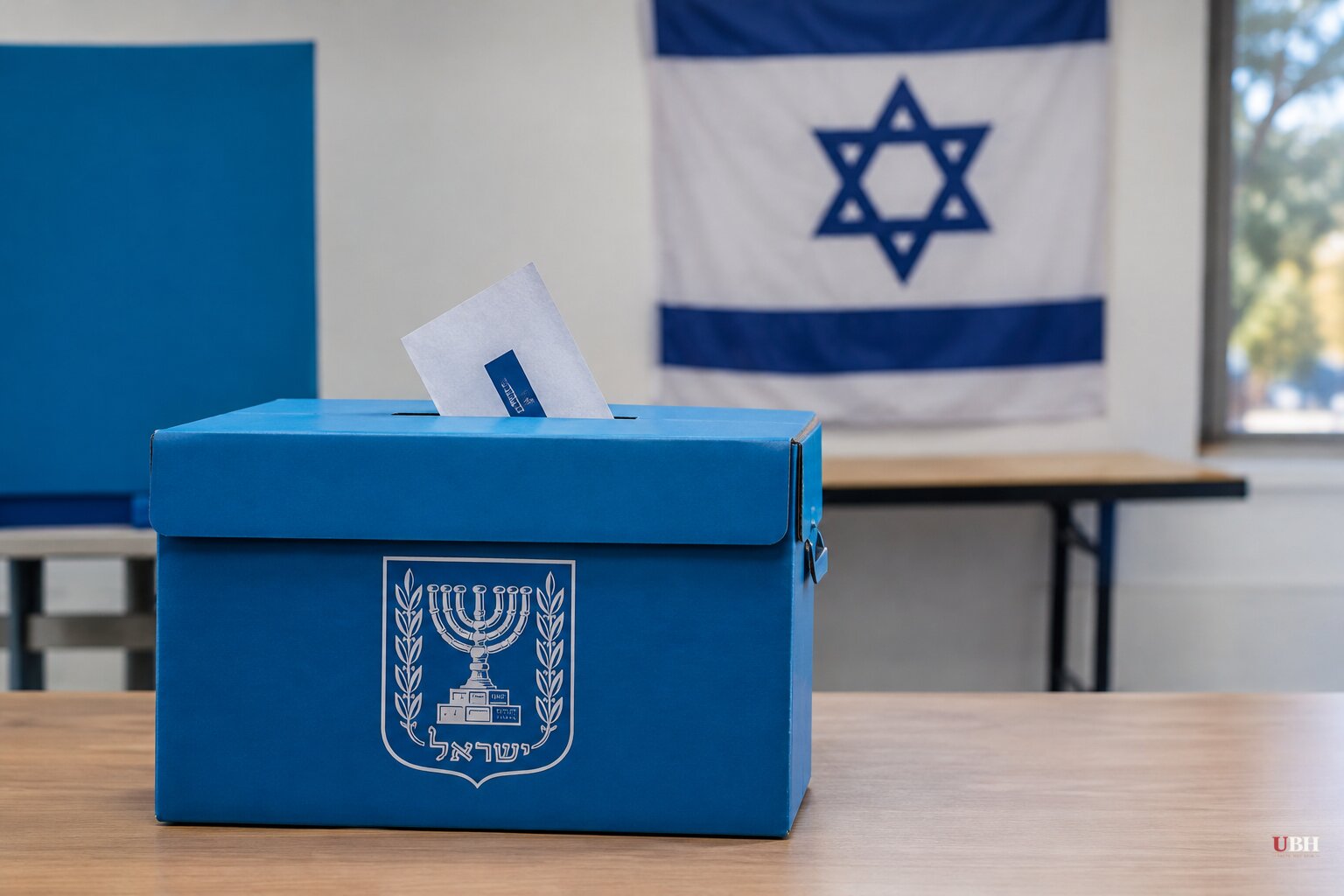
Since polls opened Tuesday morning, Oct. 27, Israel's election has moved from a record-turnout day to a split exit poll. Voting closed at 10 p.m. local time, 4 p.m. EDT, and the first projection shows no clear winner.
The Kan 11 exit poll gave Netanyahu's Likud 25 seats. Likud holds 32 now. His right-wing alliance as a whole was projected at 50 seats.
The opposition slate led by former military chief Gadi Eisenkot was projected at 53. Arab parties were projected at 17, above the 13 to 15 that pre-election polling had suggested.
The arithmetic is simple. A government needs 61 of the Knesset's 120 seats, and neither Netanyahu's 50 nor the opposition's 53 gets there alone. Without the Arab parties, neither side has a path to a majority.
Exit polls are projections, not results. Seat counts can move once ballots are counted, and the final tally is expected Wednesday.
Turnout
The Central Elections Committee said more than 74% of eligible voters had cast ballots as of 8 p.m. local time. That is 3.7 percentage points above total turnout in the 2022 election. The Jerusalem Post reported strong participation in Israel's largest Arab-majority towns.
Netanyahu's election-day post
Netanyahu used turnout as a rallying cry. "We're at war for our home," he wrote on X on Tuesday. "Muslim Brotherhood supporters are raiding the polling stations and stealing the elections. Go out and vote, recover it!!"
Earlier this month, Likud announced it would send religious Jewish observers to polling sites in Arab communities to "prevent fraud." Critics accused the party of trying to intimidate Arab voters. The post as quoted names no specific incident of fraud.
Likud's position is that observers at polling places are a safeguard. Election monitoring is a standard feature of many democracies, and the party framed the move that way.
Who could decide it
The New York Post reported that the Arab parties' strong showing could make them kingmakers, but only if Eisenkot breaks a campaign promise to avoid working with them. Eisenkot has not said what he will do. Netanyahu's bloc would also need those seats to reach a majority.
Pre-election, Eisenkot's Yashar Party had surged in polls and, in some surveys, edged ahead of Likud. He and Netanyahu hold similar security positions. They split on military draft exemptions for ultra-Orthodox men, accountability for the failures around Hamas' Oct. 7, 2023 attack, and, according to Carnegie Endowment senior fellow Aaron David Miller, the Iran war and settler violence.
Former prime minister Naftali Bennett's B'Yachad alliance, a mix of centrist and right-leaning voters opposed to Netanyahu's continued leadership, was also in the race. The exit poll figures cited here do not break out its seats.
The Trump factor
President Donald Trump endorsed Netanyahu last week. "If Israel has the wrong Leader, which would be anyone other than Bibi, America will have to do this work ourselves, and I am not inclined to do so," he wrote.
Miller compared the endorsement on Bloomberg to his grandmother's chicken soup: "it sometimes didn't help, but it couldn't hurt." Likud's projected drop from 32 seats to 25 suggests it did little to move the result, if the exit poll holds.
What happens next
Party leaders will have up to 42 days to assemble a coalition of at least 61 members. President Isaac Herzog decides which leader gets the first chance.
If that attempt fails, Herzog can hand the mandate to another lawmaker, who gets 28 days. The Post reported that building a government could take three weeks to a month.
The Kan 11 figures need to be matched against official results Wednesday. After that, the open issue is whether Eisenkot or Netanyahu can reach 61 seats without a deal involving the 17-seat Arab bloc.
The 3.25% threshold also matters. Any party that falls short wins no seats, and the final count of who clears it will shape every coalition path.
Sources used for this briefing
5 links from 5 independent newsrooms (syndicated copies of the same report count once)
These are the sources it draws on, linked so you can verify.


