
Unbiased headlines. Facts, not spin.
Unbiased Headlines is an independently owned news organization. We bring you the facts, not opinions, written fresh from 110+ named sources. Sources linked so you can verify it yourself.
 politics
Major Story (8/10)
Israel Turnout Hits 55.7% by 4 p.m., Highest Since 1973, as Election Officials Order Faster Voting
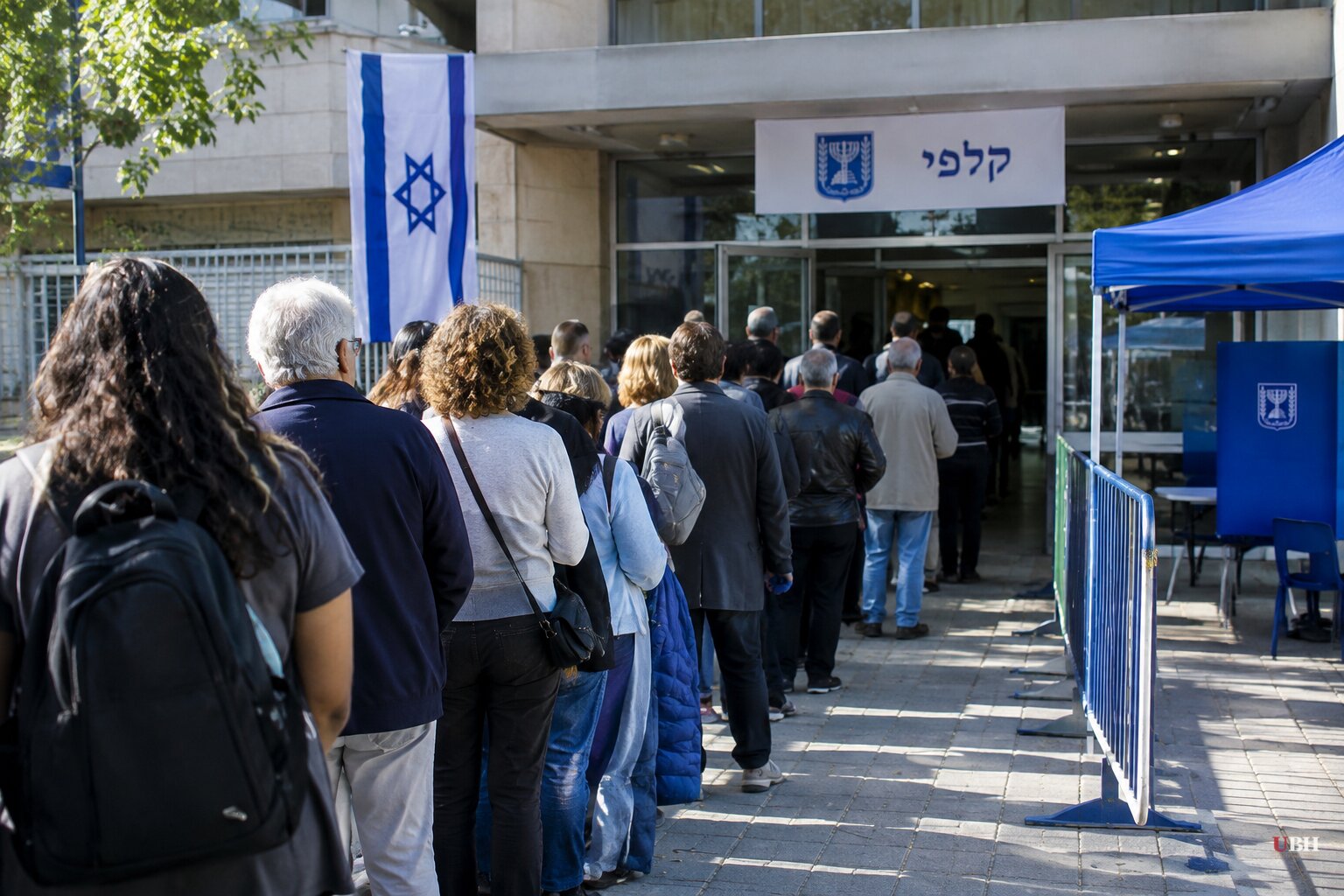
Since polls opened this morning, Oct. 27, in Israel's first national election since the Oct. 7, 2023, Hamas attack, early turnout has climbed to a level not seen in more than half a century. The Central Elections Committee said turnout was 55.7% at 4 p.m. local time. At the same hour in 2022 it was 47.5%.
Dean Livne, the committee's acting director general, told The Times of Israel that no nationwide turnout this high has been recorded since 1973. He later said more than 4 million people had voted.
Long lines, extended access
Multiple reports described long lines at polling stations across the country. The Central Elections Committee issued orders to speed up the process. It also clarified that anyone who arrives at a polling station by 10 p.m. local time will be allowed to vote.
Livne said the highest turnout so far was in Modiin at 60.7%, followed by Tel Aviv at 50.5% and Jerusalem at 47.7%.
Who is turning out
Ofer Kenig, a research fellow at the Israel Democracy Institute, told CNN the early numbers show an increase "in all sectors" except ultra-Orthodox cities, where turnout is lower. He said that "very, very cautiously" the rise looks larger in liberal strongholds than in strongholds of Netanyahu's coalition.
Kenig also noted that some groups tend to vote later in the day. The early figures are a snapshot, not a result. Final polls show neither Netanyahu's bloc nor the opposition bloc led by former military chief Gadi Eisenkot assured of the 61 seats needed in the 120-seat Knesset.
Parties need at least 3.25% of the national vote to enter parliament. Most of the main Jewish parties have ruled out alliances with Arab parties, so smaller parties could end up deciding who governs.
Campaign closes on Oct. 7 and the Iran war
Netanyahu voted in Jerusalem and called the day a "very moving and fateful moment." Eisenkot, voting in Herzliya, urged Israelis to turn out and "stick to the mission of replacing the worst government since the state's founding." He told voters not to "get excited by Netanyahu's scare tactics."
In the final days, Netanyahu's opponents pressed for a formal investigation of the security failures before Oct. 7. His critics say he received actionable warnings from Egypt and did not pass them to Israel's security services or convene an emergency meeting. Those are the critics' claims. Netanyahu opposes an independent inquiry.
His argument is that an inquiry would distract from securing Gaza, defeating Hezbollah in Lebanon and handling Iran. Netanyahu and his supporters also say that calling him soft on security, after his leadership in the Gaza war and the Iran conflict, is absurd. Netanyahu denies wrongdoing in his corruption trial, where his request for a presidential pardon was denied. He also rejects the war-crimes allegations behind the International Criminal Court's 2024 arrest warrant.
On Monday, reports surfaced that Netanyahu planned to fire IDF Chief of Staff Lt. Gen. Eyal Zamir after Zamir reportedly resisted renewed military action against Iran. Netanyahu called the reports "fake news" and said, "I have no intention of firing the Chief of Staff." He added that "someone is trying to obscure the fact that Zamir himself has said Iran was attempting to interfere in the elections."
Eisenkot said he believed the reports and promised to keep Zamir in the post.
Netanyahu also leaned on his relationship with President Trump, who endorsed him on Truth Social. "I do intend to permanently remove the Iranian nuclear threat," Netanyahu said. "I will do so together with my friend President Trump."
A caretaker with war powers
A winner may not be clear for weeks. Yossi Mekelberg, a senior consulting fellow at Chatham House, told Euronews that a caretaker administration keeps substantial powers, including the authority to approve military action. "There is no new government in Israel the day after the election," he said. He added that this "makes it more volatile and more dangerous."
The president asks the lawmaker best placed to assemble 61 seats to try to form a government. If repeated attempts fail, another election can be called. During that process Netanyahu would stay in office, even if his opponents won a majority.
The timing also overlaps with the U.S. midterms on Nov. 3. Mekelberg said the two votes, a week apart, could help determine whether the war with Iran resumes. He said an opposition-led government might reconsider Israel's reliance on force against Tehran. He also said observers are "entitled to be suspicious" about whether Netanyahu's political interests could shape military decisions.
Netanyahu has not said his decisions on Iran are tied to the election.
Polls close at 10 p.m. local time. The Central Elections Committee has not released final turnout or seat projections. The next concrete step after the count is the president's decision on who gets the first chance to form a coalition.
Sources used for this briefing
6 links from 6 independent newsrooms (syndicated copies of the same report count once)
These are the sources it draws on, linked so you can verify.


