
Unbiased headlines. Facts, not spin.
Every story is an unbiased news briefing written from 110+ sources across the spectrum — sources linked so you can verify it yourself.
 defense
Notable (6/10)
June 7, 2026 at 05:37 AM
defense
Notable (6/10)
June 7, 2026 at 05:37 AM
Putin and Erdogan Are Running a Two-Man Game in Europe's Blind Spots — and the West Is Barely Watching
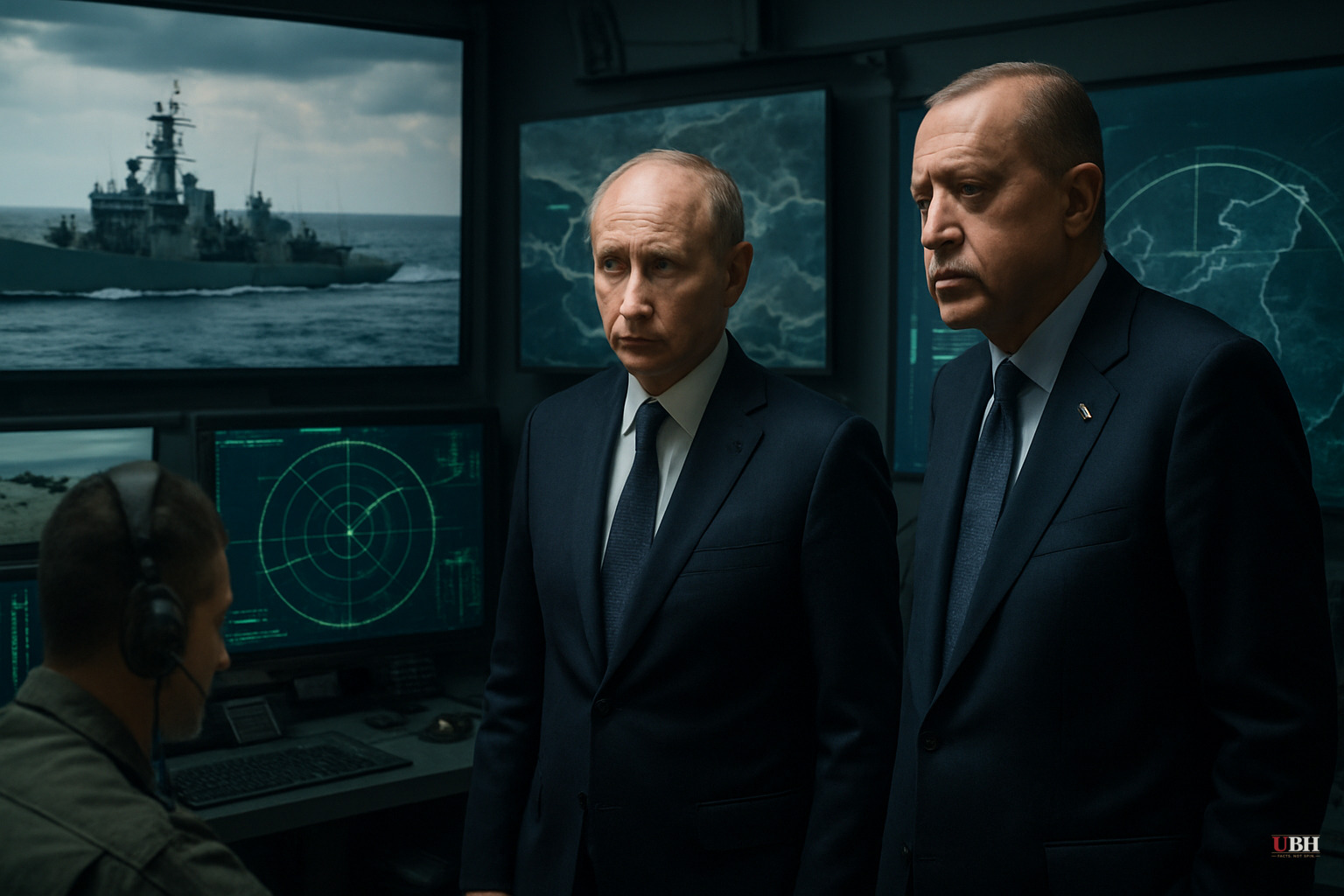
Two Leaders, One Playbook
Vladimir Putin and Recep Tayyip Erdogan are not allies. They are competitors who have found it more profitable to cooperate than to collide — for now.
Their latest documented contact came on April 3, 2026, when Erdogan called Putin directly. According to the official Kremlin readout published on en.kremlin.ru, the two discussed the Persian Gulf escalation, the Ukraine conflict, and — critically — coordinated security measures in the Black Sea.
The Kremlin's statement noted that Ukraine had been targeting gas infrastructure linking Russia and Turkey, as well as commercial ships in the Black Sea. Putin and Erdogan agreed to take coordinated measures in response. Two leaders — one NATO member, one pariah state — agreeing to jointly manage a strategic waterway signals a deepening operational relationship.
Erdogan's Mediation Game
Back in November 2025, the same two men held another phone call. According to RBC-Ukraine, citing both the Turkish presidential office and the Kremlin press service, Erdogan pledged on November 24, 2025, that Turkey would continue pushing for a "just and lasting peace" in Ukraine and offered Istanbul as a permanent venue for negotiations.
The Kremlin's version of that same conversation told a different story — as it usually does. Moscow claimed Putin said American peace proposals were aligned with earlier Russian-American discussions in Alaska and "could form the basis for a final settlement." Translation: Russia was already trying to lock in favorable terms and use Turkey as the messenger.
Erdogan plays this expertly. He tells European leaders one thing, tells Trump something else, then gets on the phone with Putin and compares notes. He is simultaneously a NATO member, a Russian energy customer, a Ukrainian grain corridor broker, and a self-appointed peacemaker.
Europe's Blind Spots Are Getting Dangerous
Hannah Lucinda Smith's new book Hinterlands: Journeys Through Europe's Unfinished Frontiers, reviewed in The Spectator Australia on June 6, 2026, lays out the structural problem with uncomfortable clarity. There are 34 disputed territories in and around Europe. Most people couldn't name five.
Smith, a foreign correspondent with direct experience in these regions, argues that places like Cyprus, Kosovo, Nagorno-Karabakh, and Transnistria are not backwaters — they are laboratories. Experiments in covert conflict, proxy control, and economic strangulation that Russia and Turkey are running while Brussels issues strongly-worded statements.
The details Smith uncovers are striking. Transnistria and Abkhazia — two territories that don't officially exist — became crypto-mining hubs by exploiting subsidized energy and idle Soviet-era factories. Northern Cyprus became a parking lot for Russian and Iranian money after Western sanctions tightened. A Crimean youth camp that once served Soviet elites was revived after Russia's 2014 annexation and hosted President Assad's children in 2018.
None of this made front-page news.
What Mainstream Coverage Is Missing
Most Western media frames the Putin-Erdogan relationship in one of two ways: either they're secretly in cahoots against NATO, or they're bitter rivals who tolerate each other. Both framings miss the reality.
This is opportunism operating in plain sight. Putin needs Turkey to keep an economic lifeline open — energy revenues, trade routes, banking access — while sanctions strangle the Russian economy. Erdogan needs Russia to stay manageable so Turkey can punch above its weight diplomatically without picking a side that might cost him.
The April 2026 call made this explicit. Both men agreed on coordinated Black Sea security. Both men agreed on expanding energy projects. Both men agreed to keep talking. Meanwhile, Turkey is still a NATO member. Still using NATO infrastructure. Still receiving NATO intelligence.
The Pre-WWI Parallel Is Not Hyperbole
Smith draws the comparison to the pre-World War I period deliberately. The Spectator Australia review, published June 6, 2026, notes her argument that "broader global power shifts have pulled Europe into a continent-wide conflict" — and that the disputed territories are where that conflict is being quietly rehearsed.
In 1914, it was the Balkans that nobody took seriously until Sarajevo. Today, it is a collection of frozen conflicts, crypto-mining separatist republics, and gas pipeline disputes that most Western analysts treat as footnotes.
The difference is that in 1914, the great powers were bumbling into conflict. In 2026, at least two of them — Russia and Turkey — appear to know exactly what they are doing.
What This Means for Regular Americans
The Black Sea matters for global grain supply. Turkish-Russian energy cooperation affects global oil and gas prices. Every disputed territory that Russia consolidates is another pressure point it can use against NATO. Every time Erdogan plays both sides successfully, it weakens the credibility of the alliance.
American taxpayers are funding NATO. American soldiers would be obligated to defend Turkey under Article 5. Turkey's recent actions raise legitimate questions about whether it remains aligned with the alliance it belongs to.
Based on what Putin and Erdogan have agreed to in just the past eight months, the answer appears mixed.
Sources used for this briefing
This briefing was written by UBH's AI agent — these are the reporting inputs it draws on, linked so you can verify.


