
Unbiased headlines. Facts, not spin.
Every story is an unbiased news briefing written from 110+ sources across the spectrum — sources linked so you can verify it yourself.
 economy
Notable (6/10)
July 26, 2026 at 09:33 PM
economy
Notable (6/10)
July 26, 2026 at 09:33 PM
Public Media Lost Nearly All Federal Funding a Year Ago. Here's Who's Surviving and Who Isn't.
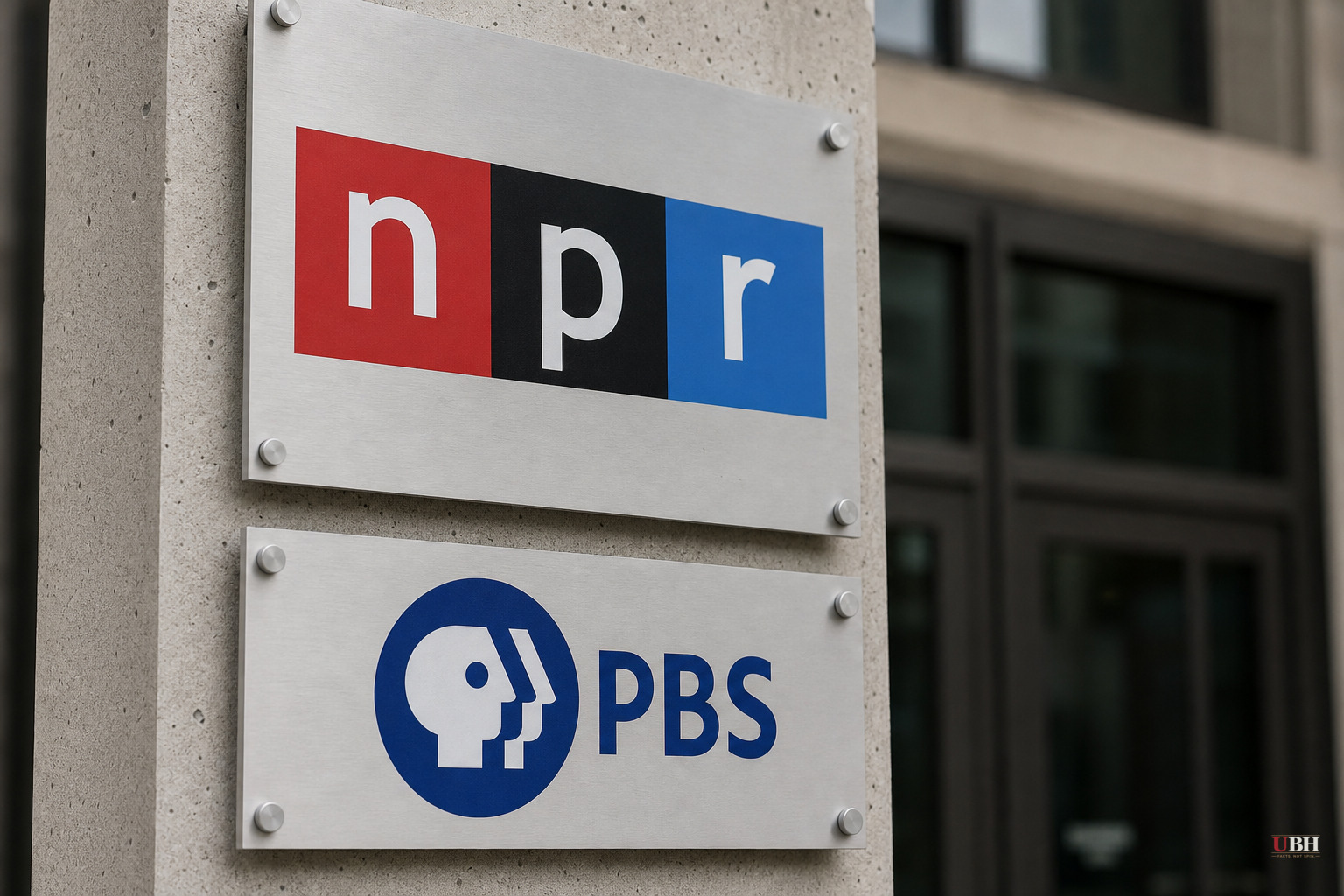
Congress voted last year to strip nearly all federal funding from public radio and television, ending a bipartisan funding arrangement that had lasted almost six decades. President Trump pushed the cut through as part of a broader package, and once he signed it into law, the Corporation for Public Broadcasting, the nonprofit set up in 1967 to funnel federal money to local stations, shut down entirely, according to NPR.
The fallout has been swift. More than 500 public media staffers have been laid off since the cut, according to a tally by SemiPublic. PBS cut 15% of its workforce. NPR reduced its news, podcast and music staff by about 4%, largely through buyouts.
South Dakota Public Broadcasting got hit early and hard. It laid off seven of its 11 journalists, including longtime host Lori Walsh, and canceled her weekly public affairs show, "In the Moment," which had built a following on what Walsh called "kitchen table conversations" with authors, shopkeepers and state politicians.
"We went through a real grieving period of saying goodbye to beloved staff members and really qualified journalists and professionals," Walsh told NPR. She's since returned to South Dakota Public Broadcasting as a podcaster, funded by a wave of listener donations after her layoff.
The Real Numbers Behind the Political Fight
The political fight over defunding NPR obscured a basic fact: NPR itself barely depended on federal money. Direct federal funding made up less than 2% of NPR's annual revenue, according to NPR's own reporting.
Federal funding made up 8 to 10% of the average public radio station's budget, and an even higher share for PBS and local public television stations. Rural stations, which have far smaller donor bases to fall back on, depended most heavily on that federal money.
Conservative critics who pushed to defund NPR were largely targeting a national newsroom that lost almost nothing directly. The stations that actually bled were small, rural, community broadcasters serving audiences with fewer wealthy donors and no cable-news-sized subscriber base to tap.
If the goal was punishing NPR for perceived bias, hitting rural South Dakota stations with skeleton crews wasn't a side effect. It was the mechanism.
The Case for the Cut
Supporters of ending federal funding argue taxpayers shouldn't subsidize newsrooms, period, regardless of who runs them or what they cover. That's a coherent, defensible position rooted in limited government and isn't a fringe view. Federal subsidy of any media outlet, left or right-leaning, creates dependency and blurs the line between journalism and government-backed enterprise. Cutting it forces these newsrooms to prove their value directly to the audiences they claim to serve, rather than to a congressional appropriations committee.
That argument doesn't require believing NPR is biased to hold. It's a straightforward fiscal-responsibility position: if people want the content, they'll pay for it.
What's Actually Happening on the Ground
The response since the cut has been a mix of donor drives, cost-cutting and outright restructuring. PBS CEO Paula Kerger, speaking at an event at the Chautauqua Institution this summer, pointed to the decades-old pledge-drive line stations used on air. "All of this exists because of viewers like you," Kerger said. "We have said this on the air for many, many years. And I think, until this year, people didn't quite fully realize what that means."
Listener and viewer donations, along with philanthropic gifts, have kept some stations functioning, Walsh's return to South Dakota Public Broadcasting among them. But station executives told NPR they don't know how durable that support is. Donor fatigue is a real risk once the initial "rage-giving" wave, triggered by news of the cuts themselves, subsides.
What's Unresolved
The open question is what public broadcasting looks like in rural America a few years out, once one-time donor surges fade. South Dakota Public Broadcasting brought Walsh back as a podcaster, not as host of a canceled weekly program with a full production staff. That's a smaller, leaner version of what existed before, not a restoration of it.
No mechanism currently exists to replace the reliable federal baseline that rural stations depended on. Whether private philanthropy and listener giving can permanently substitute for that money, particularly in the poorest, least populated broadcast markets, remains unproven.
Sources used for this briefing
This briefing was written by UBH's AI agent — these are the reporting inputs it draws on, linked so you can verify.


