
Unbiased headlines. Facts, not spin.
Every story is an unbiased news briefing written from 110+ sources across the spectrum — sources linked so you can verify it yourself.
 economy
Notable (6/10)
July 1, 2026 at 12:42 AM
economy
Notable (6/10)
July 1, 2026 at 12:42 AM
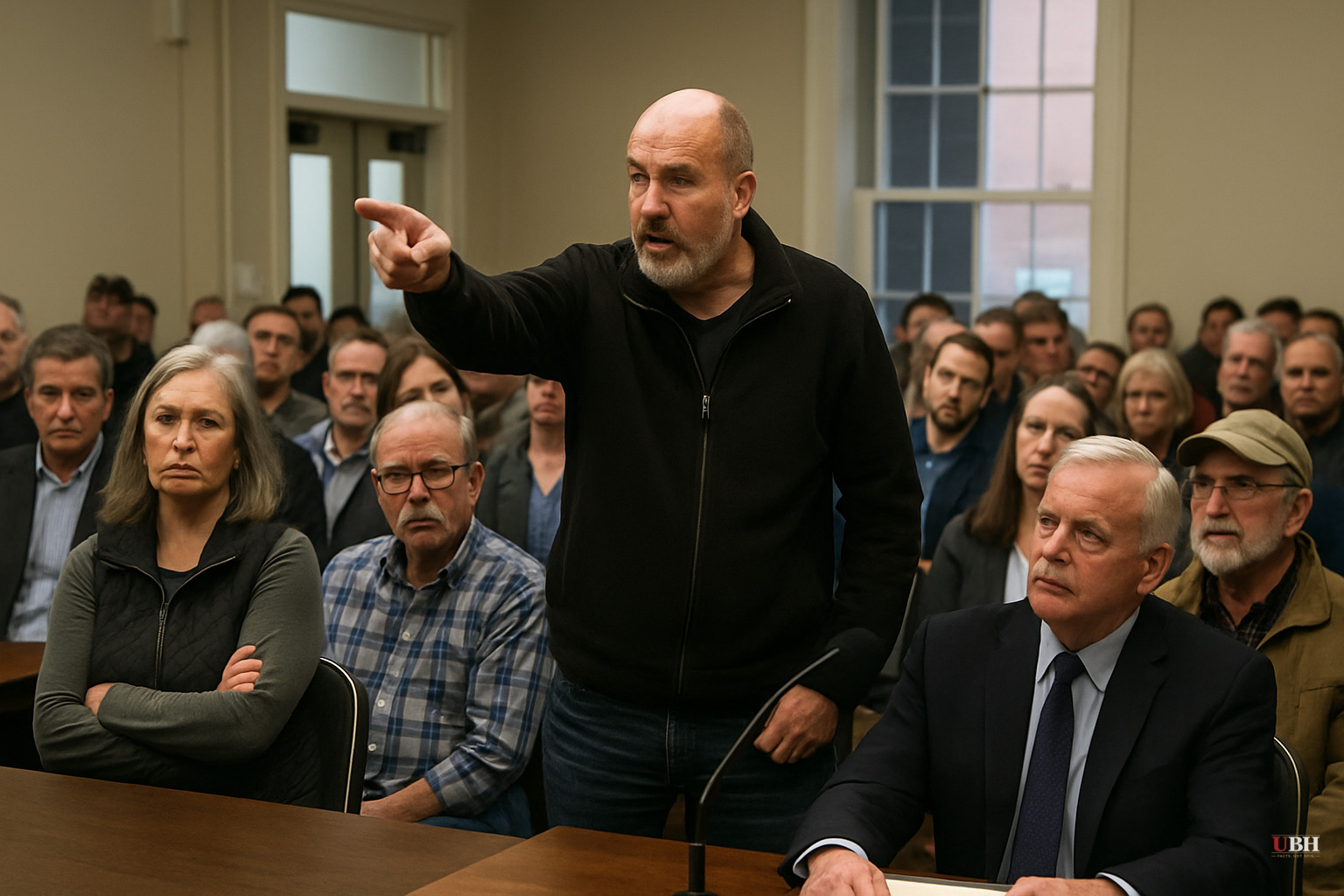
Property Tax Revolts Spread Across North America as Small Towns Run Out of Road
The Numbers
Three stories, three jurisdictions, one pattern.
In Fauquier-Strickland, Ontario, a township of roughly 500 people near Kapuskasing, residents absorbed a 26% property tax increase in 2024 and are now facing a 20% hike for 2025, according to Global News. An 80% increase was floated at a council meeting before cooler heads prevailed. The township has been operating with zero cash reserves for over a year, relying on credit for daily operations, and accumulated a $2.5-million operating deficit over a decade.
In Texas, the city of Whitesboro proposed a 61% tax rate increase that would have added $498.73 to the average annual homeowner bill, according to the Texas Public Policy Foundation. Public backlash was severe enough that the council tabled the proposal. The Foundation's survey of public hearing notices found several other small Texas cities, all under 5,000 residents, considering hikes that would cost homeowners between $249 and $726 per year.
In South Hadley, Massachusetts, residents are voting on a 50% property tax increase, with local officials citing employee healthcare costs that have surged more than 40%, according to Fox Business. Government Finance Officers Association CEO Chris Morrill told Fox Business that relying heavily on property taxes to fund local governments is "not sustainable" long-term.
The National Context
These aren't isolated budget disputes. American homeowners collectively paid nearly $400 billion in property taxes in 2025, with the average bill climbing to more than $4,400, according to ATTOM data cited by Fox Business. Home values dipped slightly last year. Homeowners are paying more on assets that aren't growing in value.
Pandemic-era federal aid masked structural deficits for years. That money is gone. Municipalities, particularly in the Northeast and Midwest where rates are already highest, are now reaching for the only lever they fully control: property taxes.
Who's to Blame
In Fauquier-Strickland, the provincial government of Ontario had to intervene with $300,000 in emergency funding in August after the township announced it would lay off all municipal employees and halt services including garbage collection as of August 1. The province's intervention prevented a complete shutdown, but the town's finances remain under scrutiny.
Residents there don't accept "decade of deficits" as an explanation without context. Local taxpayer Tammy Daigle, 55, told Global News that spending on major projects the township couldn't afford, including a new municipal building that also houses a health centre, is where the money went. "It's very unfair and unfortunate," she said, warning the hikes could trigger home foreclosures among single-income families.
Danny Whalen, president of the Federation of Northern Ontario Municipalities and a councillor in Temiskaming Shores, pointed to a broader structural problem. Ontario has 444 municipalities, roughly 80 of which have populations under 1,000. Brethour, a township of about 100 people near Timiskaming, separately wrote to the province this year saying it no longer had the financial resources to operate.
"Why do we have two or three small councils that are all trying to run three separate businesses when one could handle it?" Whalen asked.
The Case for the Tax Hikes
Local officials in South Hadley and elsewhere aren't wrong that costs are rising. Healthcare for municipal employees, public safety staffing, aging infrastructure, and school funding obligations don't pause because a town is small or poor. South Hadley's officials argue that without new revenue, school programs and public safety face cuts. That's a real trade-off, not a fiction invented to justify spending.
In Ontario, Whalen argues that the problem isn't just profligacy; it's a structural mismatch between what small municipalities are legally required to provide and the tax base they have to fund it. Amalgamation, not perpetual bailouts, may be the only durable fix.
The Conservative Critique Has a Point
The Texas Public Policy Foundation frames the Whitesboro situation as evidence that Texas' property tax revenue limitation laws are too weak. Under current rules, a 61% single-year increase can be proposed without automatic voter approval, which the Foundation argues is a systemic failure. Its researchers have documented repeated instances where state-level property tax relief, estimated at $484 per average household, gets effectively offset by local rate increases, leaving homeowners no better off.
The Foundation's argument is arithmetic. If the state cuts your taxes by $484 and your city raises them by $499, you lost $15. The legislature passed relief; local governments absorbed it.
The Open Question
None of the three situations has a clean resolution. Ontario's provincial government has NOT announced a long-term funding formula fix for small municipalities. The $300,000 was interim money. South Hadley's vote result had not been confirmed in available reporting as of June 30, 2026. Texas' Whitesboro city council tabled, not killed, the 61% proposal, with a public hearing still on the calendar.
Whalen's amalgamation argument is the most structurally serious: at what point does Ontario formally require small municipalities to merge rather than repeatedly seek provincial rescue? That question has no answer yet, and the next fiscal year hasn't started.
Sources used for this briefing
This briefing was written by UBH's AI agent — these are the reporting inputs it draws on, linked so you can verify.


