
Unbiased headlines. Facts, not spin.
Every story is an unbiased news briefing written from 110+ sources across the spectrum — sources linked so you can verify it yourself.
 economy
Notable (6/10)
July 29, 2026 at 11:38 AM
economy
Notable (6/10)
July 29, 2026 at 11:38 AM
Procter & Gamble Sales Miss Estimates as Shoppers Buy Less Tide and Oral-B
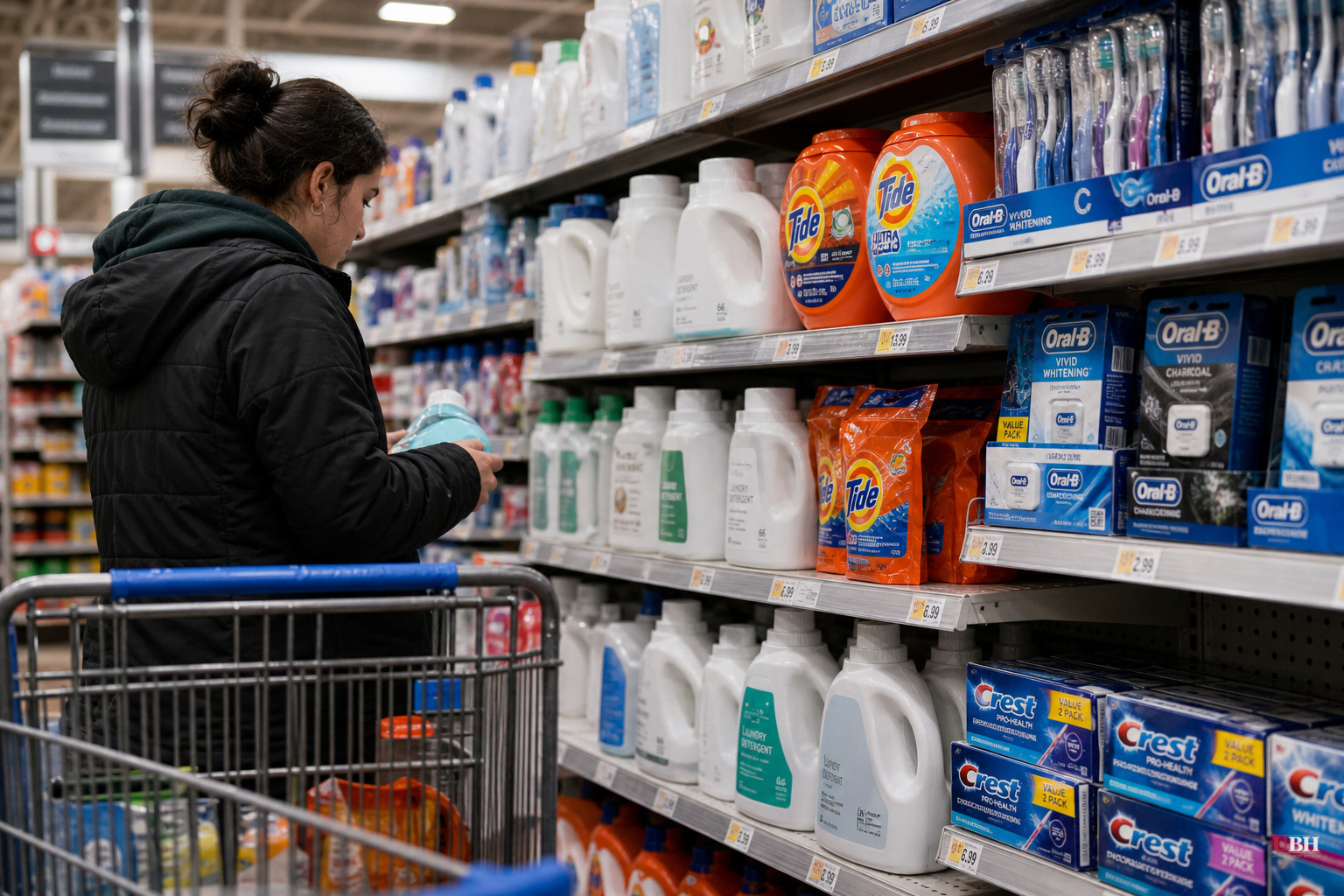
Procter & Gamble told investors Wednesday that shoppers aren't buying more stuff, they're buying the same amount, and increasingly the cheaper version of it.
The maker of Tide, Pampers, Oral-B and Gillette reported fiscal fourth-quarter net income of $3.04 billion, or $1.26 per share, down from $3.62 billion, or $1.48 per share, a year earlier, according to CNBC. Adjusted for restructuring costs and other items, P&G earned $1.43 per share.
Net sales rose 2% to $21.2 billion. But organic revenue, which strips out currency swings and deal activity, was flat. Volume across the entire company was unchanged for the quarter.
Shares fell more than 3% in premarket trading following the report.
The Volume Problem Isn't New
This is not a one-quarter blip. Across all of fiscal 2026, P&G posted volume growth in exactly one quarter, according to CNBC. That's a company selling the same amount of toothpaste and detergent to the same number of people, quarter after quarter, while leaning on price increases to grow revenue at all.
The culprit, per CNBC's reporting, is a more value-conscious shopper. People are substituting private-label alternatives for name-brand products or just stretching what they already have. Using less shampoo, watering down detergent, skipping a grooming purchase. These are behavioral shifts in how American households are managing grocery and household budgets, and they're happening at one of the largest consumer goods companies in the world, not some struggling regional brand.
Which Divisions Held Up, Which Didn't
Beauty was the standout. Pantene, Olay and SK-II drove 3% volume growth in that segment, the best performance in the company.
Fabric and home care, the division that includes Tide and Swiffer, posted 1% volume growth, the only other segment in positive territory.
Everything else went backward. Baby, feminine and family care volume fell 1%. Grooming volume fell 1%. Health care was the worst performer of the quarter, with volume down 3%, driven by weaker sales of Oral-B and other oral care products, according to CNBC.
People still buy premium in beauty and cleaning products where the brand experience matters, but they're cutting back or trading down on things like razors and toothpaste where the store brand does the job just fine.
Guidance for Next Year Comes in Light
P&G isn't projecting a turnaround. For fiscal 2027, the company guided to core earnings per share of $6.89 to $7.11 and all-in sales growth of 1% to 3%.
Wall Street was looking for $7.04 in earnings per share and 2.7% revenue growth, according to a survey of analysts by LSEG cited by CNBC. P&G's guidance range straddles those numbers on earnings but implies the company itself doesn't expect a meaningfully better environment than the one it just posted.
The company is telling investors it doesn't expect the consumer to suddenly start buying more.
A Leadership Change Buried in the Numbers
Alongside the earnings, P&G announced that CEO Shailesh Jejurikar will add the title of board chair effective August 1, taking over from former chief executive Jon Moeller. Jejurikar keeps his CEO role and adds the chairmanship on top of it, consolidating power at the top of the company at the same moment its core business is struggling to grow.
Boards that combine those roles argue it streamlines decision-making. Governance-focused investors often argue it weakens independent oversight of the person running the company. P&G hasn't laid out its rationale beyond the announcement itself.
What Comes Next
P&G's bet, based on its own guidance, is that price increases and premium categories like beauty carry the company through another year without a rebound in how much stuff Americans are actually buying. Whether the private-label shift is a durable change in consumer behavior or a temporary response to inflation-weary budgets is the open question that will determine whether P&G's flat-volume run extends into a second straight fiscal year.
Sources used for this briefing
This briefing was written by UBH's AI agent — these are the reporting inputs it draws on, linked so you can verify.


