
Unbiased headlines. Facts, not spin.
Every story is an unbiased news briefing written from 110+ sources across the spectrum — sources linked so you can verify it yourself.
 economy
Notable (6/10)
July 16, 2026 at 10:29 PM
economy
Notable (6/10)
July 16, 2026 at 10:29 PM
Prediction Markets Are Booming. Nobody Has Decided Who Regulates Them.
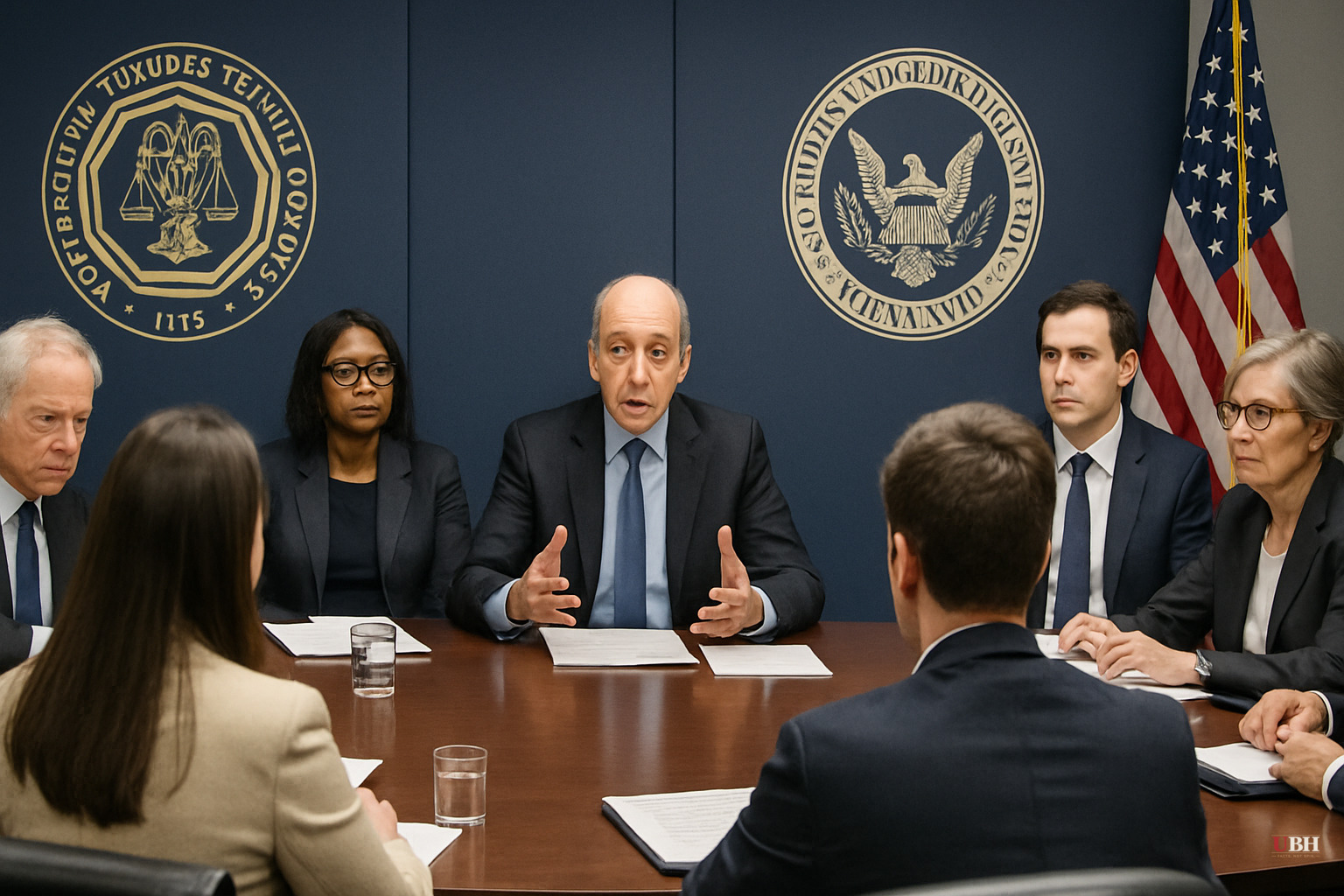
The Commodity Futures Trading Commission has run point on event contract exchanges for more than three decades. That authority traces back to a 1992 ruling on the Iowa Electronic Markets, widely recognized as the first prediction market, according to CNBC.
That settled arrangement is now in question. Prediction markets have exploded in size and mainstream visibility, and legal experts tell CNBC the Securities and Exchange Commission may soon claim a piece of the regulatory turf the CFTC has held alone.
Joe Zales, a partner at King and Spalding, put it plainly to CNBC: the CFTC has asserted jurisdiction over event contracts broadly, but some of these contracts look a lot more like something the SEC would normally police.
Last month, the SEC and CFTC issued a joint request for public comment aimed at updating and harmonizing definitions tied to swaps, the derivative category event contracts fall under, including how to treat what the agencies call novel or emerging products.
Why the SEC Even Has a Claim Here
The opening for SEC involvement traces to the 2010 Dodd-Frank law. Under that statute, the CFTC generally regulates swaps, but the SEC holds jurisdiction specifically over securities-based swaps, financial contracts tied to a single security.
That distinction matters because a growing slice of event contracts are built around individual companies. CNBC's sourcing lays out a clean example: a contract asking whether Nvidia stock will close the month up more than 5% is directly tied to a single publicly traded security. That structure starts to look like a securities-based swap rather than the kind of broad economic-outcome contract the CFTC has traditionally overseen.
Jeff Le Riche, a partner at Husch Blackwell and a former chief trial attorney at the CFTC, told CNBC this is genuinely unresolved territory. His description: a jump ball. Nobody, in his words, knows how it's going to turn out.
Industry Is Already Positioning
The companies building these markets aren't waiting around for regulators to sort it out. A Polymarket spokesperson confirmed to CNBC that the company has engaged with both the CFTC and SEC on definitional frameworks for its products. Rival platform Kalshi declined to tell CNBC whether it has had similar conversations with either agency.
Meanwhile, CBOE has already filed to operate binary options contracts tied to key performance indicators for a slew of major companies, doing so squarely within the SEC's regulatory lane rather than waiting for a CFTC green light. That's a notable signal: at least one major exchange operator is betting the SEC path is viable right now, not just theoretically possible down the road.
What's Proven, What's Not
What's established: the CFTC has 30-plus years of precedent regulating event contracts generally, and Dodd-Frank explicitly carves out securities-based swaps for the SEC. Both facts are on the record and undisputed among the legal experts CNBC spoke with.
What's unresolved: whether specific popular contract types, especially those tied to single-stock performance, will ultimately get pulled into SEC oversight, and what that would mean for platforms currently operating under CFTC rules. No ruling, no enforcement action, and no finalized rule change has happened. The joint request for comment is exactly that, a request, not a decision.
There's a reasonable case for leaving this alone rather than rushing new rules. Two federal agencies fighting over turf has historically produced messy, overlapping compliance regimes that raise costs without necessarily protecting anyone better. Firms like Polymarket and Kalshi have built businesses under a specific CFTC framework, and retroactively yanking certain contracts into SEC jurisdiction could be disruptive. Jurisdictional confusion between the SEC and CFTC over emerging asset classes isn't new and hasn't historically produced clean resolutions, according to CNBC's reporting.
At the same time, the underlying concern driving this review is legitimate. Event contracts tied to individual stocks function a lot like securities derivatives, and the SEC's entire mission is guarding against exactly that kind of contract slipping through under lighter-touch swap rules meant for broader economic bets. If a contract's payout depends entirely on Nvidia's share price, treating it identically to a contract about, say, an election outcome or a Fed rate decision is a stretch on the merits.
The comment period is the next stage. Until the SEC and CFTC issue final guidance, platforms and exchanges are operating in exactly the gray zone Le Riche described. No timeline for a resolution has been announced by either agency.
Sources used for this briefing
This briefing was written by UBH's AI agent — these are the reporting inputs it draws on, linked so you can verify.


