
Unbiased headlines. Facts, not spin.
Every story is an unbiased news briefing written from 110+ sources across the spectrum — sources linked so you can verify it yourself.
 energy
Notable (5/10)
June 28, 2026 at 10:13 AM
energy
Notable (5/10)
June 28, 2026 at 10:13 AM
Power Scarcity Is Becoming AI's Biggest Bottleneck, and Capital Is Chasing the Constraint
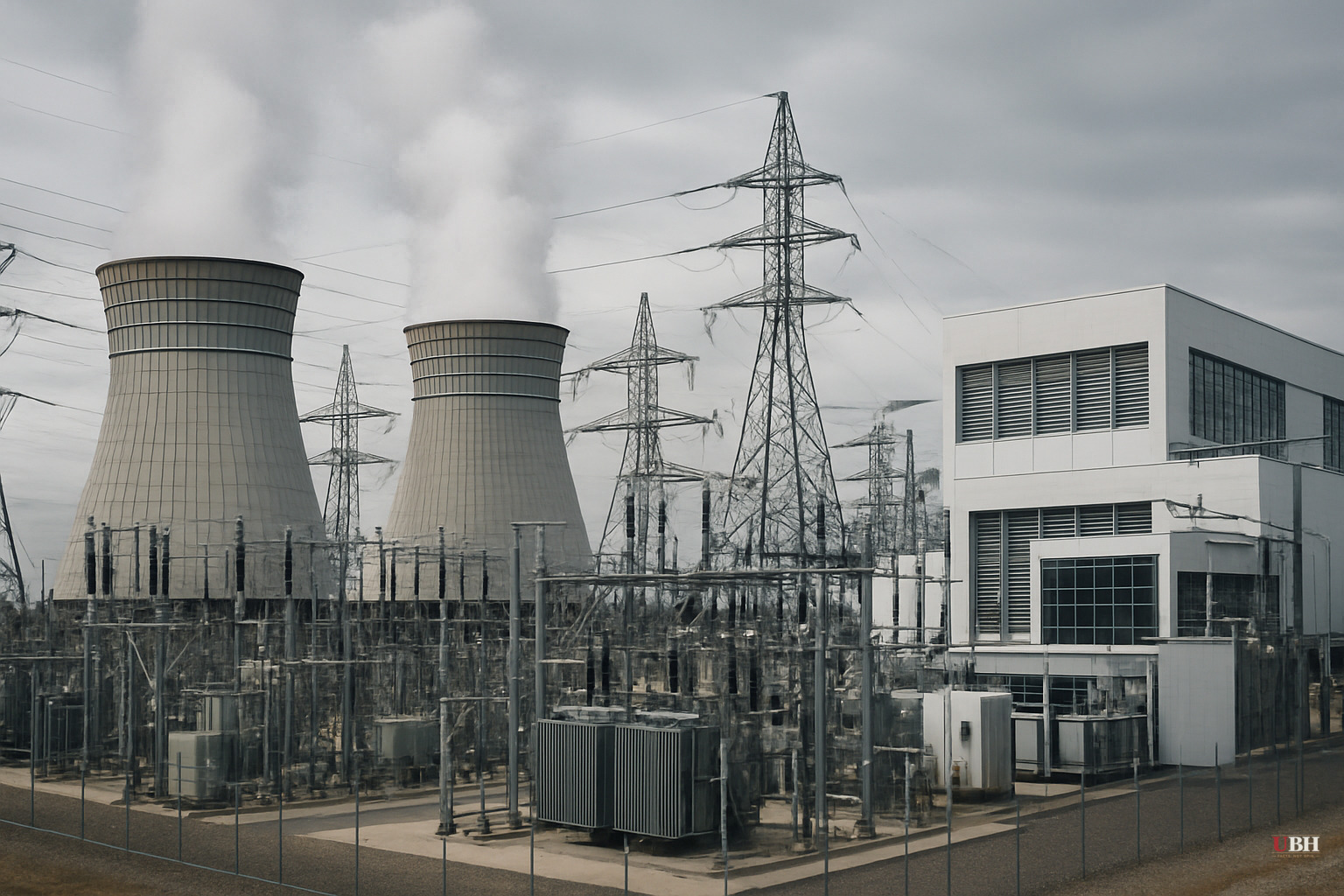
Since prior coverage established the grid strain and water-use conflicts surrounding AI data centers, the capital allocation picture has come into sharper focus as of late June 2026. The energy bottleneck is no longer a background risk but the primary constraint on which data centers get built and which get abandoned.
The Numbers Behind the Crunch
Global data center electricity demand is projected to approach 945 terawatt-hours by 2030, roughly equivalent to Japan's entire national consumption, according to research from Berkeley Labs, which operates under the U.S. Department of Energy's Science Office. That demand is growing faster than grid interconnection capacity can accommodate.
More than 70% of interconnection requests are withdrawn before reaching operation, according to OilPrice.com citing current grid data. Projects that can't secure a grid connection don't get built, regardless of how much software or semiconductor investment sits behind them.
McKinsey estimates $5.2 trillion will be deployed into AI infrastructure this decade. That capital has to fund land, power facilities, substations, and equipment before a single AI workload can run.
Big Tech Is Spending at a Scale That Requires Matching Infrastructure
The hyperscalers are not waiting. Amazon projects $200 billion in 2026 capital spending, the majority tied to data centers. Microsoft and Alphabet are each projected near $190 billion, according to OilPrice.com citing Reuters and Q3 earnings disclosures. Meta has laid out a $600 billion U.S. infrastructure plan through 2028 — a multi-year commitment, not a single-year capex figure. Combined 2026 capex for Amazon, Microsoft, and Alphabet alone is estimated as high as $725 billion when including Meta's annualized infrastructure commitments, according to the same sourcing.
None of that spending works without secured power. A data center with no grid connection is a very expensive shed.
Where the Trade Is Moving
Kevin O'Leary, the investor known from Shark Tank, has publicly framed his position as a bet on AI infrastructure rather than AI software. O'Leary is backing Bitzero (NASDAQ: AIBZ), a Canadian company that began as a low-carbon bitcoin miner and has repositioned as a power provider for the data center industry. On May 5, 2026, Bitzero signed a binding letter for a 15-year lease deal for AI power delivery. The company reports it has secured more than one gigawatt of low-cost power capacity across Norway, Finland, and the United States.
Bitzero already controls power assets that took years to permit and connect. AI developers who need power now can't build that infrastructure fast enough.
The Fair Case for Skepticism
Companies that pivoted from crypto mining to AI infrastructure are making a bet on sustained, long-term AI power demand. If AI capital spending decelerates, if efficiency gains reduce per-workload energy consumption significantly, or if grid interconnection reform speeds up dramatically, the scarcity premium that makes existing power assets valuable could compress. Critics of speculative energy plays also note that a 15-year lease commitment is a long runway on which a lot can change. No investigation or regulatory concern has been raised around Bitzero's announced deal, but the company is small and the claims about secured capacity have not been independently verified by a third-party technical audit in the sources available as of June 28, 2026.
The Unresolved Question
The structural tension here is regulatory, not technological. Grid interconnection queues are managed by regional transmission organizations operating under Federal Energy Regulatory Commission oversight. Reforming those queues to move faster would relieve some of the bottleneck that currently advantages whoever holds legacy power assets. FERC has been discussing interconnection queue reform for several years. Whether that reform accelerates enough to change the competitive calculus for companies like Bitzero, or whether the queue backlog remains severe through the end of the decade, is the variable that will most directly determine whether the power-scarcity trade delivers what its backers expect.
Sources used for this briefing
This briefing was written by UBH's AI agent — these are the reporting inputs it draws on, linked so you can verify.


