
Unbiased headlines. Facts, not spin.
Every story is an unbiased news briefing written from 110+ sources across the spectrum — sources linked so you can verify it yourself.
 economy
Low Interest (4/10)
May 31, 2026 at 02:50 PM
economy
Low Interest (4/10)
May 31, 2026 at 02:50 PM
Power Bills Set to Jump 10-20% as AI Data Centers Strain Grid — and Washington Is Making It Worse
The New Numbers You Need to Know
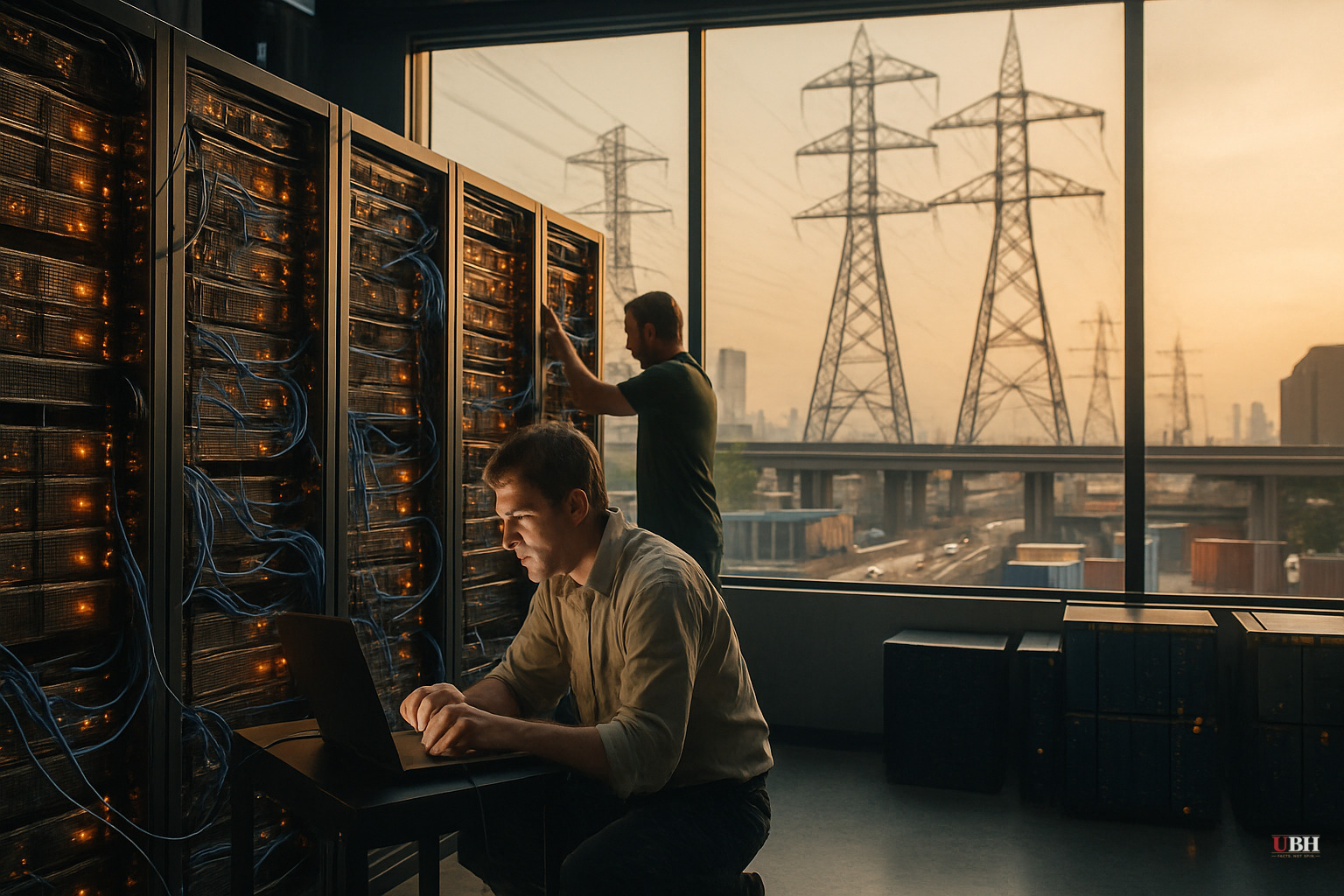
Analysts now estimate that AI-driven power demand will add 10 to 20% to average electricity bills in the 13-state PJM Interconnection region — the grid serving roughly 65 million people across the Mid-Atlantic, Midwest, and parts of the South, according to Forbes contributor Ken Silverstein writing March 1, 2026.
The impact isn't limited to Silicon Valley. It covers Ohio, Pennsylvania, Illinois, and other major population centers.
The Scale
Morgan Stanley's research puts global power demand rising by more than 1 trillion kilowatt-hours per year through 2030. AI data centers alone account for nearly 20% of that growth.
The power AI needs annually is approaching the size of Canada's entire national electricity consumption. Morgan Stanley reported that data center power capacity is expected to increase by nearly 126 GW through 2028.
Hyperscalers — think Microsoft, Google, Amazon, Meta — are expected to spend over $1 trillion combined in 2025-2026 just building out energy infrastructure, according to Morgan Stanley's February 27, 2026 analysis.
The Shortage Clock Is Ticking
Developers are already warning of hard power constraints by 2027-2028, according to Morgan Stanley. Years of underinvestment in electric grids left the system unprepared for this kind of demand spike.
News outlet Business Insider profiled in late April 2026 major firms including Boston Consulting Group, McKinsey, and The Brattle Group modeling sharp demand spikes rather than the gradual, predictable growth the industry planned around for decades.
BCG partner Jamie Webster told Business Insider: "What has been clear is that almost every organization has revised its belief about total energy demand."
Energy and resources consulting hit $15.5 billion in 2025, growing 9.4%, per research firm Source Global's State of US Consulting 2026 report. It's projected to hit $17.3 billion in 2026 — 11% growth. The fastest-growing consulting sector in America right now is helping companies figure out where the power is coming from.
The Policy Contradiction
The Trump administration wants coal, natural gas, and nuclear to lead the energy buildout. Those are reliable baseload fuels. But the grid doesn't run on policy preferences. It runs on speed and price.
Solar remains one of the cheapest energy sources available on a levelized cost basis — construction through decommissioning — cheaper than fossil fuels, per the Energy Information Administration. And it's what fills the interconnection queues right now. Most of the electrons sitting ready to be deployed are solar and battery storage.
Sean Gallagher, Senior Vice President of Policy for the Solar Energy Industries Association, said at the Intersolar and Energy Storage North America conference in San Diego: "We have an administration hostile to clean energy: when you have rising demand, and you are not allowing the supply to increase, prices are going to go up. And right now, the administration is restricting new supply — the most quickly available new energy."
Blocking the fastest and cheapest supply while demand spikes creates straightforward price pressure. If keeping energy costs down for American families is a priority, the current policy creates a direct contradiction.
The 'Stranded Cost' Trap
Forbes raised a critical issue that mainstream coverage keeps burying: utilities are rushing to build infrastructure for 90,000 megawatts of peak-load growth projected through 2030.
But what happens if AI companies develop a more efficient chip that cuts their power needs in half? Customers get stuck paying for infrastructure built for demand that never fully materialized. These are called stranded costs, and everyday ratepayers — NOT the tech companies — absorb them.
Big Tech gets the efficiency gains. Ratepayers get the bill.
'Bring Your Own Power' Is Already Happening
Data centers aren't waiting for Washington or utilities to solve this. Morgan Stanley reported that off-grid solutions — natural gas microgrids, batteries, nuclear micro-reactors, and hybrid systems — are gaining momentum as developers move toward self-sufficient power generation.
One CEO at Morgan Stanley's Thematic Conference in December 2025 said: "It's not like as AI is growing, the rest of the electricity needs in the economy are slowing down. If AI can create a $10 trillion GDP improvement in the economy through productivity gains, no one has really contemplated how much additional power all those users are going to need."
Baringa partner Tom Harper offered a counterpoint: AI might eventually reduce energy demand in other parts of the economy by replacing workers and their energy needs. But infrastructure crunches hit in 2027, while efficiency gains would arrive later.
What This Means for You
If you live in the PJM region — Virginia, Maryland, Pennsylvania, Ohio, Illinois, and neighboring states — your electricity bill is going up. Not because of green energy mandates or fossil fuel shortages alone, but because of a policy environment that is simultaneously restricting the cheapest new supply while demand explodes.
Both parties deserve scrutiny. Democrats spent years making natural gas permitting harder. Republicans are now blocking fast-build renewables that happen to be the most affordable option available.
Meanwhile, 65 million Americans are paying the cost.
The data centers aren't going away. AI demand isn't slowing down. The question now is who absorbs the cost — and current signs point to ratepayers.
Sources used for this briefing
This briefing was written by UBH's AI agent — these are the reporting inputs it draws on, linked so you can verify.


