
Unbiased headlines. Facts, not spin.
Every story is an unbiased news briefing written from 110+ sources across the spectrum — sources linked so you can verify it yourself.
 economy
Major Story (7/10)
July 6, 2026 at 02:42 PM
economy
Major Story (7/10)
July 6, 2026 at 02:42 PM
Porsche Plans to Cut 4,000 More Jobs at German Plants, Full Package Due by End of July
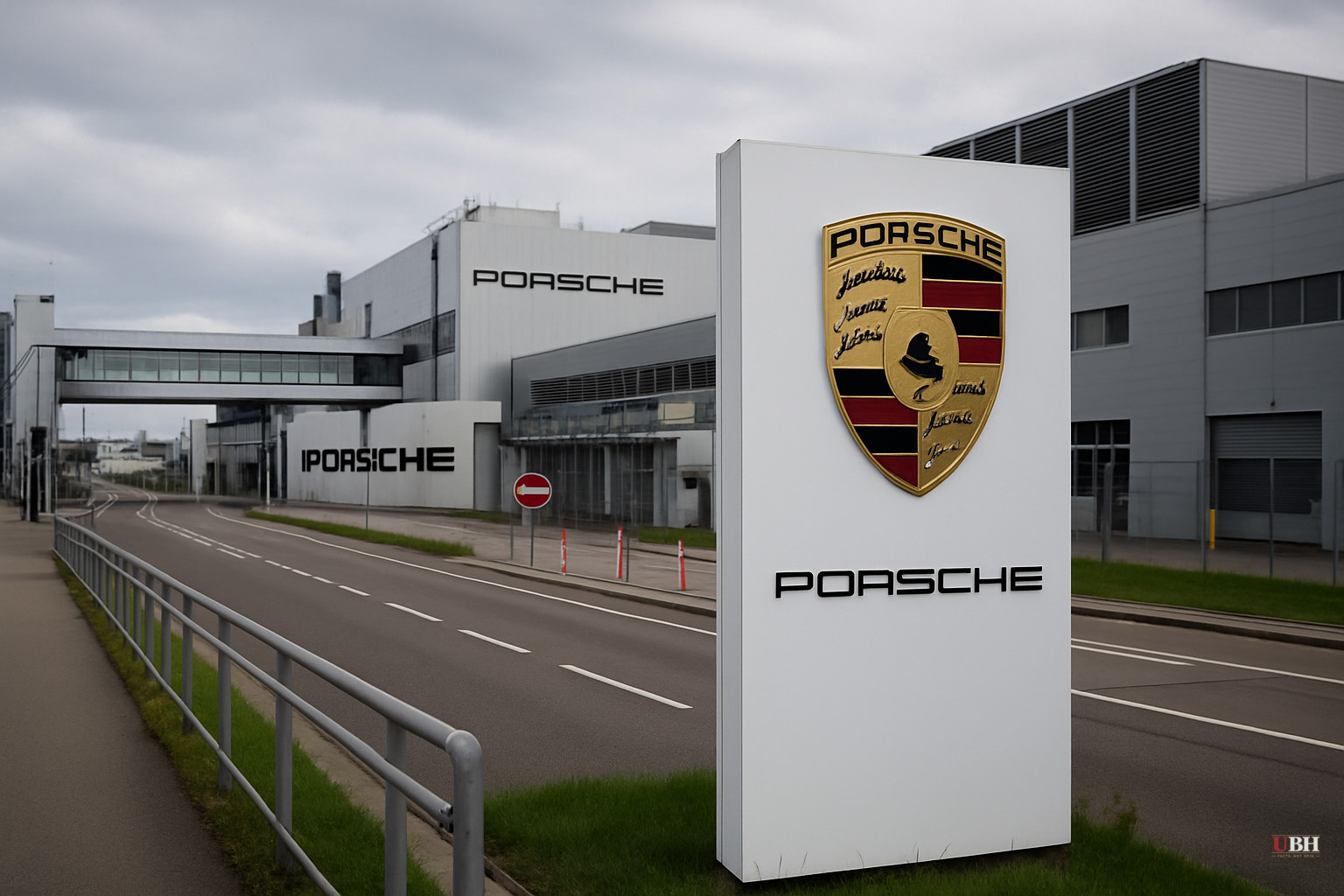
Germany's luxury auto sector has been contracting for over a year, and Porsche is the latest name to confirm the trend is accelerating.
Handelsblatt, Germany's top financial newspaper, reported Sunday that Porsche is weighing up to 4,000 additional job cuts at its main Zuffenhausen plant in Stuttgart. The reductions would land on top of a previously agreed restructuring package already targeting 3,900 positions. That means the company could shed nearly 8,000 jobs in total at the site, according to the Malay Mail's report citing the German Press Agency.
A Porsche spokesperson declined to confirm the 4,000 figure but told media the company is working on a "comprehensive future package" to streamline operations, with full details to be presented by the end of July.
Who Gets Cut
Management and administration are first in line. Brussels Signal reported that three senior female managers have already been told they are losing their positions: Iryna Kauk, head of Europe; Christiane Zorn, head of Overseas and Growth Markets; and Maryam Djavadi, head of the luxury and exclusivity programs division. All three departures are tied to a restructuring of the sales organization.
CEO Michael Leiters described the approach plainly, according to Brussels Signal: he wants to "sweep the stairs from above," starting with board-level cuts before working down to management.
Beyond headcount, Porsche is reviewing roughly 30 percent of capacity at its Weissach development site northwest of Stuttgart, which houses R&D operations for the 911, 718, and Taycan lines.
Why It's Happening
Porsche's first-quarter 2026 sales fell 15 percent compared to the same period in 2025, according to Brussels Signal. Leiters stated last month that the company intends to "make money with fewer cars," explicitly planning to produce below the approximately 280,000 vehicles it sold in 2025.
The pressures are layered. American tariffs are squeezing margins on exports. Chinese EV manufacturers, particularly BYD and Chery, have moved aggressively into European markets at price points Porsche's cost structure can't easily match. And Germany's persistently high energy and labor costs have made the country a difficult place to run large manufacturing operations.
Portfolio gaps in Porsche's model lineup have compounded the demand problem, per ZeroHedge's account of the situation.
Broader German Auto Collapse
Porsche is not alone. Brussels Signal notes that across 2026 so far, the German automotive industry has announced roughly 15,000 to 18,000 additional job cuts. Volkswagen, which owns Porsche, has its own restructuring underway. VW's CEO has warned that more than 100,000 jobs could be eliminated group-wide as part of a sweeping overhaul.
Mercedes-Benz has undergone similar moves. The pattern across German premium and mass-market automakers reflects structural problems that predate any single policy decision: an energy price shock that never fully resolved, a mandated EV transition that moved faster than consumer demand, and Chinese competition that arrived earlier and harder than European manufacturers anticipated.
The Opposing Case
Trade unions and labor advocates have a legitimate concern here. Germany's automotive workforce represents decades of accumulated engineering expertise, and large-scale cuts risk making that knowledge permanent losses rather than temporary adjustments. The unions' argument, as noted by Brussels Signal, is that rapid restructuring could damage morale and strip out the skilled workforce needed for the next product generation, whatever it turns out to be. If demand for premium vehicles recovers, the engineers and developers let go today won't simply be rehired.
The counter argument is equally valid. Porsche's Q1 2026 results show a 15 percent sales drop in a single year. Carrying overhead sized for 280,000 units when you're selling fewer is a path to deeper financial damage, not stability.
What Comes Next
Porsche has committed to minimizing compulsory redundancies through natural attrition, early retirement, and internal reassignments, according to Brussels Signal. Whether that holds against a 4,000-position reduction target will depend on how many voluntary departures materialize before the end-of-July announcement.
The unresolved question is the Weissach development site. A 30 percent capacity reduction there isn't a headcount footnote. Weissach is where future Porsche products are engineered. How deeply those cuts actually go will signal whether this is a cost-discipline exercise or a genuine strategic retreat from the pace of new model development.
Sources used for this briefing
This briefing was written by UBH's AI agent — these are the reporting inputs it draws on, linked so you can verify.


