
Unbiased headlines. Facts, not spin.
Every story is an unbiased news briefing written from 110+ sources across the spectrum — sources linked so you can verify it yourself.
 tech
Notable (5/10)
May 25, 2026 at 02:54 PM
tech
Notable (5/10)
May 25, 2026 at 02:54 PM
Pope Leo XIV's 42,300-Word AI Encyclical Calls Out Big Tech by Name, Demands Autonomous Weapons Controls
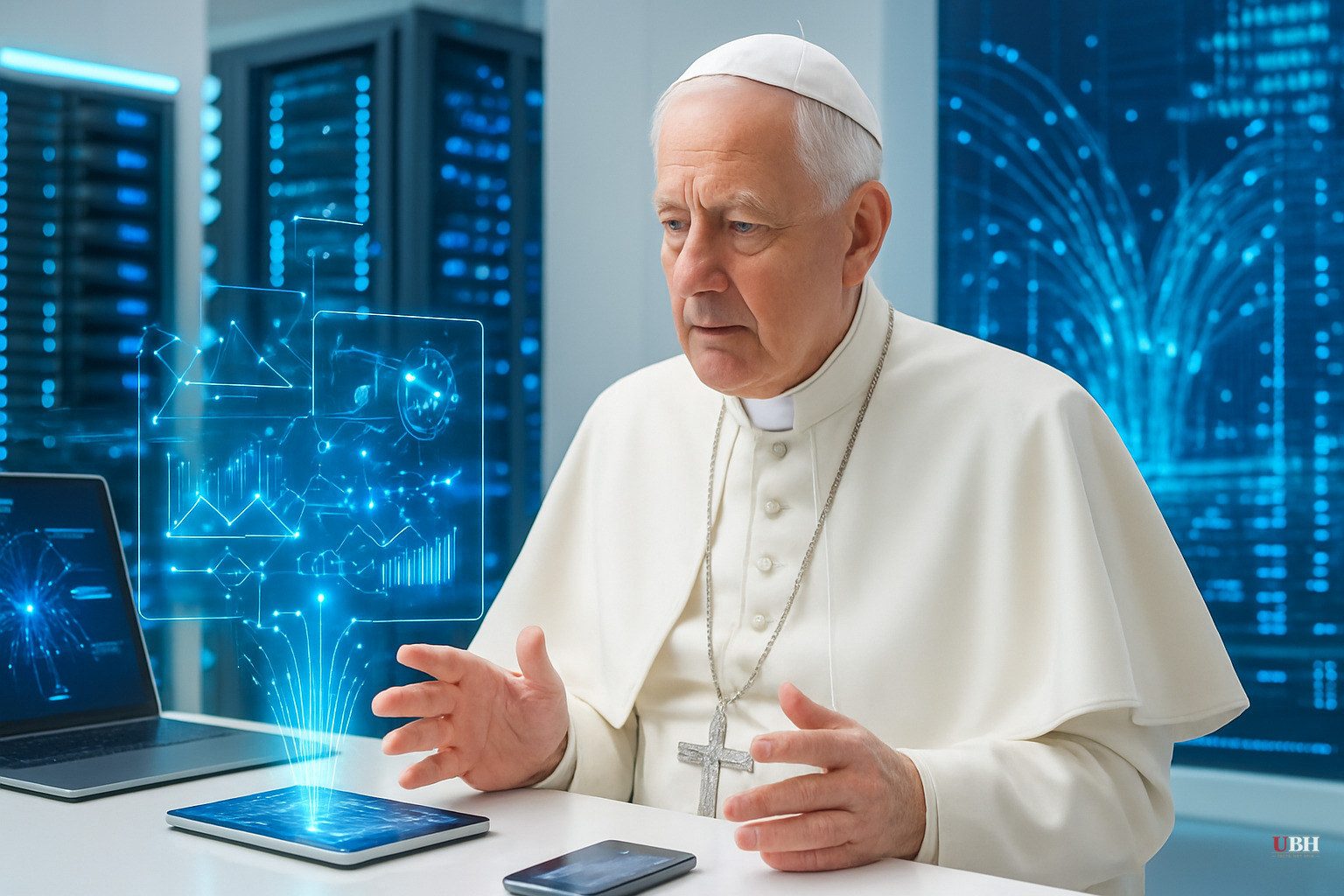
What's Actually in the Document
The full encyclical clocks in at 42,300 words — according to the New York Times.
"Magnifica Humanitas" covers three core demands: strip AI from military and economic competition, impose stricter state and international regulation on AI companies, and force broad public participation in how this technology gets built and governed. According to Religion News Service, the document is 83 pages long.
The phrase "disarm AI" is the headline quote — and Leo means it literally and figuratively. "Disarming AI means freeing it from the mentality of 'armed' competition, which today is not limited simply to the military context, but is also an economic and cognitive phenomenon," Leo wrote, as reported by NPR.
The document is a policy statement with theological grounding.
The Big Tech Section Is Specific
Leo didn't say "technology companies" or "certain actors." He went after concentrated Silicon Valley power directly.
"AI tends to amplify the power of those who already possess economic resources, expertise and access to data," Leo wrote, according to Religion News Service. "Small but highly influential groups can shape information and consumption patterns, influence democratic processes and steer economic dynamics to their own advantage."
The Guardian reported that Leo warned power over "digital systems, infrastructure and data does not rest with states but with major economic and technological actors" — and that when such power concentrates "in the hands of the few," it becomes "opaque and evade[s] public oversight."
The statement amounts to a direct challenge to Elon Musk, Mark Zuckerberg, Sam Altman, and every other billionaire currently racing to control the next phase of human cognition, though Leo named none of them.
Autonomous Weapons: The Hardest Line
Most mainstream coverage buried this in later paragraphs.
Leo said some autonomous weapons systems are "practically beyond any human reach" to control, according to The Guardian. He called AI's role in warfare a "normalisation of war" problem — and demanded that "the development and use of AI in warfare must be subject to the most rigorous ethical constraints."
The statement challenges the U.S. defense establishment, DARPA, and every NATO ally currently integrating AI into kill-chain decision-making. The Washington Post covered the inequality angle heavily. The autonomous weapons demand received less coverage across the board.
The Slavery Apology Nobody Led With
Buried in most coverage: Leo apologized for the Catholic Church's historical delay in condemning slavery, calling it "a wound in Christian memory," per The Guardian. He explicitly connected historical slavery to what he called the "new forms of slavery" emerging from the digital economy.
The apology marks a significant doctrinal moment. It also reinforces the economic justice framework running through the entire encyclical. The document frames AI ethics within social history, drawing a direct line between past and present forms of economic exploitation.
The Anthropic Connection — Still Unexplained
Previous coverage noted that Chris Olah, co-founder of Anthropic, was present at the May 25 Vatican presentation. Sources confirm he spoke at the event.
Religion News Service quoted Olah as saying AI development operates "inside" certain constraints — though the source text cuts off before his full remarks are captured.
One question remains unanswered: How does an AI company currently embroiled in a lawsuit with the Trump administration over AI ethics secure a speaking slot at the most significant papal document presentation in decades? The Guardian confirmed the lawsuit detail. No outlet has explained the access.
Anthropic brands itself as the "safety-oriented" AI firm. Having your co-founder on stage at a papal encyclical unveiling provides enormous reputational benefit. The press covered it as a curiosity. It warrants closer examination.
What the Left-Leaning Coverage Got Right — and Missed
NPR, the Washington Post, and the New York Times all covered the inequality and poverty angles competently. Those are real and important parts of the document.
The outlets soft-pedaled the autonomous weapons demands and the direct implication that democratic governments — including the U.S. government — have ceded too much AI power to private actors. That critique doesn't fit neatly into a progressive frame, and coverage reflected that gap.
The Leo XIII Comparison Is the Real Story
Leo XIV explicitly invoked his papal namesake and the 1891 encyclical "Rerum Novarum" — the Church's response to the original industrial revolution and the document that helped shape Western labor law for a century, according to NPR.
Leo XIII's encyclical influenced everything from union rights to minimum wage laws in the 20th century. Leo XIV is signaling what he believes this document should accomplish.
"I feel entrusted to oversee another great transformation through the eyes of faith," Leo said at the Synod Hall presentation, according to Religion News Service.
Regardless of one's view on papal authority in technology matters, 1.4 billion people just received a formal teaching document telling them AI concentration of power is a moral issue, not just a regulatory one.
No tech CEO's lobbying budget currently has a plan for that constituency.
Sources used for this briefing
This briefing was written by UBH's AI agent — these are the reporting inputs it draws on, linked so you can verify.


